
Sports Injuries: Why They Happen, How Physio Helps, and What a Proper Recovery Really Looks Like
Sports injuries show up in every type of athlete—from weekend runners to seasoned professionals. The pattern is usually the same: something starts to feel uncomfortable, you try to brush it off, then the pain returns the moment you push your training again. At that point, most people realise the body isn’t adapting the way they hoped. That’s where physiotherapy becomes essential. A clear diagnosis, a structured plan, and the right progressions can be the difference between a short setback and a long-term issue.
This article breaks down why sports injuries happen, what effective treatment looks like, and how we guide people back to full performance at Phoenix Physio.
What Counts as a Sports Injury?
A sports injury is any issue that affects how you move, whether it’s a sudden tear or something that builds slowly over time. The common ones we see include:
- Muscle strains in areas like the hamstrings, calf, or quadriceps
- Ligament sprains, especially around the ankle and knee
- Tendon irritation—Achilles, rotator cuff, patellar tendon
- Joint injuries affecting the hip, shoulder, or knee
- Overuse problems such as shin pain, tendinopathy, or stress reactions
- Impact injuries from falls, tackles, or direct contact
Some injuries create an instant stop. Others give you a warning signal and then quietly worsen if load isn’t adjusted. Either way, the body is telling you something isn’t quite right.

Why Sports Injuries Happen
Every injury has a story behind it. The details change, but the themes are surprisingly consistent.
Training Load Rises Too Fast
When your training volume or intensity jumps quicker than your body can adapt, tissues start to struggle. A sudden return to heavy lifting, sprinting without proper warm-up, or doubling weekly mileage are classic triggers. Muscles and tendons become irritated long before they reach breaking point, which is why early signs matter.
Movement Inefficiencies
Even strong athletes pick up injuries when their movement patterns aren’t supporting them. Limited hip or ankle mobility, weakness around the glutes, poor trunk control, or old compensations can quietly shift load to the wrong places. It may feel fine for a while—until it doesn’t.
Fatigue and Insufficient Recovery
A tired body moves differently. When your system is under-recovered, the tissues lose resilience and your coordination drops. This is when awkward landings, poor decisions, or overloaded tendons tend to appear.
Repetition and Overuse
Some injuries don’t start with a dramatic event. They creep up from repeated strain—distance running, swimming, cycling, or gym movements with high frequency. They usually start as a “niggle,” and those niggles often tell you more than you think

Why Early Assessment Matters
Most people wait too long before getting their injury checked. They hope it will settle, try to train around it, or avoid the movements that aggravate it. The problem is that the body adapts to these avoidance strategies, and before long, you end up with two issues instead of one.
A proper assessment gives you:
- A clear diagnosis
- Insight into what caused the injury
- A plan that stops wasted weeks of trial and error
- Early control over symptoms
- A faster route back to your normal training load
At Phoenix Physio, assessments combine clinical testing, strength profiling, joint and soft-tissue evaluation, and movement analysis. The goal is always the same: understand the real problem, not just the pain.
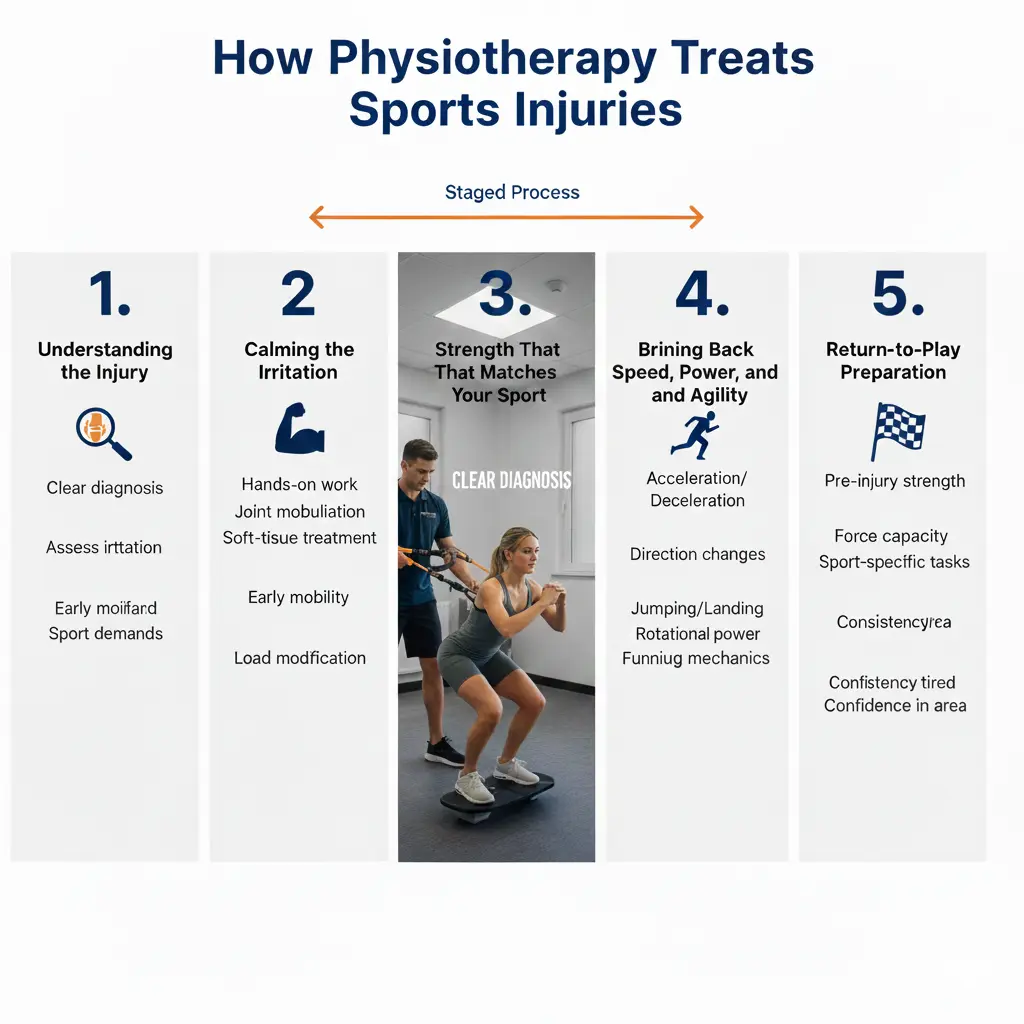
How Physiotherapy Treats Sports Injuries
Successful rehabilitation isn’t about pushing through pain or waiting until symptoms vanish. It’s a staged process, with each phase preparing you for the next.
Understanding the Injury
We start by identifying the exact structure involved, assessing how irritated it is, and understanding the demands of your sport. This shapes everything that comes after.
Calming the Irritation
The first priority is settling the symptoms without shutting down movement. That usually includes a mix of:
- Hands-on work
- Joint mobilisation
- Soft-tissue treatment
- Early mobility drills
- Load modification so you keep moving safely
The aim is to reduce discomfort while keeping the rest of the body active and strong.
Strength That Matches Your Sport
Once symptoms are stable, rehab turns to building strength and control. This stage matters most. You can feel “better” long before your body is actually ready for higher loads.
Rehab here focuses on:
- Strength through full range of motion
- Stability and balance work
- Tendon-specific loading when needed
- Improving control around joints that were overloaded
- Gradual introduction of fatigue to mirror real training demands
This is where confidence starts to come back.
Bringing Back Speed, Power, and Agility
When your base strength is solid, rehab needs to resemble the demands of your sport. That includes:
- Acceleration and deceleration work
- Direction changes
- Jumping and landing practice
- Rotational power
- Running mechanics or movement refinement
The goal is simple: when you return to training, nothing should feel surprising.
Return-to-Play Preparation
Pain-free movement isn’t the finish line. Before you return fully, you need to demonstrate:
- Strength at or above your pre-injury level
- Capacity to produce and absorb force
- Ability to complete sport-specific tasks under pressure
- Consistency when tired
- Confidence in the injured area
A well-designed return-to-play process dramatically lowers the risk of a repeat injury.
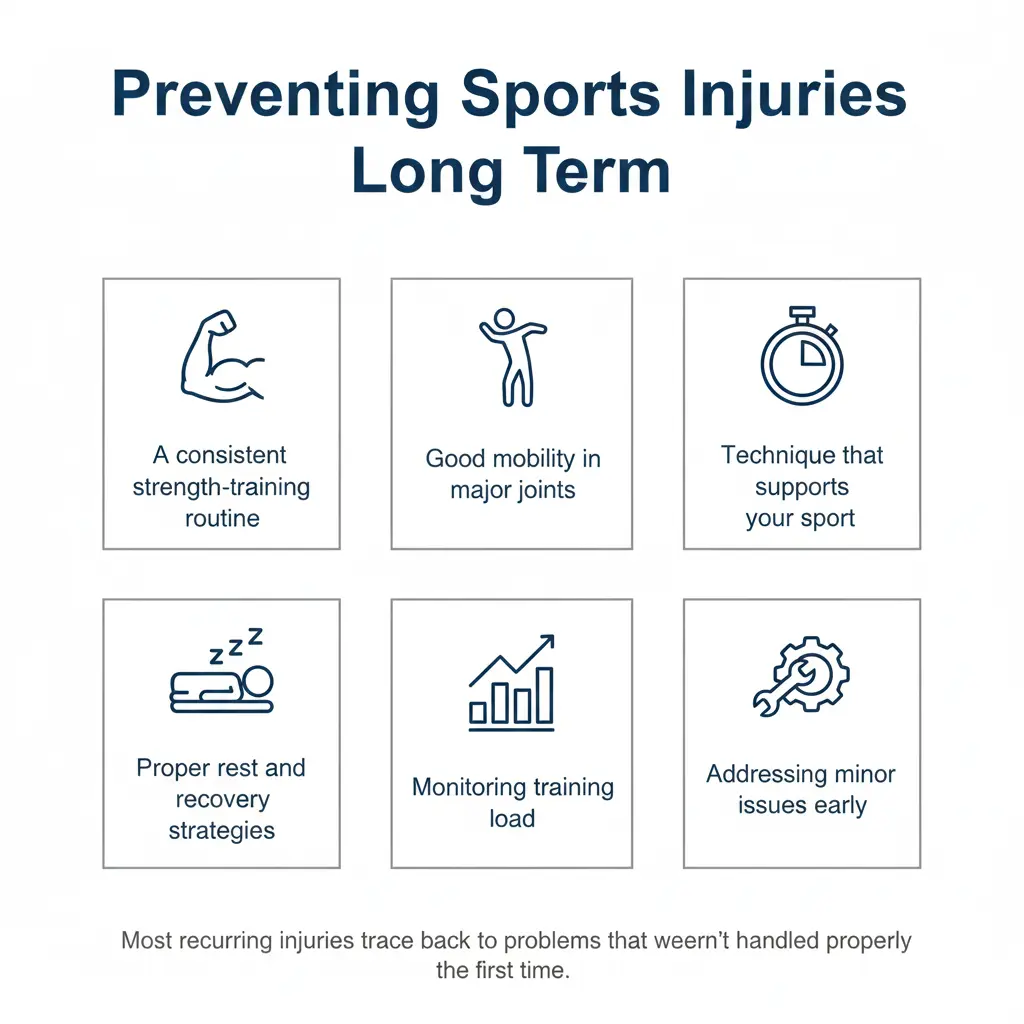
Preventing Sports Injuries Long Term
You can’t prevent everything, but you can significantly reduce your risk. Key factors include:
- A consistent strength-training routine
- Good mobility in major joints
- Technique that supports your sport
- Proper rest and recovery strategies
- Monitoring training load—especially during increases
- Addressing minor issues early instead of ignoring them
Most recurring injuries trace back to problems that weren’t handled properly the first time.
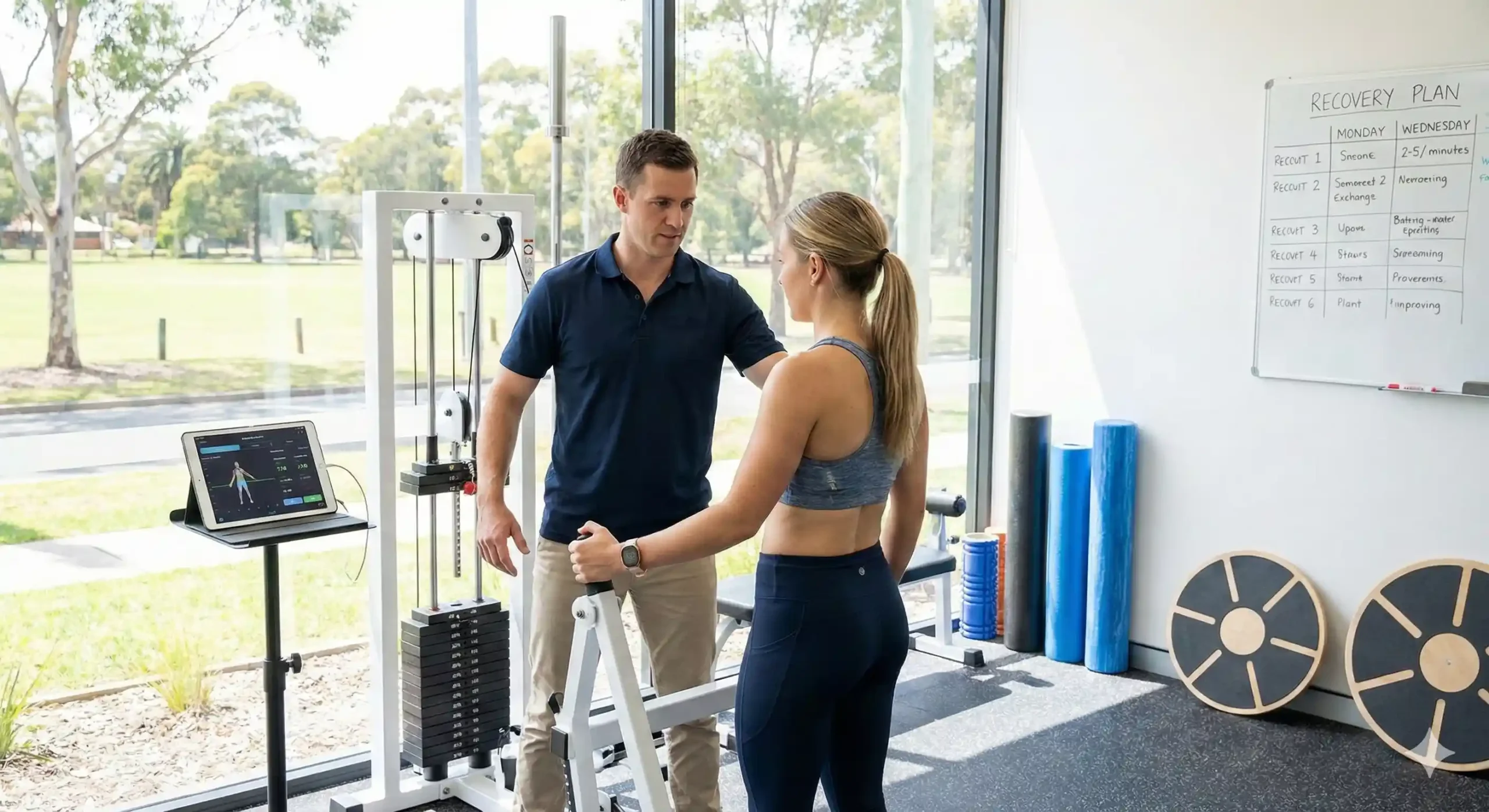
Why Choose Phoenix Physio for Sports Injury Recovery?
At Phoenix Physio, sports injury treatment goes beyond easing pain. The focus is on understanding why the injury happened, how your body moves under load, and what needs to change to prevent it from coming back. Every assessment looks at movement patterns, strength imbalances, flexibility, and sport-specific demands, not just the painful area.
Treatment is tailored, evidence-based, and progressive. Whether you are dealing with a sudden sports injury or a long-term overuse issue, rehabilitation is designed to restore strength, control, and confidence so you can return to training and competition safely. Sessions combine hands-on physiotherapy, targeted exercise, and clear guidance on activity management, so recovery stays efficient and sustainable.
What sets Phoenix Physio apart is the long-term approach. Instead of short-term fixes, you get a structured plan that supports performance, reduces re-injury risk, and helps you move better for the future, not just the next few weeks.
Book an appointment today and take the first step toward faster recovery, safer movement, and stronger performance.
Conclusion
Sports injuries don’t improve through rest alone. They heal when the cause is identified, the load is managed properly, and strength is rebuilt in a way that matches the demands of your sport. With the right plan, you return fitter, more resilient, and more aware of how your body moves. At Phoenix Physio, that’s always the objective: guide you through a clear, confident recovery and make sure you get back to the activities you enjoy without hesitation.
When rehab is done well, you don’t just return to activity—you come back stronger, more efficient, and more resilient than before. That’s the standard at Phoenix Physio. We guide you through a clear, confident recovery, rebuild the areas that were overloaded, and make sure you return to training, competition, or everyday activity without hesitation.
FAQ: Sports Injuries & Physiotherapy
How do I know if my sports injury is serious?
If pain changes your movement, forces you to stop training, or keeps returning as you increase load, it’s worth getting checked. Sudden swelling, sharp pain, or loss of strength are also clear indicators.
Should I rest completely after a sports injury?
Total rest usually slows recovery. Most injuries heal faster with controlled, well-timed movement. The challenge is knowing which movements help and which create setbacks.
How long does recovery take?
It depends on the tissue involved and the severity. A light strain might settle quickly; tendon or ligament issues tend to need more time. A structured plan is the best way to avoid delays or repeat problems.
Do I need a scan before seeing a physio?
In most cases, no. Physios can diagnose the majority of sports injuries through clinical examination. Scans are only needed when symptoms are unusual or not progressing as expected.
Can physio stop the Sports injuries from coming back?
Yes. When rehab addresses the true cause—strength gaps, mobility limits, technique, or load management—the risk of recurrence drops significantly.
How to heal sports injuries faster?
- Rest. Limit activities that involve using the injured area for at least a day or two. …
- Ice. Apply an ice pack to the injured area for 20 minutes at a time, four to eight times a day. …
- Compression. Keeping pressure on the injured area may help reduce swelling. …
- Elevation.