
Introduction
Surgery is only the first step. What truly determines how well you return to normal life is your post operative recovery.
Many people assume recovery is about rest and time. In reality, the way you move, rebuild strength, and retrain your body after surgery has a direct impact on how quickly and safely you heal. This is where expert physiotherapy becomes essential.
At Phoenix Physio, post surgical rehabilitation is designed to help you recover with structure, confidence and measurable progress. Whether you have undergone joint replacement, ligament repair, spinal surgery, or abdominal procedures, the right guidance makes all the difference.
This guide explains what post operative recovery really involves, why physiotherapy is critical, and what you can expect during your rehabilitation journey.
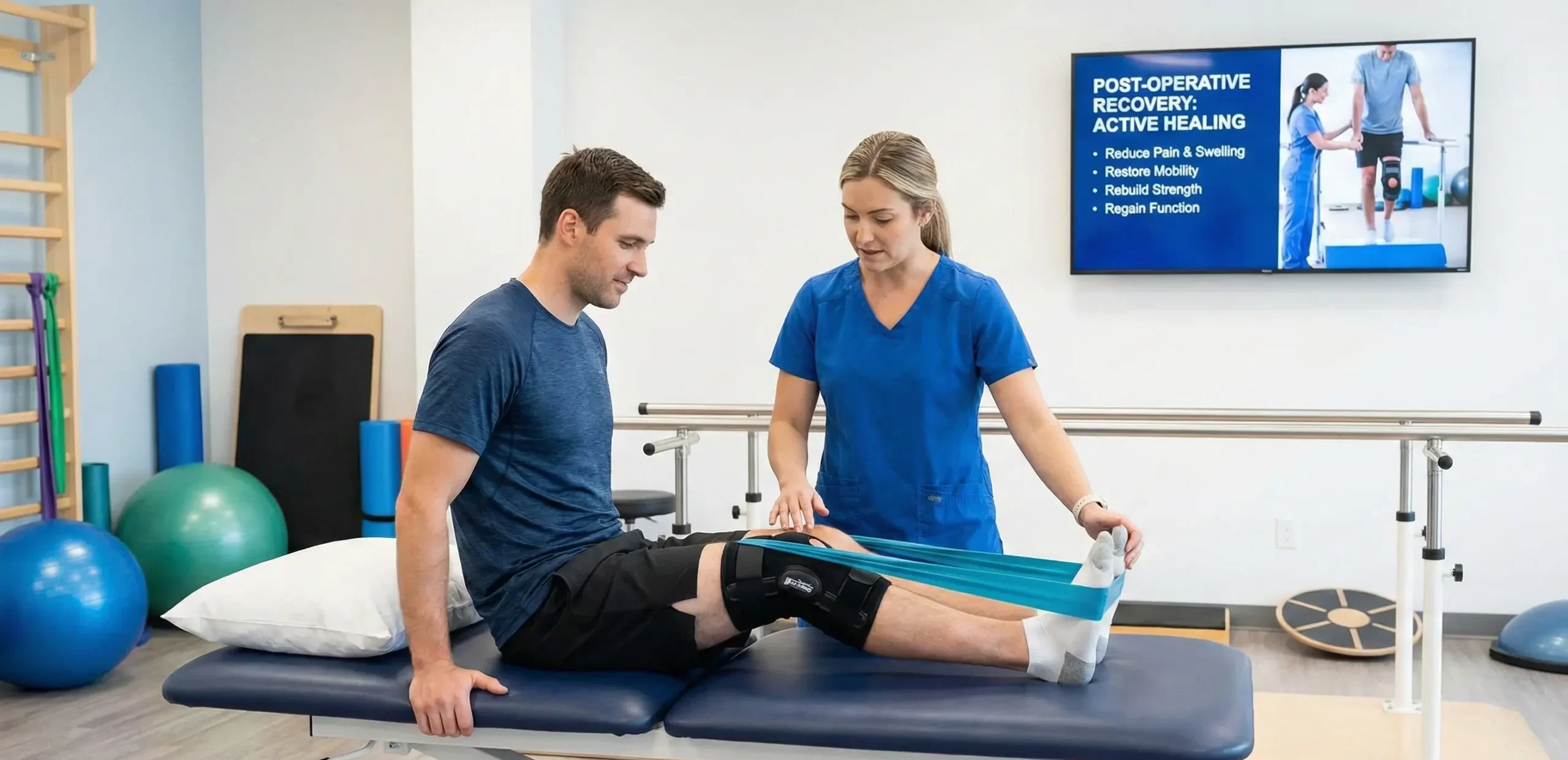
What Is Post Operative Recovery?
Post operative recovery refers to the physical rehabilitation process that takes place after a surgical procedure. It includes:
Tissue healing
Pain and swelling management
Restoring mobility
Rebuilding muscle strength
Regaining balance and coordination
Returning to normal daily function
Healing is not a passive process. During post operative recovery, simply resting without the right movement and rehabilitation can allow stiffness, muscle weakness, and poor movement habits to develop.
Guided physiotherapy keeps the body active in a safe way, encouraging proper joint motion, muscle engagement, and healthy movement patterns. This reduces the risk of delays, setbacks, and long-term complications while supporting a smoother, more complete recovery.
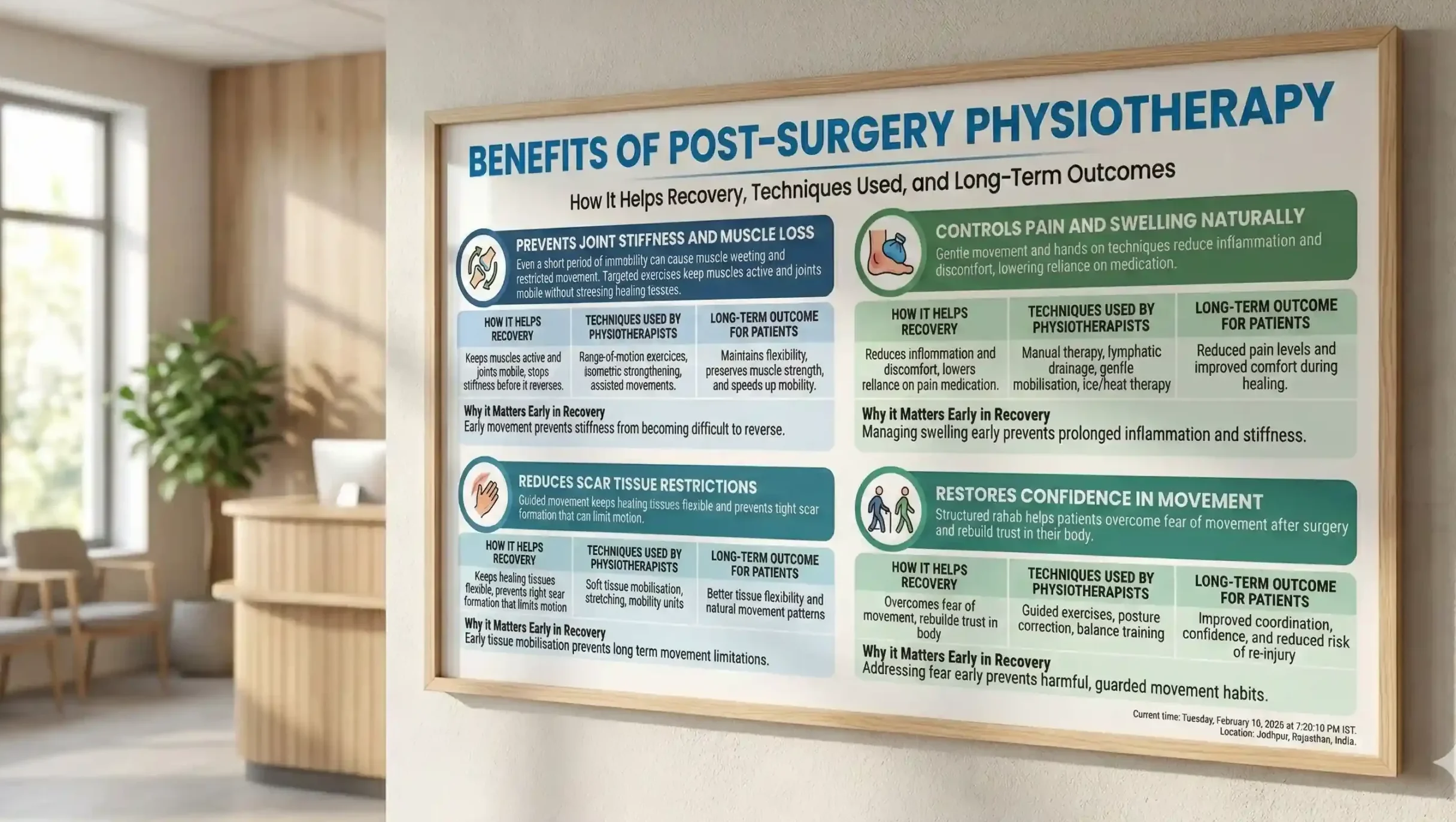
Why Post Operative Recovery Needs Physiotherapy
After surgery, your body naturally protects the operated area. This often leads to reduced movement, muscle shutdown and joint stiffness. Physiotherapy addresses these issues early before they become permanent problems.
Prevents Joint Stiffness and Muscle Loss
Even a short period of immobility after surgery can quickly lead to muscle wasting, joint stiffness, and reduced flexibility. During post operative recovery, the body naturally tries to protect the surgical area by limiting movement, but this often slows overall healing and makes returning to normal activity harder.
Targeted physiotherapy exercises are introduced carefully to keep muscles active and joints mobile without placing stress on healing tissues. These guided movements improve circulation, maintain strength, and prevent tightness, helping your body recover safely while preserving essential mobility throughout the post operative recovery process.
Controls Pain and Swelling Naturally
During post operative recovery, pain and swelling are common as the body heals from surgical trauma. Relying only on rest or medication can slow progress and lead to stiffness. Physiotherapy uses manual therapy, gentle mobilisation, and guided movement to improve circulation and calm irritated tissues naturally.
These hands-on techniques help reduce inflammation, ease discomfort, and restore comfortable motion without stressing the surgical area. As movement improves, many patients find they depend less on pain medication while still progressing safely through each stage of post operative recovery.
Reduces Scar Tissue Restrictions
Scar tissue is a natural part of the healing process after surgery. However, during post operative recovery, if the area is not moved correctly and at the right time, this scar tissue can become tight and restrict normal joint and muscle motion.
Physiotherapy introduces guided movement and soft tissue techniques that help keep healing tissues flexible and aligned. This prevents unnecessary tightness, maintains functional movement, and supports smoother recovery without limiting long-term mobility.
Restores Confidence in Movement
After surgery, it’s common to feel unsure about moving the affected area. During post operative recovery, this hesitation can lead to guarded, fear-based movements that slow progress and create stiffness.
Structured rehabilitation provides safe, guided exercises that rebuild confidence step by step. As you learn how to move without pain or risk, trust in your body returns, helping you regain natural, relaxed movement patterns and recover more effectively.
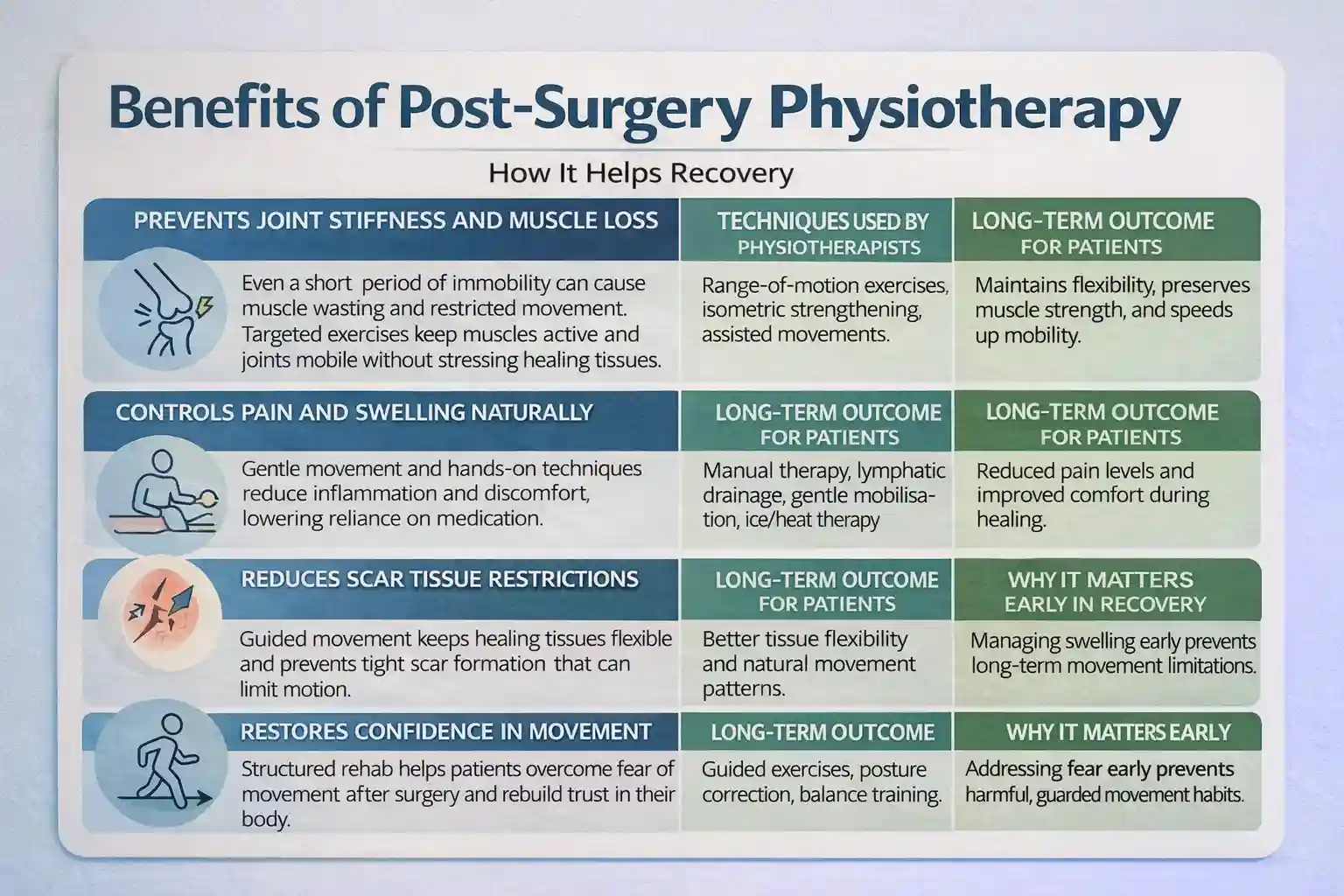
| Benefit of Post-Surgery Physiotherapy | How It Helps Recovery | Techniques Used by Physiotherapists | Long-Term Outcome for Patients | Why It Matters Early in Recovery |
|---|---|---|---|---|
| Prevents Joint Stiffness and Muscle Loss | Even a short period of immobility can cause muscle wasting and restricted movement. Targeted exercises keep muscles active and joints mobile without stressing healing tissues. | Range-of-motion exercises, isometric strengthening, assisted movements | Maintains flexibility, preserves muscle strength, and speeds up mobility | Early movement stops stiffness before it becomes difficult to reverse |
| Controls Pain and Swelling Naturally | Gentle movement and hands-on techniques reduce inflammation and discomfort, lowering reliance on medication. | Manual therapy, lymphatic drainage, gentle mobilisation, ice/heat therapy | Reduced pain levels and improved comfort during healing | Managing swelling early prevents prolonged inflammation and stiffness |
| Reduces Scar Tissue Restrictions | Guided movement keeps healing tissues flexible and prevents tight scar formation that can limit motion. | Soft tissue mobilisation, stretching, mobility drills | Better tissue flexibility and natural movement patterns | Early tissue mobilisation prevents long-term movement limitations |
| Restores Confidence in Movement | Structured rehab helps patients overcome fear of movement after surgery and rebuild trust in their body. | Guided exercises, posture correction, balance training | Improved coordination, confidence, and reduced risk of re-injury | Addressing fear early prevents harmful, guarded movement habits |

Common Surgeries That Require Structured Post Operative Recovery
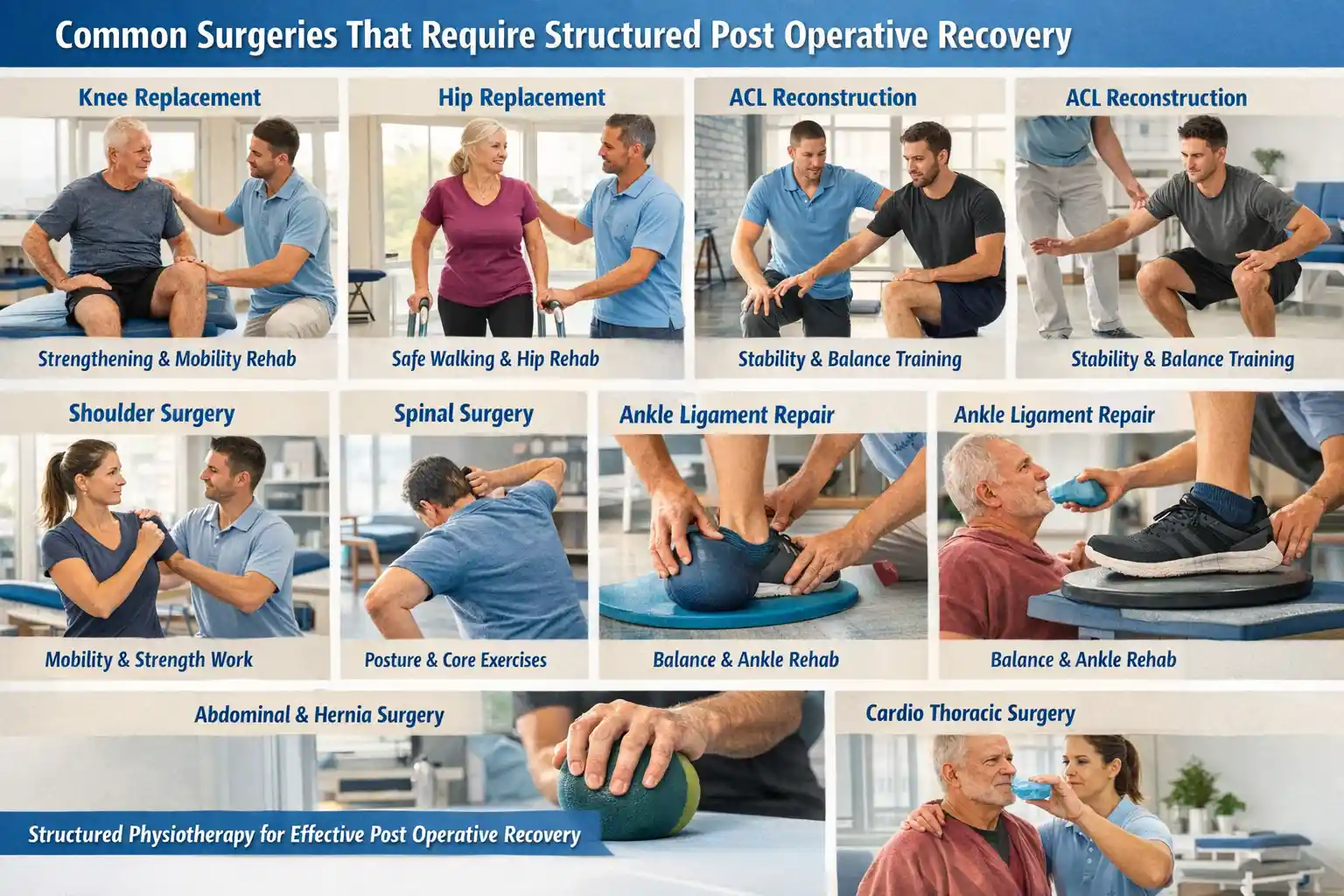
Knee replacement surgery
During post operative recovery, rehab after knee replacement surgery focuses on reducing swelling, restoring knee bending and straightening, and getting you walking safely again. Strength work, especially for the quadriceps, is key during post operative recovery to avoid stiffness and improve daily movement patterns.
Hip replacement surgery
In early post operative recovery after hip replacement surgery, the priority is safe mobility, improving hip strength, and restoring a normal walking pattern. Physiotherapy during post operative recovery helps you move confidently while protecting the new joint during healing.
ACL reconstruction
This phase of post operative recovery after ACL reconstruction is step by step and highly structured. Physiotherapy guides your post operative recovery by rebuilding knee stability, strength, balance, and control so you can return to sport safely.
Shoulder surgery
After shoulder surgery, post operative recovery begins with gentle mobility before progressing to strength and stability work. This gradual approach in post operative recovery prevents long term stiffness and restores functional arm movement.
Spinal surgery
Physiotherapy is essential in post operative recovery following spinal surgery, supporting safe movement habits, posture improvement, and core strengthening. Proper post operative recovery reduces the risk of recurring back or neck pain.
Ankle ligament repair
Targeted exercises during post operative recovery after ankle ligament repair improve ankle mobility, strength, and balance. Consistent post operative recovery is important to prevent repeated sprains and restore stability.
Abdominal and hernia surgeries
Physiotherapy in post operative recovery after abdominal and hernia surgeries focuses on breathing, posture, and gradual core activation. A structured post operative recovery plan helps rebuild strength safely and lowers complication risks.
Each of these procedures needs a different post operative recovery plan based on surgical technique, healing timelines, and patient goals.
Tendon Transfer Surgery and Post Operative Recovery
Tendon transfer surgery changes the way muscles perform their role, which means recovery is not just about healing but about relearning movement. Post operative recovery Aylesbury focuses on retraining the brain and body to coordinate these new patterns safely, while protecting the surgical repair with gentle, guided mobility. This careful balance prevents stiffness in nearby joints and supports proper healing of the transferred tendon.
As recovery progresses, physiotherapy becomes more focused on rebuilding strength and restoring functional use of the limb. Structured rehabilitation improves grip, control, and everyday movement so patients can return to daily activities with confidence and reduced risk of setbacks.
Cardio Thoracic Surgery, Rib Pain and Post Operative Recovery
After cardio thoracic surgery, rib and chest wall pain can make breathing and movement uncomfortable. Post operative recovery Aylesbury uses targeted techniques to reduce pain, improve comfort, and restore easier breathing through guided breathing exercises that help expand lung capacity and reduce the risk of complications.
Alongside this, gentle mobility work and posture correction reduce stiffness around the ribs, shoulders, and spine. This helps patients regain natural upper body movement safely, making everyday tasks feel more comfortable as recovery progresses.
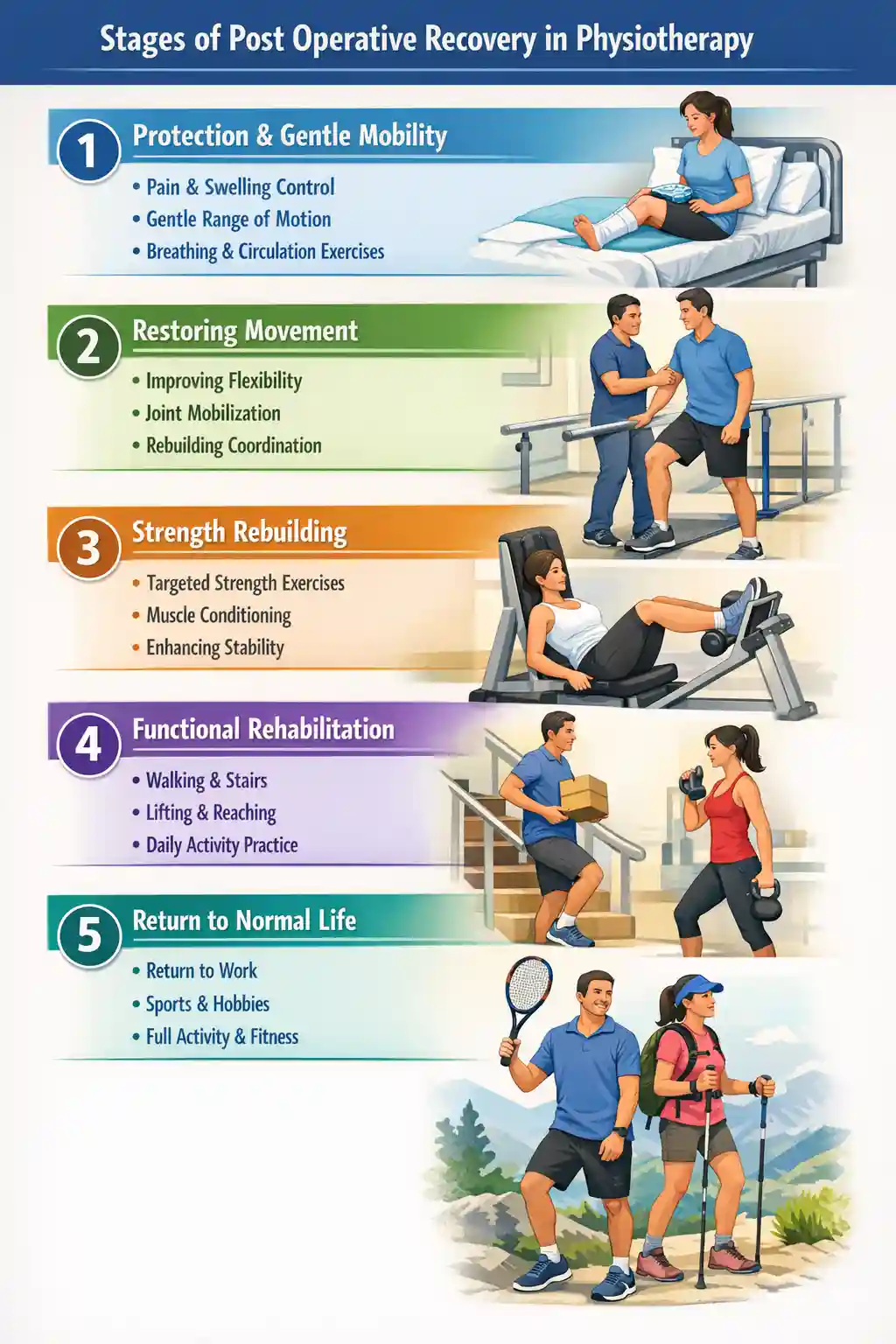
Stages of Post Operative Recovery in Physiotherapy
A proper post operative recovery plan follows progressive stages.
Stage 1: Protection and Gentle Mobility
In the early days, the focus is on:
Pain control
Swelling reduction
Gentle range of motion
Breathing and circulation exercises
This stage prepares your body for movement without stressing the surgical site.
Stage 2: Restoring Movement
As healing progresses, mobility work becomes more active and purposeful during post operative recovery. Gentle movements evolve into controlled exercises that encourage the joint to move through a fuller range while re-engaging surrounding muscles.
This stage helps restore natural motion, improve coordination, and prepare the body for the strengthening and functional work that follows.
Stage 3: Strength Rebuilding
Once healing tissues are stable, focused strength training becomes a key part of post operative recovery. Muscles often weaken quickly after surgery due to rest, pain, and reduced activity.
Gradual, targeted strengthening rebuilds muscle support around the surgical area, improves joint stability, and prepares the body for more demanding movements in the later stages of recovery.
Stage 4: Functional Rehabilitation
As recovery progresses, exercises are designed to mirror real daily movements. During post operative recovery, this means practising activities such as walking, climbing stairs, lifting objects, reaching overhead, and preparing to return to work tasks.
This functional approach helps your body relearn safe, natural movement patterns so everyday activities feel easier, more controlled, and more confident as you transition back to normal life.
Stage 5: Return to Normal Life and Activity
The final stage prepares you to return to normal routines, hobbies and sport safely.
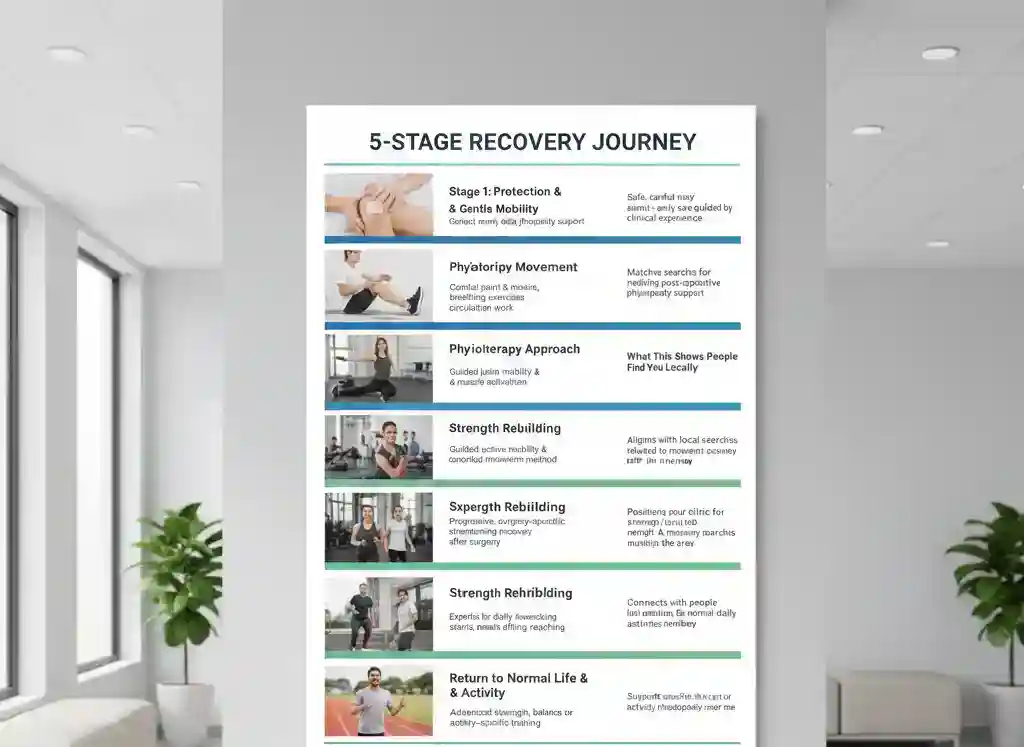
| Recovery Stage | Clinical Focus | Physiotherapy Approach | What This Shows Patients | How This Helps People Find You Locally |
|---|---|---|---|---|
| Stage 1: Protection and Gentle Mobility | Control pain and swelling while protecting the surgical site | Gentle range of motion, breathing exercises, circulation work | Shows safe, careful early care guided by clinical experience | Matches searches for nearby post-operative physiotherapy support |
| Stage 2: Restoring Movement | Improve joint mobility and muscle activation | Guided active mobility and controlled movement patterns | Demonstrates a structured and progressive recovery method | Aligns with local searches related to movement recovery after surgery |
| Stage 3: Strength Rebuilding | Restore muscle strength and joint stability | Progressive, surgery-specific strengthening programs | Highlights expertise in rebuilding strength after immobility | Positions your clinic for strength rehab and recovery searches in the area |
| Stage 4: Functional Rehabilitation | Prepare the body for daily and work-related tasks | Functional exercises like walking, stairs, lifting, and reaching | Reflects real-life rehab focused on practical outcomes | Connects with people looking for help returning to normal daily activities nearby |
| Stage 5: Return to Normal Life and Activity | Safely return to routine life, hobbies, or sports | Advanced strength, balance, and activity-specific training | Builds confidence by focusing on long-term recovery, not quick fixes | Supports searches like return to sport or activity physiotherapy near me |
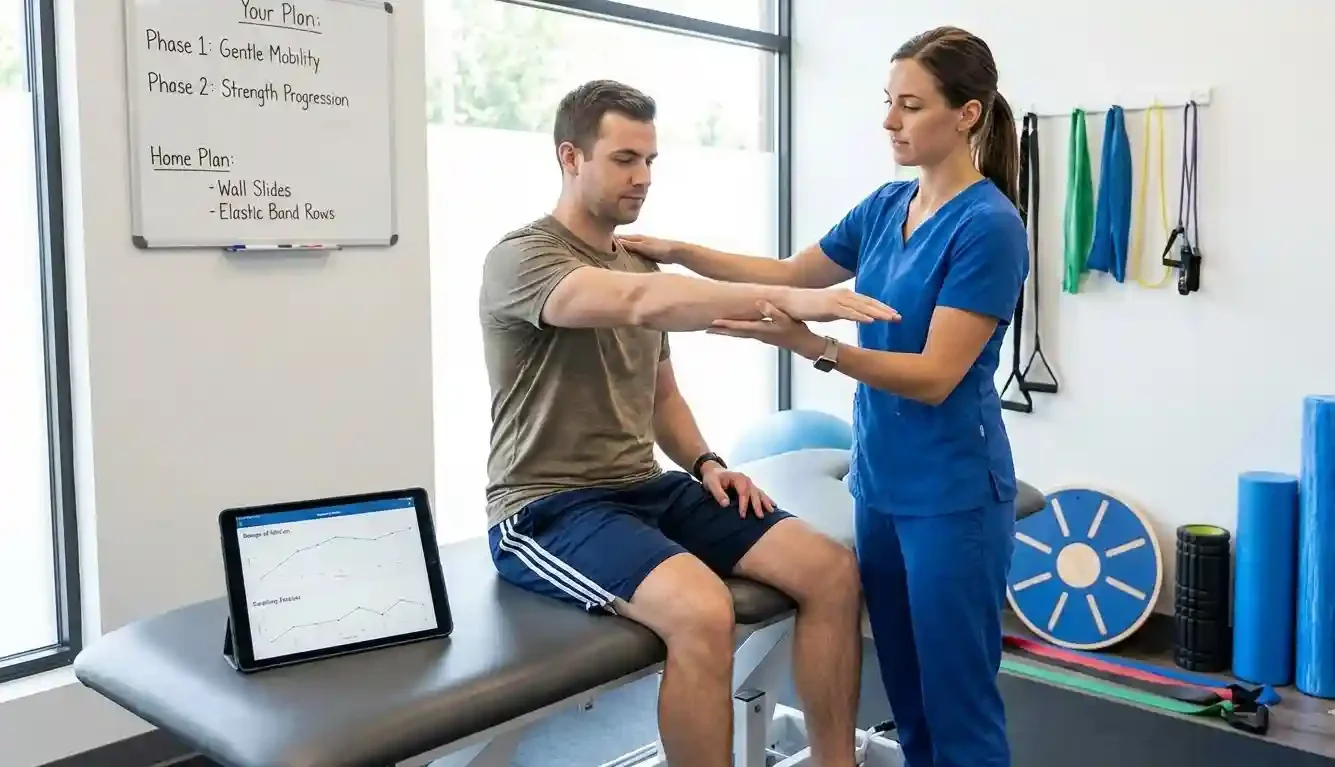
What to Expect During Your Physiotherapy Sessions
You can expect a structured, closely monitored recovery process designed around how your body is healing at each stage.
Detailed assessment of movement and strength
Your physiotherapist checks joint mobility, muscle strength, posture, and walking pattern to understand exactly where limitations exist after surgery.Monitoring of swelling and healing progress
Swelling, pain levels, and tissue healing are reviewed regularly to ensure exercises are introduced at the right time without overloading the surgical area.Hands-on treatment to improve mobility
Gentle manual techniques and guided movements help reduce stiffness, improve circulation, and restore comfortable motion.Step-by-step exercise progression
Exercises are not random. They are advanced gradually as your strength, control, and healing improve.Clear home exercise guidance
You are given simple, practical exercises to continue at home so recovery continues between sessions.Regular progress reviews
Your plan is reviewed and adjusted frequently based on how your body responds, ensuring steady and safe improvement.
Recovery is monitored, adjusted, and progressed according to how your body heals, not a rigid timetable.
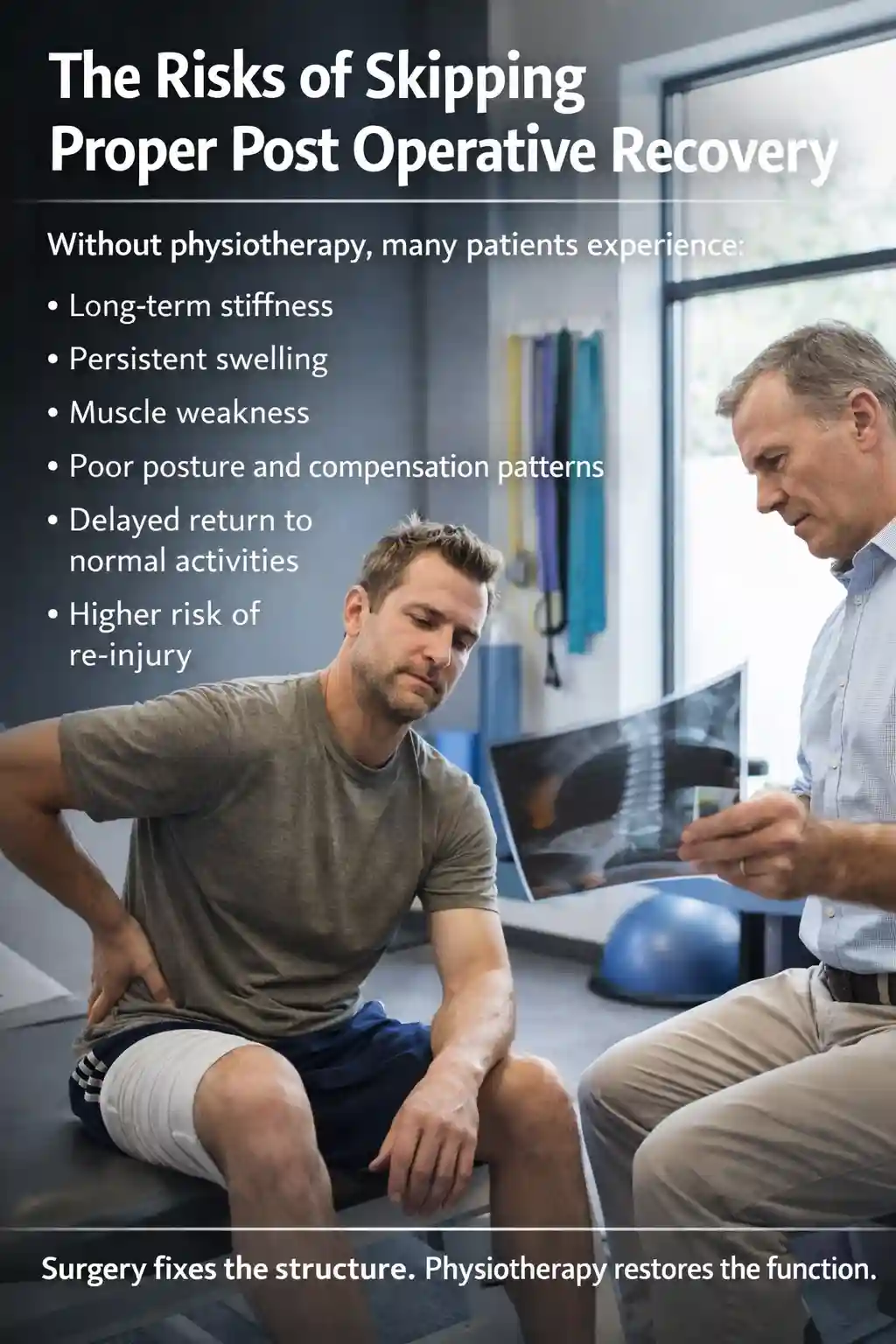
The Risks of Skipping Proper Post Operative Recovery
Without physiotherapy, many patients experience:
Long-term stiffness
Persistent swelling
Muscle weakness
Poor posture and compensation patterns
Delayed return to normal activities
Higher risk of re-injury
Surgery fixes the structure. Physiotherapy restores the function.
Tips to Support Your Post Operative Recovery at Home
Alongside physiotherapy, simple habits make a big difference:
Follow post surgical advice carefully
Stay consistent with prescribed exercises
Avoid long periods of immobility
Maintain good hydration and nutrition
Prioritise sleep for tissue healing
Report unusual pain or swelling early
Small daily actions compound into faster recovery.
How Long Does Post Operative Recovery Take?
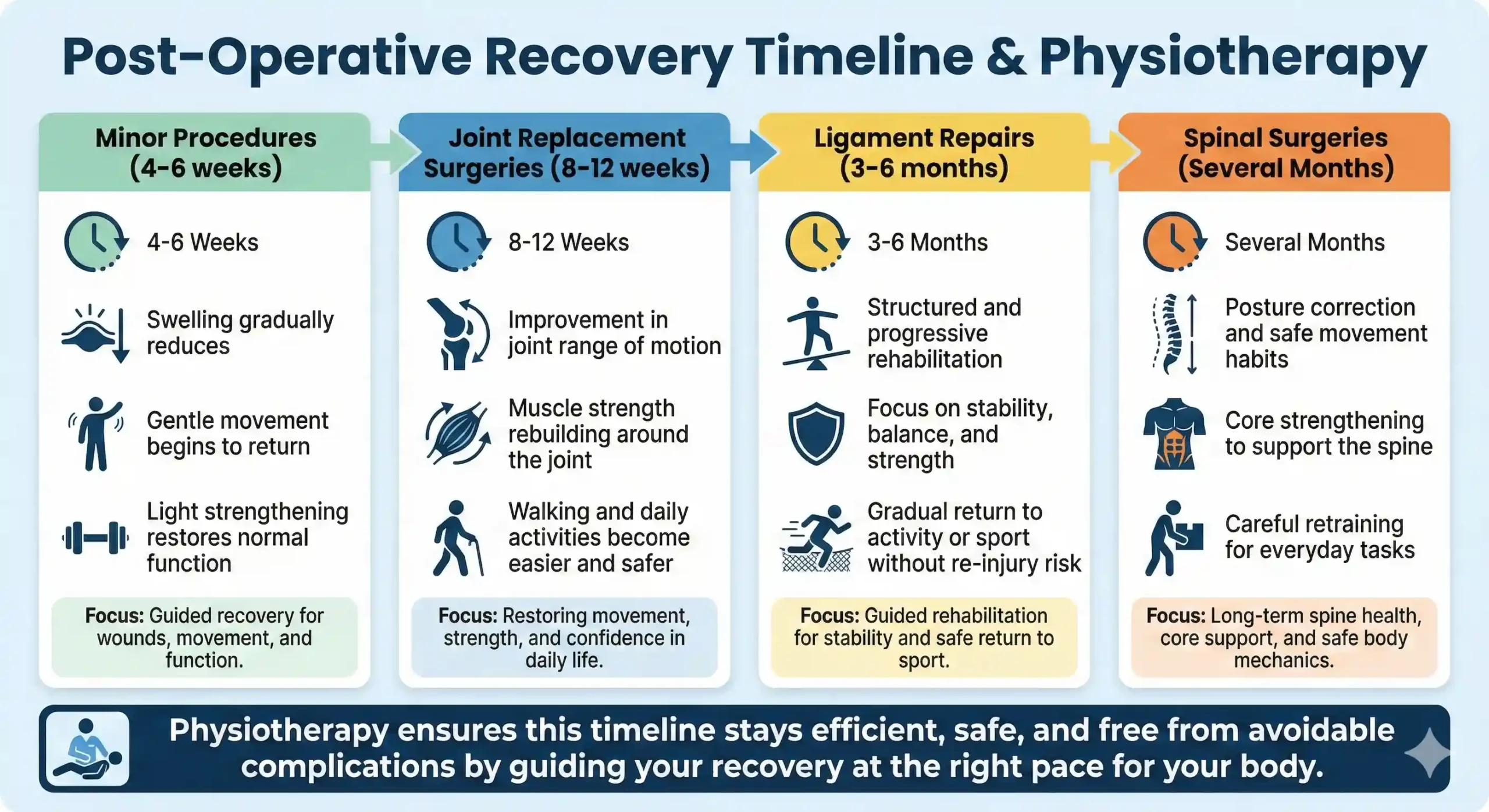
Recovery time varies based on the type of surgery, the tissues involved, and how your body heals. It is not only about waiting for wounds to close. True recovery means restoring movement, strength, and confidence through guided rehabilitation.
Minor procedures: 4 to 6 weeks
Swelling gradually reduces
Gentle movement begins to return
Light strengthening restores normal function
Joint replacement surgeries: 8 to 12 weeks
Improvement in joint range of motion
Muscle strength rebuilding around the joint
Walking and daily activities become easier and safer
Ligament repairs: 3 to 6 months
Structured and progressive rehabilitation
Focus on stability, balance, and strength
Gradual return to activity or sport without re-injury risk
Spinal surgeries: several months
Posture correction and safe movement habits
Core strengthening to support the spine
Careful retraining for everyday tasks
Physiotherapy ensures this timeline stays efficient, safe, and free from avoidable complications by guiding your recovery at the right pace for your body.

Why Choose Phoenix Physio for Post Operative Recovery
Post-surgical rehabilitation needs clinical expertise, patience, and a plan built around your specific procedure. At Phoenix Physio, treatment plans are tailored to your surgery, progression is safe and evidence-based, and the focus stays on long-term function rather than short-term relief. You are supported from the first careful movements after surgery through to full recovery, with guidance that continues until you feel confident in daily life again.
When Should You Start Physiotherapy After Surgery?
In most cases, physiotherapy should begin within a few days of surgery, unless your surgeon advises otherwise. Early, guided movement helps prevent stiffness, reduce swelling, and avoid common post-operative complications, which can significantly speed up recovery.
Book Your Post Operative Recovery Plan
The quality of your rehabilitation has a direct impact on how well and how quickly you heal. With expert physiotherapy support, you regain strength, mobility, and confidence in a structured and safe way. If you have recently had surgery or are preparing for one, booking your post-operative recovery plan early gives you the best possible outcome. Contact Phoenix Physio today to begin your recovery the right way
Conclusion
Post Operative Recovery is where real healing happens. Surgery repairs the problem. Physiotherapy restores the way your body moves, functions and feels day to day.
With the right guidance, steady progression and personalised care, you can reduce pain, rebuild strength and return to normal life with confidence. A structured recovery plan is not optional after surgery. It is what determines how well and how quickly you get back on your feet.
If you are in Aylesbury or nearby, the team at Phoenix Physio is ready to support your Post Operative Recovery journey from the first step to full function.
Frequently Asked Question
When should I start physiotherapy after surgery?
Physiotherapy often begins within a few days after surgery, unless your surgeon advises delay. Early guided movement reduces swelling, prevents stiffness, and improves circulation. Starting at the right time helps your body heal safely while laying the foundation for faster strength, mobility, and functional recovery in later stages.
Is post operative physiotherapy painful?
Post-operative physiotherapy is designed to be gentle and controlled. You may feel mild discomfort as tissues begin to move again, but treatment never pushes beyond safe limits. Sessions are adjusted to your pain tolerance to support healing without placing stress on surgical repairs or sensitive areas.
How long does post surgery physiotherapy take?
The duration depends on the type of surgery, your health, and recovery goals. Some people need a few weeks, while others may require several months. Progress is reviewed regularly so your program advances according to how your body responds to each rehabilitation stage.
Do I still need physiotherapy if I feel better?
Feeling better does not always mean full recovery. Muscles may still be weak and movement patterns altered. Physiotherapy ensures strength, balance, and joint function are fully restored, reducing the risk of future pain, stiffness, or re-injury once you return to normal activities.
What happens during post operative physiotherapy sessions?
Sessions include assessment of movement, swelling, and strength, followed by hands-on therapy and guided exercises. You receive clear home exercise instructions to continue progress between visits. Each session builds on the last, ensuring recovery stays safe, structured, and aligned with healing timelines.
Can physiotherapy prevent complications after surgery?
Yes. Physiotherapy helps prevent joint stiffness, muscle wasting, scar tissue tightness, and poor movement habits. Early and structured rehabilitation improves circulation, flexibility, and strength, supporting smoother healing and lowering the chances of long-term mobility limitations or avoidable setbacks.