Introduction
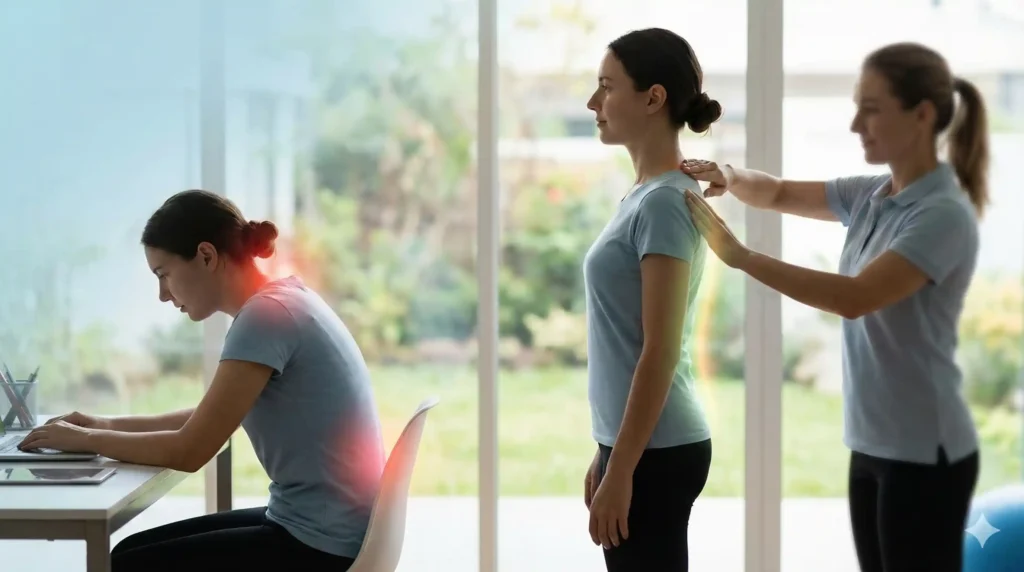
Postural dysfunction is one of the most common yet overlooked causes of chronic back pain, neck stiffness, headaches, and discomfort while sitting or sleeping. Many people assume posture problems are cosmetic. In reality, poor posture places constant strain on muscles, joints, and nerves, leading to pain that often worsens over time.
At Phoenix Physio, we regularly see patients who have tried posture correctors, chairs, pillows, or exercises found online, only to feel temporary relief or no improvement at all. The missing piece is usually understanding why postural dysfunction happens and how to correct it properly through structured physiotherapy.
This guide explains postural dysfunction in plain language. You’ll learn the causes, symptoms, long-term effects, and most importantly, how physiotherapy helps correct posture safely and permanently.
What Is Postural Dysfunction?
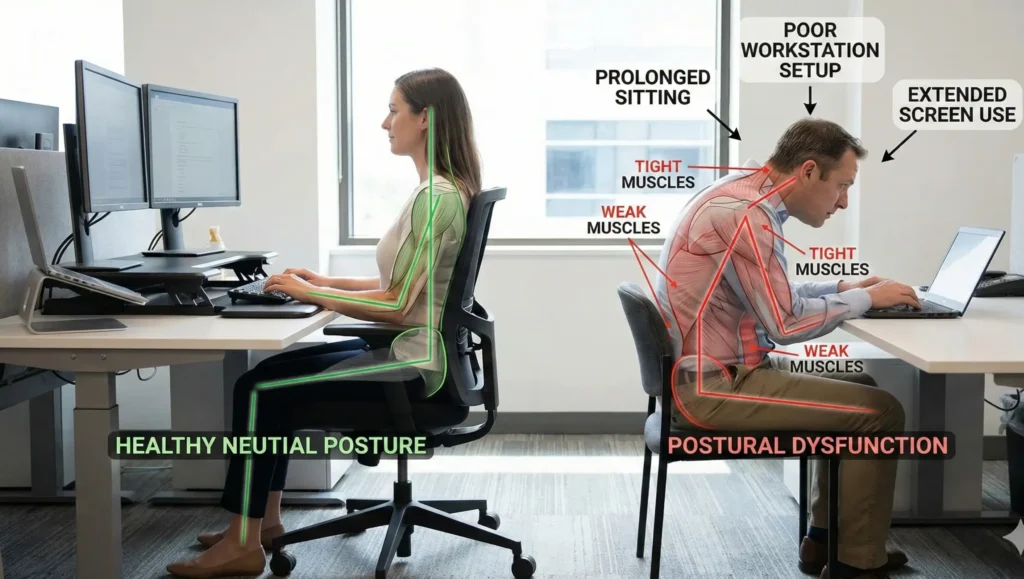
Postural dysfunction is a condition that develops when the body is held in poor alignment for long periods of time. Instead of maintaining a neutral posture, the head, shoulders, and spine gradually shift into inefficient positions that place increased stress on muscles and joints.
Over time, the body adapts to these faulty postures. Some muscles become tight and overactive, while others weaken and stop providing proper support to the spine. This muscle imbalance reduces stability, limits joint mobility, and alters normal movement patterns.
As a result, postural dysfunction increases strain on the neck, shoulders, upper back, and lower back, often leading to pain, stiffness, and fatigue. It does not happen suddenly but develops gradually through everyday habits such as prolonged sitting, extended screen use, poor workstation setup, repetitive tasks, and lack of regular movement.
Common Signs and Symptoms of Postural Dysfunction
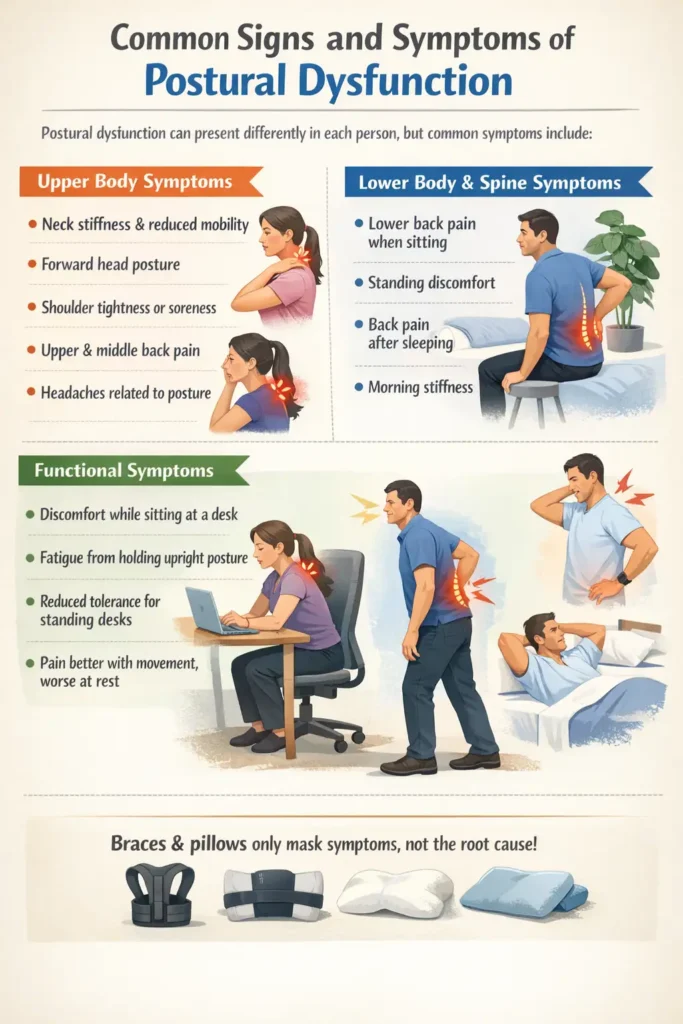
Postural dysfunction can present differently in each person, but common symptoms include:
Upper Body Symptoms
Neck stiffness and reduced mobility
Forward head posture
Shoulder tightness or soreness
Upper and middle back pain
Headaches related to posture
Lower Body and Spine Symptoms
Lower back pain when sitting
Discomfort while standing for long periods
Back pain after sleeping
Feeling stiff when getting up in the morning
Functional Symptoms
Discomfort while sitting at a desk
Fatigue from holding upright posture
Reduced tolerance for standing desks
Pain that improves with movement but returns at rest
Many people search online for solutions like back brace for bad back, back ache pillow, or pillow underneath back, but these only mask symptoms rather than addressing the root cause.
| Symptom Category | Common Symptoms | What Patients Commonly Notice | Underlying Postural Cause | Physiotherapy Treatment Focus | Expected Outcome |
|---|---|---|---|---|---|
| Upper Body | Neck stiffness and reduced mobility | Difficulty turning the head, tight neck after screen use | Forward head posture, cervical muscle overload | Cervical mobility work, postural re-education | Improved neck movement and reduced stiffness |
| Forward head posture | Head drifting forward when sitting or standing | Weak deep neck flexors, poor ergonomic habits | Postural correction, deep neck strengthening | Better head alignment and reduced strain | |
| Shoulder tightness or soreness | Heavy or aching shoulders by evening | Rounded shoulders, muscle imbalance | Scapular stabilisation, shoulder mobility | Reduced shoulder tension and improved posture | |
| Upper and middle back pain | Burning or dull ache between shoulder blades | Thoracic stiffness from prolonged sitting | Thoracic mobility and strengthening exercises | Improved spinal movement and comfort | |
| Posture-related headaches | Headaches after desk work or phone use | Cervical tension and reduced upper spine mobility | Manual therapy, posture correction | Fewer and less intense headaches | |
| Lower Body & Spine | Lower back pain when sitting | Pain builds during prolonged sitting | Slouched posture, reduced lumbar support | Lumbar stabilisation, movement retraining | Reduced sitting-related back pain |
| Discomfort when standing long periods | Back or hip fatigue when standing still | Poor load distribution through spine and pelvis | Postural endurance training | Improved standing tolerance | |
| Back pain after sleeping | Waking with stiffness or soreness | Accumulated postural stress during the day | Mobility work, recovery-based exercises | Easier mornings with less pain | |
| Morning stiffness | Feeling rigid when getting up | Reduced joint mobility after inactivity | Joint mobilisation, movement routines | Faster return to normal movement | |
| Functional Impact | Desk-related discomfort | Pain increases during work hours | Static posture without movement breaks | Ergonomic advice, posture breaks | Better comfort during desk work |
| Fatigue holding upright posture | Feeling exhausted trying to sit straight | Weak postural muscles | Strengthening postural stabilisers | Less effort to maintain good posture | |
| Poor tolerance to standing desks | Pain despite changing work setup | Posture not corrected, only position changed | Postural correction across positions | Improved tolerance in sitting and standing | |
| Pain improves with movement, returns at rest | Relief during activity but stiffness later | Mechanical and postural dysfunction | Movement-based rehabilitation programme | Long-term symptom reduction |
What Causes Postural Dysfunction?
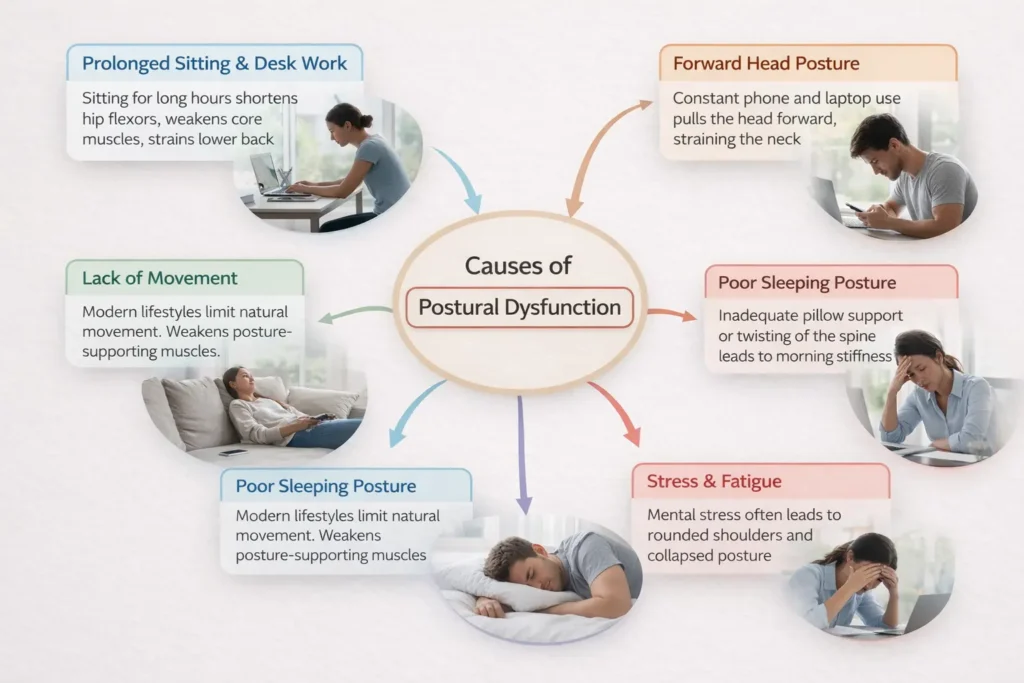
Postural dysfunction is usually the result of habitual stress, not injury. Common causes include:
Prolonged Sitting and Desk Work
Sitting for long hours shortens hip flexors, weakens core muscles, and increases strain on the lower back. Poor chair back support and slouched posture accelerate this process.
Forward Head Posture
Constant phone and laptop use pulls the head forward. For every inch the head moves forward, the load on the neck increases significantly, contributing to neck pain and headaches.
Poor Sleeping Posture
Inadequate pillow support or sleeping positions that twist the spine can lead to back pain after sleeping and morning stiffness.
Lack of Movement
Modern lifestyles limit natural movement. Without regular mobility and strengthening, posture-supporting muscles weaken.
Stress and Fatigue
Mental stress often shows up physically as rounded shoulders, shallow breathing, and collapsed posture.
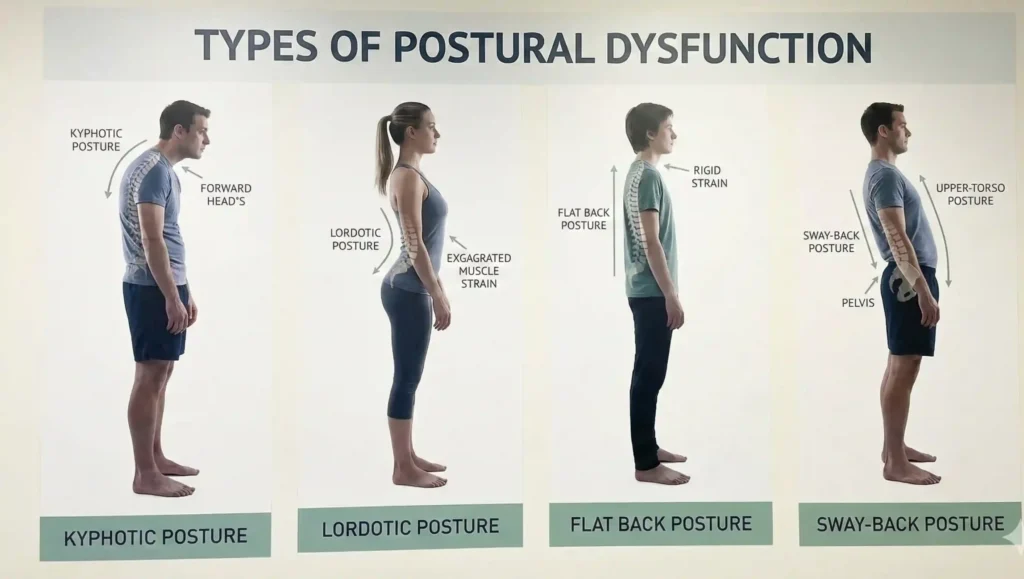
Types of Postural Dysfunction
Postural dysfunction does not look the same in everyone. Physiotherapists assess posture patterns to understand how the spine, shoulders, and pelvis are positioned at rest and during movement. Below are the most commonly identified types of postural dysfunction and how they affect the body.
Kyphotic Posture
Kyphotic posture is marked by an exaggerated rounding of the upper back, often combined with a forward head position and rounded shoulders. This posture places continuous strain on the neck, upper back, and shoulder muscles. People with kyphotic posture frequently experience neck stiffness, shoulder tightness, upper back pain, and posture-related headaches. Long hours of desk work, phone use, and poor sitting habits commonly contribute to this pattern.
Lordotic Posture
Lordotic posture involves an excessive inward curve of the lower back. It is often linked to prolonged sitting, reduced core strength, and tight hip flexor muscles. This posture increases pressure on the lower spine and can lead to ongoing lower back pain, muscle fatigue, and discomfort during standing or walking. Without correction, lordotic posture may also affect balance and load distribution through the hips and knees.
Flat Back Posture
Flat back posture occurs when the natural curves of the spine are reduced, causing the back to appear straight and rigid. This limits the spine’s ability to absorb shock during everyday movements such as walking or bending. People with flat back posture often report stiffness, early fatigue, and difficulty maintaining upright posture for long periods. Movement can feel restricted, and simple activities may require extra effort.
Sway-Back Posture
Sway-back posture is characterised by the pelvis shifting forward while the upper body leans slightly backward. This places increased strain on the hips, lower back, and spinal ligaments. Over time, this posture can lead to lower back discomfort, hip pain, and reduced stability during standing and walking. It is commonly seen in people who stand for long periods without adequate muscular support.
Can Poor Posture Cause Headaches?
Yes. Poor posture is a well-documented cause of tension-type headaches.
Forward head posture and rounded shoulders overload the neck muscles, especially those attaching to the base of the skull. Over time, this leads to muscle fatigue, reduced blood flow, and nerve irritation, which can trigger recurring headaches.
Treating posture often reduces headache frequency without medication.
Untreated Postural Dysfunction: Long-Term Effects
Ignoring postural dysfunction does more than cause occasional discomfort. When poor posture is left untreated, it gradually alters how muscles, joints, and the nervous system work together, leading to long-term physical strain.
Over time, this can result in:
Chronic neck and back pain
Reduced spinal mobility and stiffness
Gradual joint degeneration
Muscle imbalances that increase the risk of injury
Poor breathing mechanics due to restricted rib movement
Reduced work productivity and disrupted sleep quality
This is why early intervention with physiotherapy is far more effective than relying on braces or passive supports alone.
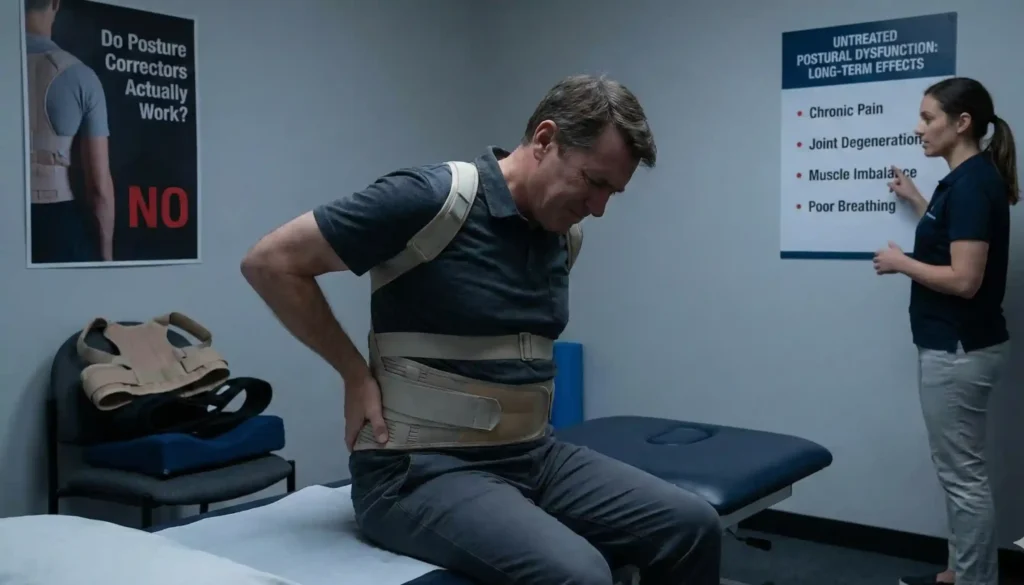
Do Posture Correctors Actually Work?
Posture correctors, back braces, and chair supports can be useful for short-term posture awareness, but they do not correct postural dysfunction on their own.
When relied on for long periods, external supports can actually weaken posture-stabilising muscles, making the underlying problem worse. Sustainable posture correction requires:
Muscle retraining
Restoration of joint mobility
Habit and movement pattern changes
Gradual, targeted strengthening
Physiotherapy focuses on rebuilding internal support so your body can maintain proper posture naturally, without dependence on braces or devices.
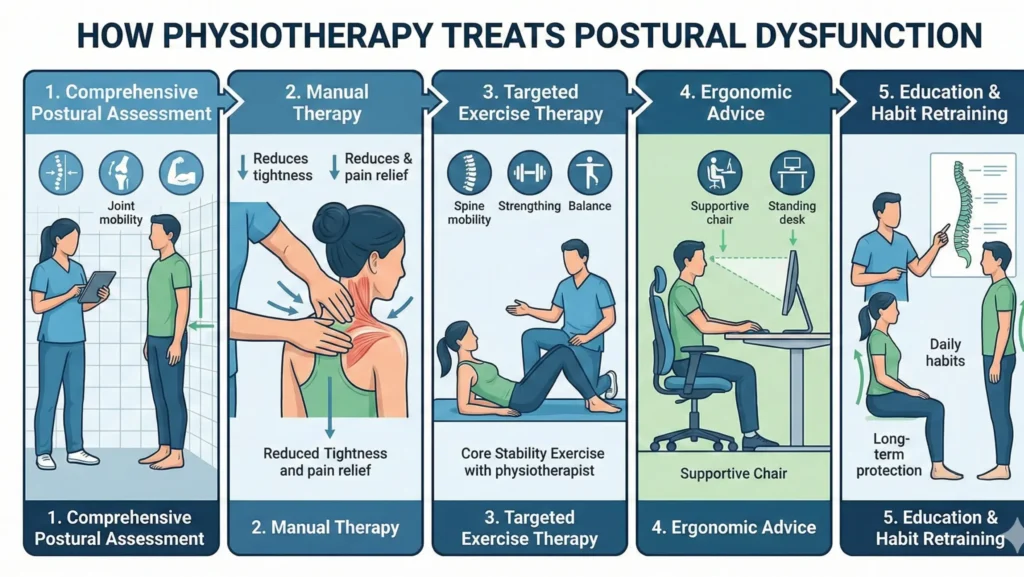
How Physiotherapy Treats Postural Dysfunction
Physiotherapy is the most effective treatment for postural dysfunction because it addresses both structure and movement.
At Phoenix Physio, postural correction programs are personalised and progressive.
Comprehensive Postural Assessment
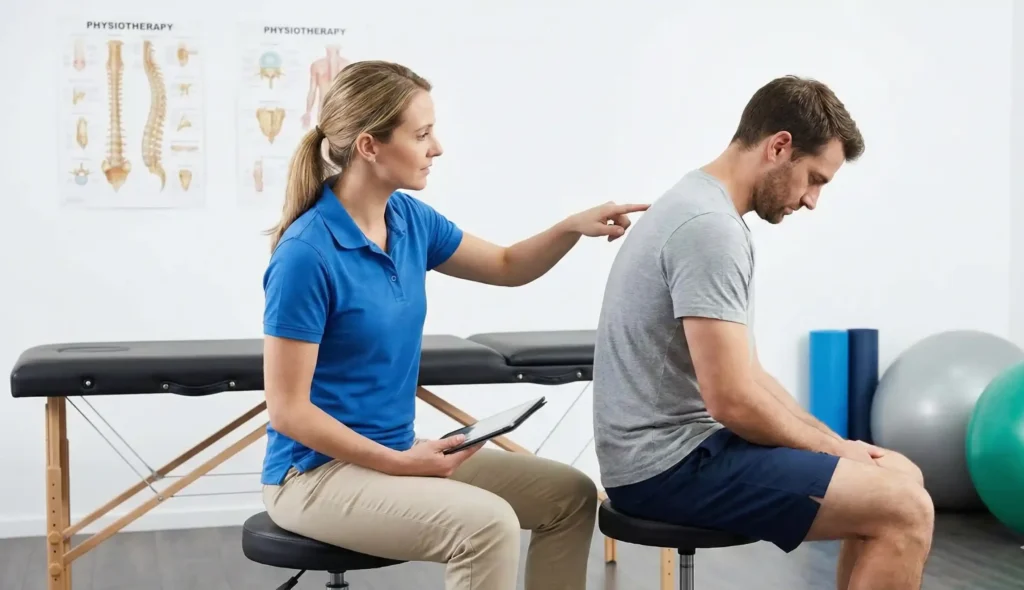
A physiotherapist assesses spinal alignment, joint mobility, muscle strength, workstation habits, and daily activities.
Manual Therapy
Hands-on techniques reduce muscle tightness, improve joint movement, and relieve pain.
Targeted Exercise Therapy
Specific exercises restore balance between tight and weak muscles. These include:
Spine mobility exercises
Neck and shoulder strengthening
Core stability training
Posture correction exercises
Ergonomic Advice
Guidance on chair back support, desk height, standing desk posture, and screen positioning to reduce daily strain.
Education and Habit Retraining
Patients learn how to sit, stand, walk, and sleep in ways that protect their spines long-term.
Exercises for Better Posture
While exercises should always be tailored, common components include:
Spine Mobility Exercises
Improve flexibility and reduce stiffness in the thoracic and lumbar spine.
Neck and Upper Back Strengthening
Helps correct forward head posture and reduce neck pain.
Core Stability Exercises
Provide a stable base for the spine during sitting and standing.
Shoulder Control Exercises
Reduce rounded shoulders and shoulder blade discomfort.
Consistency matters more than intensity. Poorly chosen or rushed exercises can worsen symptoms.
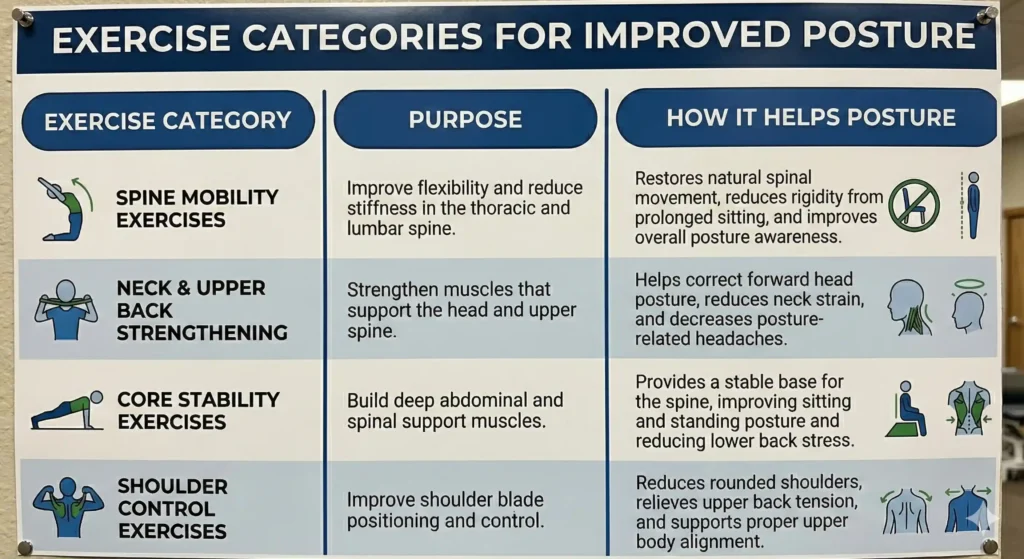
| Exercise Category | Purpose | How It Helps Posture |
|---|---|---|
| Spine Mobility Exercises | Improve flexibility and reduce stiffness in the thoracic and lumbar spine | Restores natural spinal movement, reduces rigidity from prolonged sitting, and improves overall posture awareness |
| Neck and Upper Back Strengthening | Strengthen muscles that support the head and upper spine | Helps correct forward head posture, reduces neck strain, and decreases posture-related headaches |
| Core Stability Exercises | Build deep abdominal and spinal support muscles | Provides a stable base for the spine, improving sitting and standing posture and reducing lower back stress |
| Shoulder Control Exercises | Improve shoulder blade positioning and control | Reduces rounded shoulders, relieves upper back tension, and supports proper upper body alignment |
Postural Dysfunction and Workstation Setup
Sitting Posture
-
Feet flat on the floor
-
Hips slightly higher than knees
-
Back supported without slouching
-
Screen at eye level
Standing Desk Posture
Standing desks are helpful only when used correctly. Poor standing posture can be just as damaging as poor sitting posture.
Alternate between sitting and standing, and maintain neutral spine alignment.
How Long Does It Take to Correct Postural Dysfunction?
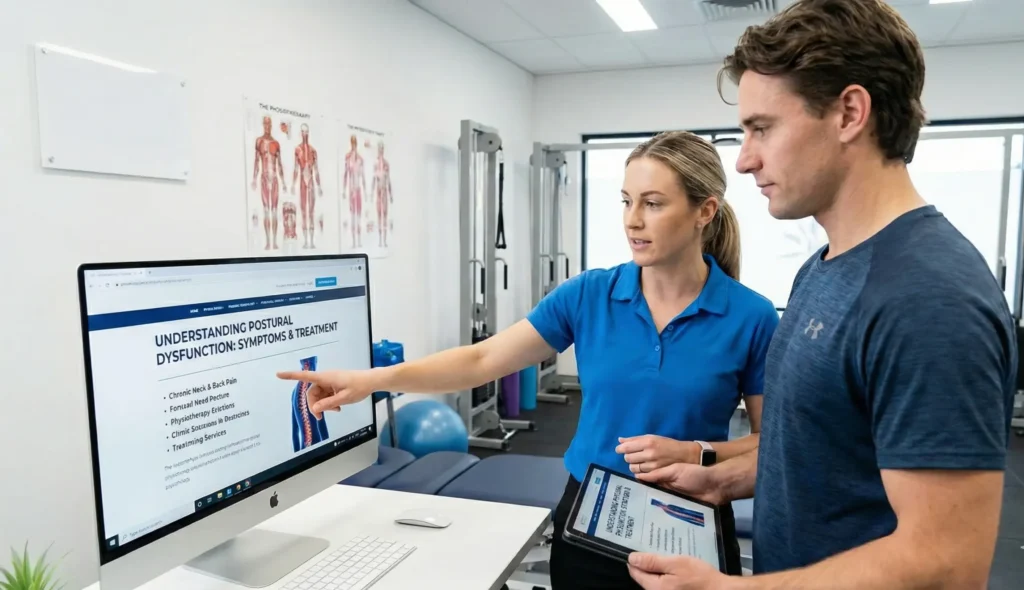
Correcting postural dysfunction is a gradual process, not a quick fix. The recovery timeline depends on factors such as how long the posture problem has been present, the severity of muscle imbalances, age, and daily lifestyle habits like desk work or physical activity levels.
Typical Recovery Timelines for Postural Dysfunction
Mild postural issues: Improvement often begins within 4 to 6 weeks with targeted exercises and posture awareness
Moderate postural dysfunction: Usually requires 8 to 12 weeks of structured physiotherapy and movement retraining
Long-standing postural pain: May take several months, particularly when poor posture has developed over years
Physiotherapy helps accelerate recovery by ensuring posture correction exercises are performed safely, progressively, and with proper technique. This reduces flare-ups and prevents compensatory movement patterns that can delay progress.
Expert Insight on Posture Correction
“Postural dysfunction improves most effectively when treatment focuses on restoring natural movement and muscle balance, rather than forcing the body into rigid positions. With guided physiotherapy and consistent habits, long-term correction is achievable.”
Senior Musculoskeletal Physiotherapist
Can Postural Dysfunction Be Fixed, and When Should You Seek Help?
Yes, postural dysfunction can be corrected long term with the right approach and consistency.
Posture correction is not about forcing yourself to sit or stand stiffly upright. That often creates more tension and fatigue. Effective posture correction focuses on restoring natural spinal alignment, improving muscle strength, and retraining movement patterns so good posture becomes effortless in daily life.
Patients who complete physiotherapy and maintain healthy movement habits typically experience lasting improvement. Once the body relearns efficient movement and balance, posture is maintained with far less conscious effort, reducing the risk of symptoms returning.
When Should You See a Physiotherapist for Postural Dysfunction?
Seeking professional help early can prevent minor postural issues from turning into long-term pain. A physiotherapy assessment is recommended if you experience:
Persistent neck, upper back, or lower back pain
Discomfort while sitting at a desk or standing for long periods
Headaches linked to posture or screen use
Pain that improves with movement but returns during rest
Stiffness that interferes with daily activities or sleep
Early assessment allows underlying movement restrictions and muscle imbalances to be addressed before they lead to chronic pain or recurring flare-ups.
Why Choose Phoenix Physio for Postural Dysfunction Treatment and Assessment?
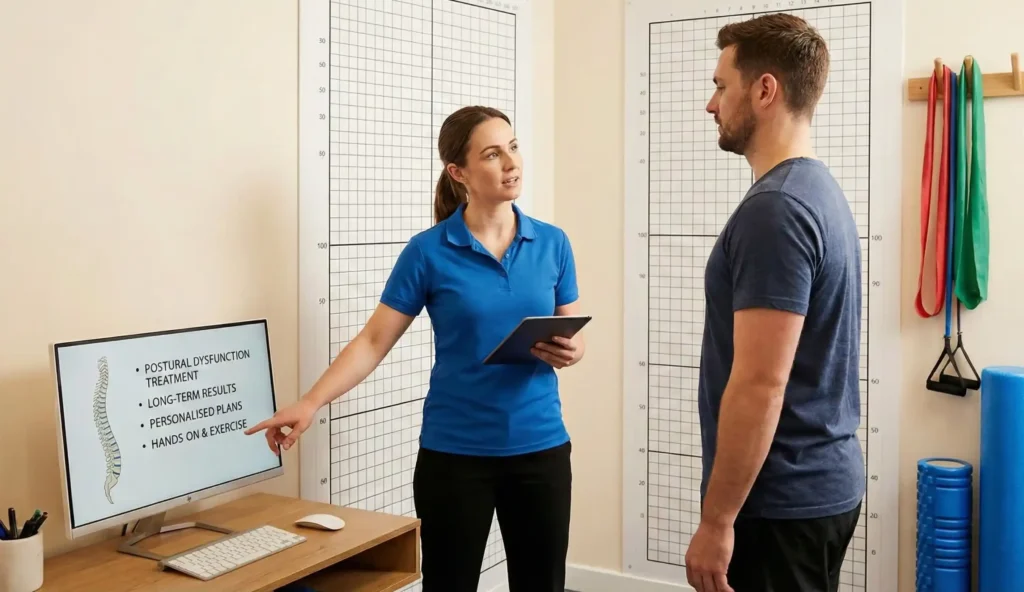
Phoenix Physio delivers expert, evidence-based physiotherapy with a clear focus on long-term results, not temporary relief. Treatment is tailored, realistic, and designed to restore function so posture improves naturally over time.
Experienced physiotherapists with a clinical, movement-first approach
Personalised posture correction plans based on individual assessment
Hands-on treatment combined with targeted exercise therapy
Clear education and practical advice you can use daily
Support for desk workers, active individuals, and older adults
Postural dysfunction rarely fixes itself. The longer it is ignored, the more ingrained movement patterns become and the harder they are to reverse.
If you are dealing with poor posture, back pain, neck stiffness, or discomfort while sitting or standing, a physiotherapy assessment can identify the root cause and start the right treatment early.
👉 Book your postural dysfunction physiotherapy assessment at Phoenix Physio today and take the first step toward pain-free, confident movement.
Conclusion: Fixing Postural Dysfunction the Right Way
Postural dysfunction is not just about standing up straight. It is a gradual breakdown of how your body supports and moves itself, often driven by long hours of sitting, poor workstation habits, and reduced movement. Left untreated, it can lead to ongoing neck and back pain, headaches, stiffness, and reduced quality of life.
While posture correctors and online exercises may offer short-term awareness, they do not address the underlying muscle imbalances and movement patterns that cause postural dysfunction. Physiotherapy takes a different approach. Through proper assessment, evidence-based treatment, and guided exercise, physiotherapy helps restore natural posture, improve movement, and reduce pain safely and sustainably.
If you are experiencing posture-related pain or discomfort in Aylesbury, UK, an assessment with a qualified physiotherapist can help identify the cause and create a clear plan for long-term improvement. Early intervention not only relieves symptoms but also helps prevent future problems, allowing you to move, work, and live more comfortably.
Frequently Asked Questions
What is postural dysfunction physiotherapy near Aylesbury, UK?
Postural dysfunction physiotherapy near Aylesbury, UK, involves a full clinical assessment by a qualified physiotherapist to identify muscle imbalances, joint restrictions, and movement habits causing poor posture. Treatment is based on evidence-led techniques, including manual therapy, targeted exercises, and posture retraining tailored to each patient’s daily activities and work demands.
Can poor posture cause back pain?
Yes. Poor posture and back pain are two of the most common issues treated by physiotherapists near Aylesbury, UK. Clinical experience shows that prolonged sitting, slouched posture, and reduced spinal movement increase stress on muscles and joints, leading to persistent pain if not addressed with proper rehabilitation.
What are the best posture correction exercises?
There is no single set of posture correction exercises that works for everyone. In clinical practice, physiotherapists near Aylesbury, UK, prescribe exercises based on individual posture type, pain levels, and mobility. These commonly include spine mobility exercises, deep neck strengthening, shoulder stability work, and core control training.
How do I get an assessment in the UK?
You can book a postural assessment directly with a registered physiotherapist in the UK. You do not need a GP referral. Many clinics offer direct access appointments where posture, movement, and muscle balance are assessed in one session.
Can postural dysfunction be permanently corrected?
Yes. Postural dysfunction can be permanently corrected when treated with physiotherapy that focuses on muscle retraining, joint mobility, and long-term habit change. Clinical experience shows that patients who complete a structured physiotherapy programme and maintain good movement habits achieve lasting posture improvement.
Is physiotherapy better than posture correctors for poor posture?
Yes. Physiotherapy is more effective than posture correctors because it treats the root cause of poor posture. While braces may offer short-term awareness, physiotherapy strengthens postural muscles, restores spinal movement, and prevents dependency on external supports.
Do I need a referral to see a physiotherapist for postural dysfunction near Aylesbury, UK?
No. Near Aylesbury, UK, you can self-refer to an HCPC-registered physiotherapist for postural dysfunction. A qualified physiotherapist can assess your posture, identify contributing factors, and create an evidence-based treatment plan without the need for a GP referral.
What is the 90-90-90 sitting rule?
It refers to keeping three parts of your body at 90-degree angles while seated: Hips at a 90° angle to your torso. Knees bent at a 90° angle with your feet flat on the floor. Elbows resting at a 90° angle while using your keyboard or mouse.