
Introduction
Tendon pain is one of the most common musculoskeletal problems affecting people in the UK. Pain in the heel, knee, shoulder, or wrist often begins gradually and worsens over time, especially when the tendon continues to be overloaded. Many patients searching for physiotherapy near Aylesbury initially assume their pain is simple inflammation. However, long-lasting tendon pain is often caused by tendinosis, a degenerative tendon condition that requires structured rehabilitation rather than just rest.
At Phoenix Physio near Aylesbury, physiotherapists frequently treat tendon injuries caused by sports activity, repetitive work movements, or muscle imbalances. Physiotherapy focuses on identifying the root cause of tendon overload and gradually rebuilding tendon strength so patients can return to normal activities without recurring pain.
This guide explains what tendinosis is, why tendon pain develops, how long recovery typically takes, and how physiotherapy helps people near Aylesbury and across Buckinghamshire recover from tendon injuries.
What Is Tendinosis?
Tendinosis is a chronic tendon condition caused by degeneration of tendon fibres due to repeated overuse. Tendons connect muscles to bones and help transfer force during movement such as walking, lifting, or running.
When tendons are repeatedly overloaded without adequate recovery, tiny micro-tears form within the tendon tissue. Normally, the body repairs these small injuries, but if stress continues, the tendon begins to weaken. Over time structural changes occur inside the tendon including:
disorganised collagen fibres
thickened tendon tissue
reduced elasticity
reduced tolerance to load
Unlike acute tendon inflammation, tendinosis is primarily a degenerative process rather than an inflammatory one. This is why treatments based purely on rest or anti-inflammatory medication rarely resolve the condition completely.
Research in sports medicine shows that the most effective treatment for chronic tendon degeneration is progressive loading exercises combined with physiotherapy rehabilitation. This approach gradually rebuilds the tendon’s strength and improves its ability to tolerate everyday movement.
Tendinosis vs. Tendinitis
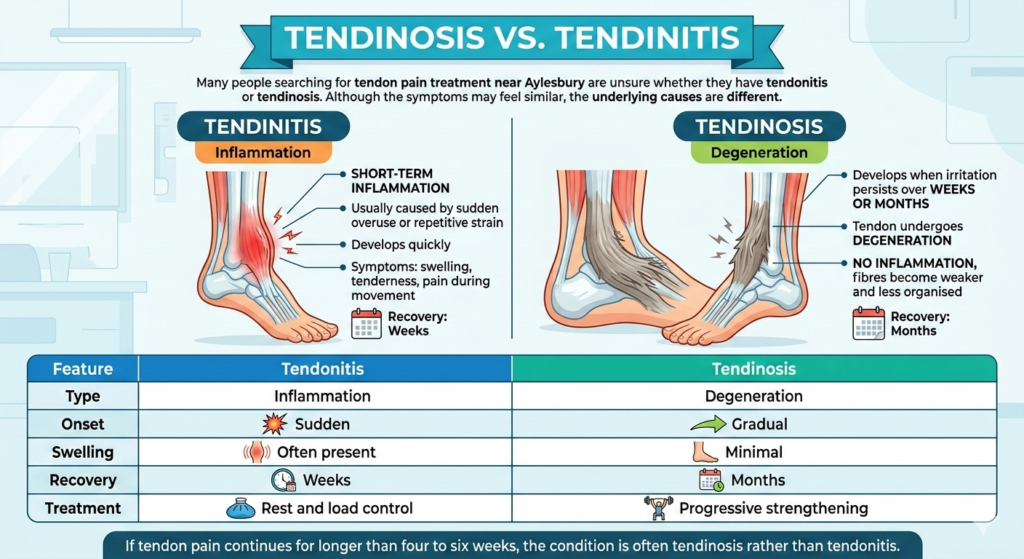
Many people searching for tendon pain treatment near Aylesbury are unsure whether they have tendonitis or tendinosis. Although the symptoms may feel similar, the underlying causes are different.
Tendonitis
Tendonitis refers to short-term inflammation of a tendon, usually caused by sudden overuse or repetitive strain. It often develops quickly and may include swelling, tenderness, and pain during movement.
With early treatment and activity modification, tendonitis can often improve within a few weeks.
Tendinosis
Tendinosis develops when tendon irritation persists over weeks or months. Instead of inflammation, the tendon undergoes degeneration, where the fibres become weaker and less organised.
Typical differences include the following:
| Feature | Tendonitis | Tendinosis |
|---|---|---|
| Type | Inflammation | Degeneration |
| Onset | Sudden | Gradual |
| Swelling | Often present | Minimal |
| Recovery | Weeks | Months |
| Treatment | Rest and load control | Progressive strengthening |
If tendon pain continues for longer than four to six weeks, the condition is often tendinosis rather than tendonitis.
Common Causes of Tendon Pain
Tendon injuries usually develop gradually due to repeated stress placed on the tendon over time. Several factors can increase the risk.
Repetitive Overuse
Sports such as running, tennis, football, and cycling involve repetitive movements that can overload tendons. Repetitive movements at work, such as typing or lifting, may also strain tendons in the wrist, elbow, or shoulder.
Sudden Increase in Activity
Starting a new exercise routine or increasing training intensity too quickly can place excessive stress on tendons before they adapt to the workload.
Poor Movement Mechanics
Incorrect movement patterns can overload certain tendons. For example, weak hip muscles can increase stress on the knee or Achilles tendon during running.
Muscle Imbalances
When certain muscles are weak or inactive, nearby tendons must compensate during movement. Over time, this can increase strain on tendon tissue.
Age-Related Tendon Changes
Tendons naturally lose elasticity with age. Reduced blood supply also slows the body’s ability to repair micro-injuries, making tendon problems more common after age forty.
Tendon Injuries Treated at Phoenix Physio Aylesbury
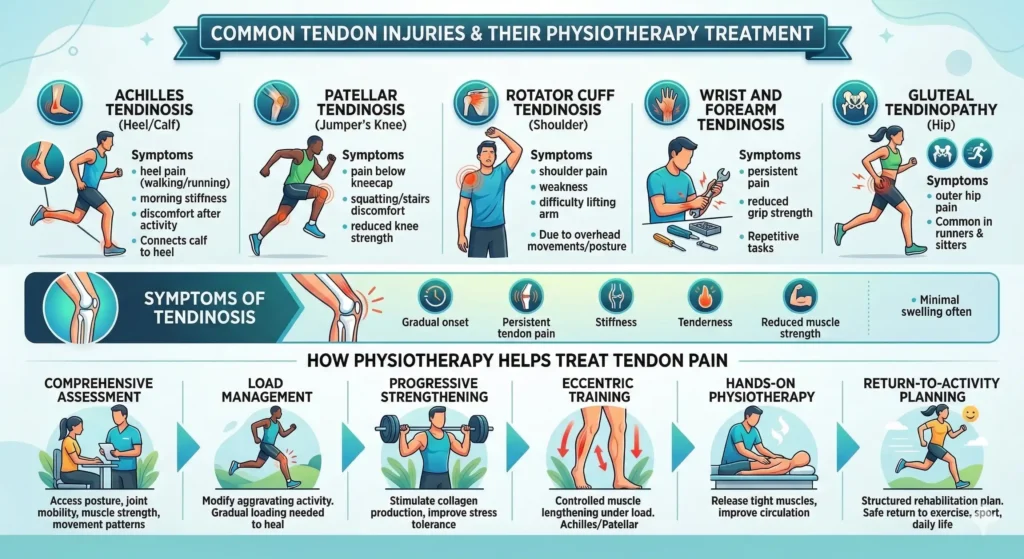
Physiotherapists frequently treat several types of tendon injuries affecting different parts of the body. Patients visiting Phoenix Physio near Aylesbury commonly present with the following conditions.
Achilles Tendinosis
The Achilles tendon connects the calf muscles to the heel bone and plays a key role in walking, running, and jumping. Overuse or sudden increases in physical activity can lead to degeneration of this tendon.
Symptoms may include:
heel pain during walking or running
stiffness in the morning
discomfort after activity
Patellar Tendinosis (Jumper’s Knee)
This condition affects the tendon connecting the kneecap to the shinbone. It commonly occurs in athletes who perform jumping or running activities.
Typical symptoms include the following:
pain below the kneecap
discomfort when squatting or climbing stairs
reduced knee strength
Rotator Cuff Tendinosis
The rotator cuff tendons stabilise the shoulder joint. Repetitive overhead movements or poor posture can gradually damage these tendons.
Symptoms may include shoulder pain, weakness, and difficulty lifting the arm.
Wrist and Forearm Tendinosis
Repetitive tasks such as typing, gripping tools, or lifting can strain tendons in the wrist and forearm, causing persistent pain and reduced grip strength.
Gluteal Tendinopathy
This condition affects the tendons around the hip and is common in runners and people who sit for long periods. Pain is usually felt on the outer side of the hip.
Symptoms of Tendinosis
Tendinosis symptoms usually develop gradually over time, rather than appearing suddenly after a single injury. In many cases, the discomfort begins during physical activity and slowly becomes noticeable during everyday movements such as walking, lifting, or reaching.
Because tendinosis involves degeneration of the tendon fibres rather than inflammation, the symptoms often feel persistent and may not improve with rest alone. Many people initially ignore the early warning signs, which allows the tendon damage to progress further.
Common Symptoms of Tendinosis
Typical symptoms people experience include:
Persistent tendon pain during movement – discomfort may occur when walking, running, lifting objects, or using the affected joint
Stiffness around the affected joint – particularly noticeable in the morning or after long periods of inactivity
Tenderness when pressing on the tendon – the tendon may feel sensitive when touched or when pressure is applied
Reduced muscle strength nearby – weakness can develop in the muscles connected to the injured tendon
Pain that worsens with repeated activity – symptoms often increase during sports, exercise, or repetitive movements
Thickening of the tendon – the affected tendon may feel slightly thicker or more rigid than normal
Reduced flexibility or range of motion – movement of the joint may feel restricted due to tendon stiffness
How Tendinosis Pain Feels
People with tendinosis often describe the pain as a dull, aching sensation that gradually worsens during activity. Unlike acute tendon inflammation, the pain may reduce slightly with rest but typically returns when the tendon is used again.
In many cases, the discomfort becomes more noticeable during activities that place load on the tendon, such as:
running or jumping
climbing stairs
lifting objects
repetitive arm or wrist movements
prolonged walking
Minimal Swelling Compared to Tendonitis
One key difference between tendinosis and tendonitis is that swelling is usually minimal or absent in tendinosis. Since the condition involves tendon degeneration rather than inflammation, the affected area may feel stiff and painful but not visibly swollen.
When to Seek Physiotherapy for Tendon Pain
If tendon pain continues for several weeks despite rest or self-care, it may indicate that the tendon has begun to degenerate. Early physiotherapy assessment can help identify the cause of the problem and prevent further tendon damage.
A physiotherapist can evaluate movement patterns, muscle strength, and joint mobility to determine why the tendon is under excessive stress. Treatment typically focuses on progressive strengthening exercises, load management, and rehabilitation techniques designed to restore tendon health and improve long-term function.
How Physiotherapy Helps Treat Tendon Pain
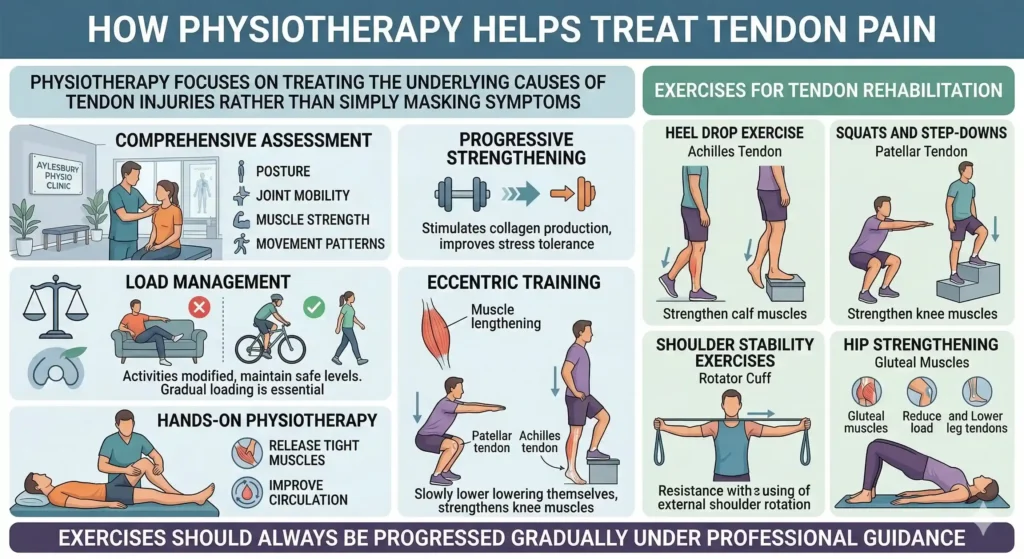
Physiotherapy focuses on treating the underlying causes of tendon injuries rather than simply masking symptoms.
At a physiotherapy clinic in Aylesbury, treatment usually begins with a comprehensive assessment followed by a structured rehabilitation program.
Physiotherapists assess posture, joint mobility, muscle strength, and movement patterns to identify factors contributing to tendon overload.
Load Management
Activities that aggravate the tendon are modified while maintaining safe levels of movement. Completely avoiding activity is rarely recommended because tendons require gradual loading to heal.
Progressive Strengthening
Strengthening exercises stimulate collagen production within the tendon and improve its ability to tolerate stress.
Eccentric Training
Eccentric exercises involve lengthening the muscle under load and are widely used for Achilles and patellar tendon rehabilitation.
Hands-On Physiotherapy
Soft tissue techniques help release tight muscles and improve circulation around the injured tendon.
Return-to-Activity Planning
A structured rehabilitation plan allows patients to safely return to exercise, sport, or daily activities without triggering another injury.
| Physiotherapy Approach | What It Involves | How It Helps Tendon Recovery |
|---|---|---|
| Movement Assessment | Physiotherapists assess posture, joint mobility, muscle strength, and movement patterns. | Physiotherapists identify the root cause of tendon overload and prevent recurring injury. |
| Load Management | Activities that aggravate the tendon are modified while maintaining safe movement. | Gradual loading encourages tendon healing without excessive strain. |
| Progressive Strengthening | Targeted strengthening exercises are introduced gradually. | This method stimulates the production of collagen and enhances the resilience of tendons. |
| Eccentric Training | Exercises that lengthen the muscle under load. | Particularly effective for Achilles and patellar tendon rehabilitation. |
| Hands-On Physiotherapy | Soft tissue therapy and manual techniques are employed in this process. | Helps release tight muscles and improve blood circulation around the tendon. |
| Return-to-Activity Planning | It provides a methodical strategy for resuming sports or daily activities. | It lowers the likelihood of re-injury and promotes long-term recovery. |
Can Tendons Heal on Their Own?
Some mild tendon injuries may improve with reduced activity and proper recovery. However, many chronic tendon problems develop because the tendon never fully regains its strength.
Without appropriate rehabilitation:
Tendon degeneration may continue
Pain may return repeatedly during activity
The risk of tendon rupture increases
Physiotherapy helps guide recovery through progressive exercises and movement correction, allowing the tendon to heal safely.
Exercises for Tendon Rehabilitation
Exercise therapy is one of the most effective treatments for chronic tendon pain.
Heel Drop Exercise
Often used for Achilles tendon rehabilitation. The exercise strengthens the calf muscles and gradually increases the tendon’s ability to handle load.
Squats and Step-Downs
These exercises help strengthen the patellar tendon and surrounding muscles.
Shoulder Stability Exercises
Resistance exercises targeting the rotator cuff improve shoulder stability and reduce stress on the tendons.
Hip Strengthening
Strengthening the gluteal muscles helps reduce load on tendons in the knee and lower leg.
Exercises should always be progressed gradually under professional guidance.
How Long Does Tendon Pain Take to Heal?
Tendon recovery time varies depending on the severity of the injury and how early treatment begins.
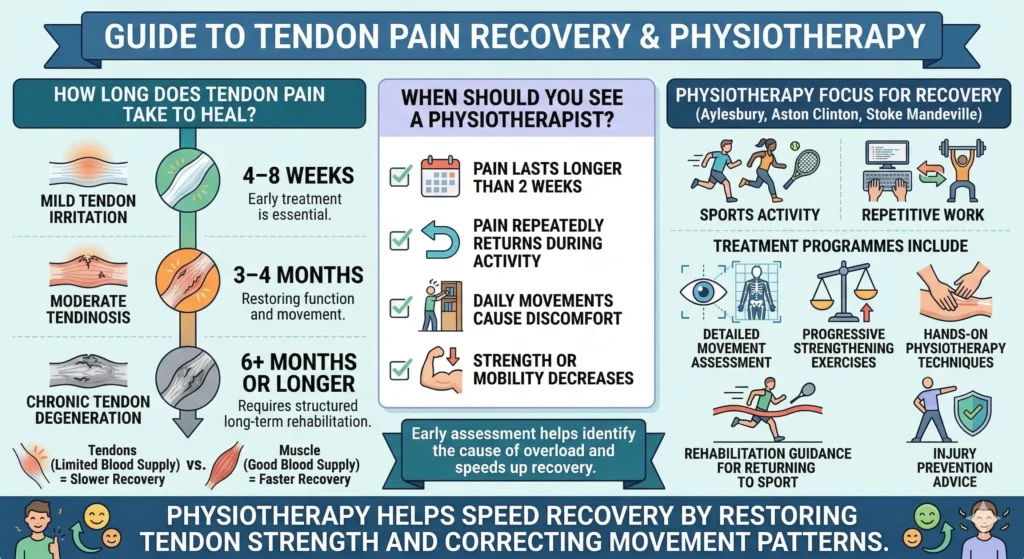
Typical recovery timelines include:
| Severity | Recovery Time |
| Mild tendon irritation | 4–8 weeks |
| Moderate tendinosis | 3–4 months |
| Chronic tendon degeneration | 6 months or longer |
Because tendons have a limited blood supply, recovery often takes longer than for muscle injuries. Physiotherapy rehabilitation helps speed recovery by restoring tendon strength and improving movement patterns.
When Should You See a Physiotherapist for Tendon Pain?
Early physiotherapy intervention can significantly reduce recovery time.
You should consider seeing a physiotherapist if:
Tendon pain lasts longer than two weeks
pain repeatedly returns during activity
Daily movements cause discomfort
strength or mobility decreases
Early assessment helps identify the cause of tendon overload before the condition becomes chronic.
Physiotherapy for Tendon Pain near Aylesbury
People living near Aylesbury and the surrounding Buckinghamshire areas, such as Aston Clinton and Stoke Mandeville, often experience tendon injuries caused by sports activities or repetitive work movements.
Physiotherapy focuses on restoring tendon strength and correcting movement patterns that contribute to injury.
Treatment programmes may include:
detailed movement assessment
progressive strengthening exercises
hands-on physiotherapy techniques
rehabilitation guidance for returning to sport
injury prevention advice
This structured approach allows tendons to regain strength gradually while reducing the risk of further injury.
Why Early Tendon Pain Treatment Matters
Many people wait too long before seeking help for tendon pain. In the early stages, the discomfort may seem mild and only appear during exercise or repetitive activity. Because of this, people often continue running, working, lifting, or training through the pain, hoping it will settle on its own. Unfortunately, this often allows the tendon to become more irritated and less able to cope with normal load.
Early physiotherapy treatment is important because tendon problems rarely improve fully through rest alone. When a tendon has started to degenerate, it usually needs the right combination of load management, strengthening exercises, and movement correction. Without this, the tendon may remain weak and painful for months.
Delaying treatment can also lead to compensation patterns in the body. For example, if someone has Achilles tendon pain, they may begin to walk differently to avoid discomfort. Over time, this can place extra stress on the knee, hip, or lower back. In the same way, shoulder tendon pain may cause a person to limit arm movement, which can lead to stiffness and reduced strength.
A physiotherapist can identify these early changes before they become bigger problems. At Phoenix Physio near Aylesbury, treatment focuses not only on the painful tendon itself but also on the surrounding joints, muscles, and movement habits that may be contributing to the issue.
Seeking help early can reduce recovery time, lower the risk of long-term tendon degeneration, and help patients return to work, exercise, and daily life more confidently. For many people, early treatment is the difference between a short rehabilitation program and a long period of ongoing pain that keeps coming back whenever activity increases.
Book Physiotherapy for Tendon Pain near Aylesbury
If you are experiencing persistent tendon pain in the heel, knee, shoulder, or wrist, a physiotherapy assessment can help identify the cause and guide recovery.
Physiotherapists at Phoenix Physio near Aylesbury provide personalised rehabilitation programmes designed to restore tendon strength, improve movement patterns, and help patients return to normal activities safely.
Early treatment often prevents tendon problems from becoming long-term conditions.
Frequently Asked Questions
How long does tendon pain take to heal?
Recovery time depends on severity. Mild tendon irritation typically improves within four to eight weeks, while moderate tendinosis takes three to four months. Chronic tendon degeneration can require six months or longer with structured physiotherapy rehabilitation. Starting treatment early at a physiotherapy clinic in Aylesbury significantly reduces recovery time compared to waiting for symptoms to resolve on their own.
What is the difference between tendonitis and tendinosis?
Tendonitis is short-term tendon inflammation that usually resolves within a few weeks with rest and load management. Tendinosis is a longer-term degenerative condition where the tendon fibres break down structurally over time. If your tendon pain has lasted more than four to six weeks, you are likely dealing with tendinosis — which requires progressive strengthening exercises, not just rest.
Is it safe to exercise with tendon pain?
Yes — when properly guided, exercise is the most effective treatment for tendon pain. Progressive loading exercises stimulate the tendon to rebuild collagen and regain strength. Stopping all activity actually weakens the tendon further. At Phoenix Physio in Aylesbury, your physiotherapist will prescribe exercises matched precisely to your current stage of recovery so you can keep moving safely.
Why has my tendon pain not improved with rest?
Rest reduces pain temporarily but does not repair a degenerated tendon. Tendinosis involves structural changes inside the tendon tissue that only respond to controlled, progressive loading under professional guidance. If you have been resting for weeks without lasting improvement, a physiotherapy assessment in Aylesbury can identify what is needed to move your recovery forward.
Do I need a GP referral to see a physiotherapist near Aylesbury
No referral is needed. You can book directly with Phoenix Physio near Aylesbury as a self-referral. This means you do not need to wait for a GP appointment first — you can start your tendon rehabilitation as soon as your symptoms appear, which leads to faster recovery.
What happens at a physiotherapy appointment for tendon pain?
Your first appointment at Phoenix Physio in Aylesbury typically lasts 45 to 60 minutes. The physiotherapist will ask about your symptoms, activity levels, and goals, then carry out a physical assessment covering movement, strength, and tendon sensitivity. You will leave with a clear diagnosis and the first steps of your personalised rehabilitation plan — most patients start their home exercise programme on the same day.
Physiotherapist Insight
“One of the biggest misconceptions we see in the clinic is that persistent tendon pain will settle with rest alone. In reality, tendons need controlled loading and rehabilitation exercises to rebuild strength and tolerate normal movement again.”
— Senior Physiotherapist, Phoenix Physio Aylesbury