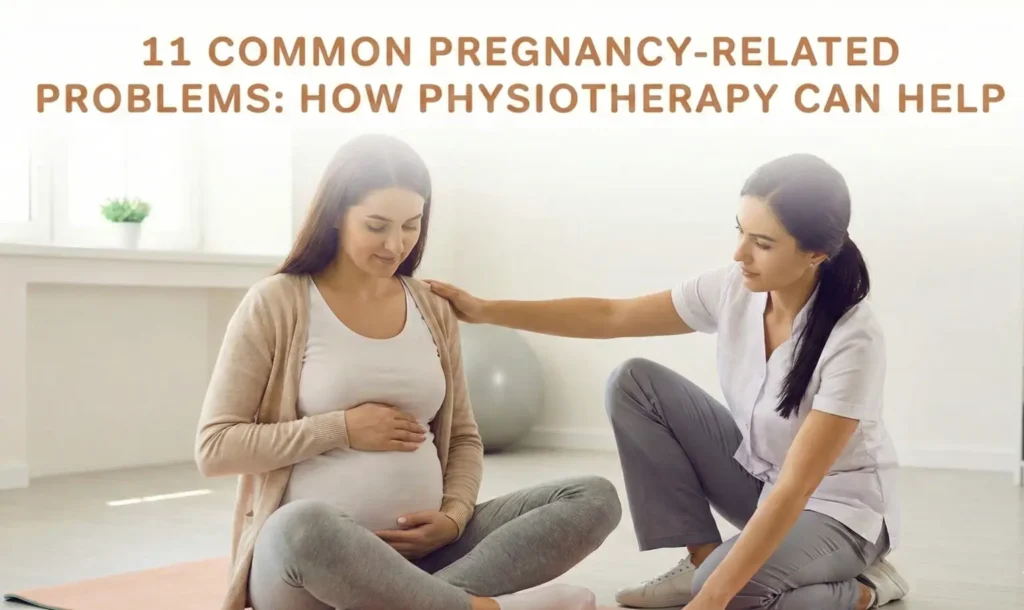
“ common Pregnancy Problems affect most women as the body adapts to rapid physical and hormonal changes.”This guide explains why these issues develop, what’s normal, what shouldn’t be ignored, and how safe physiotherapy strategies can help at every stage.
Written in plain language for women in the UK, this guide cuts through medical jargon with practical answers to real questions like:
- “How can physiotherapy ease back pain during pregnancy?”
- “What exercises are safe?”
- “When should I seek support for common pregnancy problems?”
Why Pregnancy Causes Physical Problems
Your body adapts quickly during pregnancy, but support systems often lag behind, contributing to common pregnancy problems that need timely care and proper management.
Three main factors drive most physical changes during pregnancy:
- Hormones – Relaxin loosens ligaments to prepare for birth, but it also reduces joint stability
- Posture changes – A growing bump shifts your centre of gravity and loads your spine and pelvis differently
- Muscle imbalance – Core and pelvic muscles weaken while others overwork to compensate
Pain usually develops gradually. Many women don’t realise there’s a problem until everyday tasks—walking, sleeping, turning in bed—become uncomfortable.
Understanding Pain During Pregnancy?
Discomfort can be common, but pregnancy problems and Ongoing pain is not.
Pain that:
- Worsens over time
- Affects sleep or walking
- Feels sharp, catching, or nerve-like
- Stops you from doing normal daily activities
…should always be assessed.
Physiotherapy during pregnancy is safe, widely used in the UK, and recommended for musculoskeletal problems affecting the back, pelvis, hips, and posture.

common Pregnancy Problems
1)Pelvic Girdle Pain (PGP)
Pelvic girdle pain is one of the most common pregnancy problems, affecting the joints around the pelvis, including the lower back, hips, and pubic area.
Common signs include:
- Pain when walking or climbing stairs
- Difficulty turning in bed
- Pain when standing on one leg or getting dressed
PGP is linked to reduced pelvic stability, not damage. Physiotherapy focuses on restoring control and reducing strain rather than forcing movement.
2)Lower Back Pain in Pregnancy
Lower back pain often builds up gradually as pregnancy progresses.
As posture shifts and abdominal support reduces, the lower back starts taking on more work. Simple movements like standing for long periods, walking, or getting up from a chair can become uncomfortable.
Physiotherapy looks at posture, movement habits, and muscle support. Small changes can make a noticeable difference in how the back feels during the day.
3) Rib and Upper Back Pain
As the rib cage expands, many women develop upper back or rib pain, especially later in pregnancy.
This can feel like:
- Sharp pain around the ribs
- Tightness between the shoulder blades
- Discomfort when breathing deeply or reaching
Physiotherapy treatment focuses on restoring upper back movement, improving posture, and reducing muscle overload.
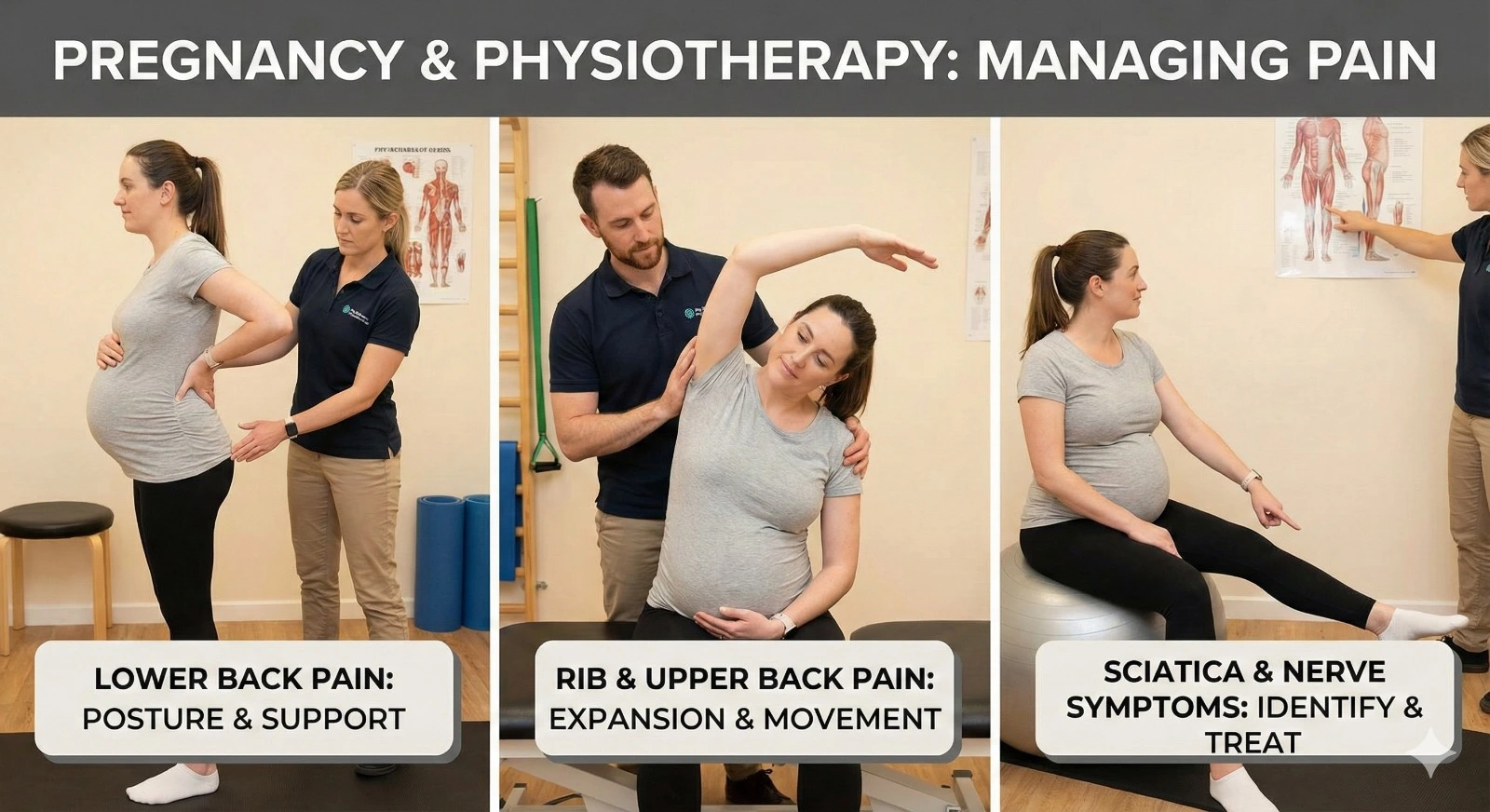
4) Sciatica and Nerve Symptoms
True sciatica is less common than nerve irritation caused by muscle tension or pelvic changes.
Symptoms may include:
- Pain running down one leg
- Tingling or numbness
- Pain that worsens with sitting
A physiotherapist identifies the cause and treats it safely, without positions or techniques that place stress on the abdomen.
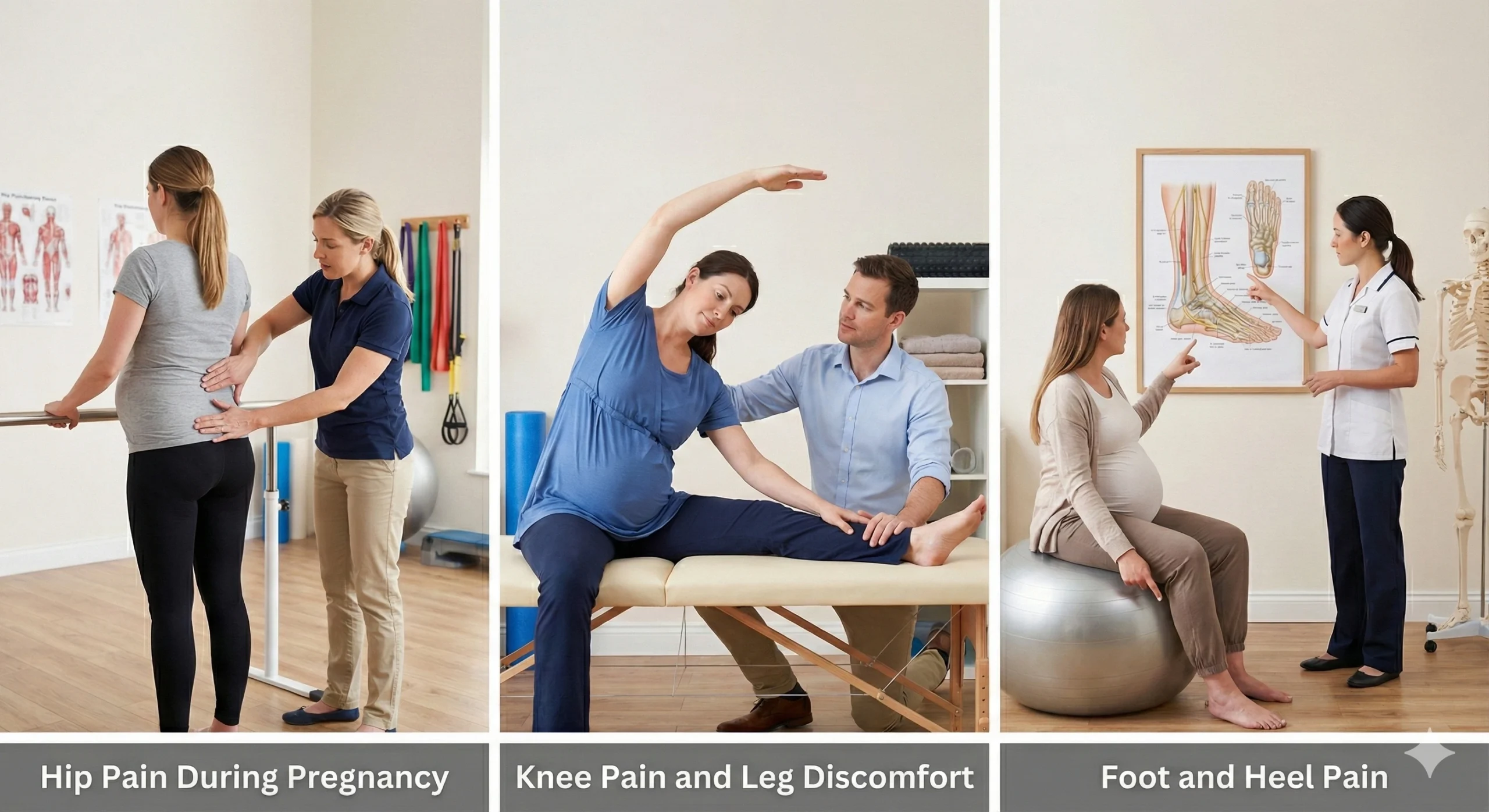
5) Hip Pain During Pregnancy
Hip pain is common as load through the pelvis increases and stability reduces.
It may be worse when side-lying at night, walking longer distances, or standing for extended periods. Physiotherapy helps balance muscle support around the hips and offers guidance on sleep positions and daily activities.
6)Knee Pain and Leg Discomfort
Weight gain and altered walking patterns can increase knee strain.
Treatment focuses on:
- Strengthening key support muscles
- Improving alignment
- Managing daily load
Early support helps prevent problems from carrying into the postnatal period.
7) Foot and Heel Pain
Hormonal changes can flatten foot arches, leading to heel or arch pain.
Physiotherapy may include:
- Foot-strengthening exercises
- Advice on footwear
- Simple load-management changes
8) Abdominal Separation (Diastasis Recti)
As the abdomen expands, separation of the abdominal muscles can occur.
Physiotherapy focuses on:
- Safe core engagement
- Breathing control
- Avoiding movements that increase strain
Early guidance reduces long-term weakness after birth.
9) Pelvic Floor Symptoms
The pelvic floor works harder throughout pregnancy.
Some women experience:
- Heaviness
- Urine leakage
- Difficulty engaging core muscles
A trained physiotherapist can assess and guide pelvic floor function safely before and after delivery.
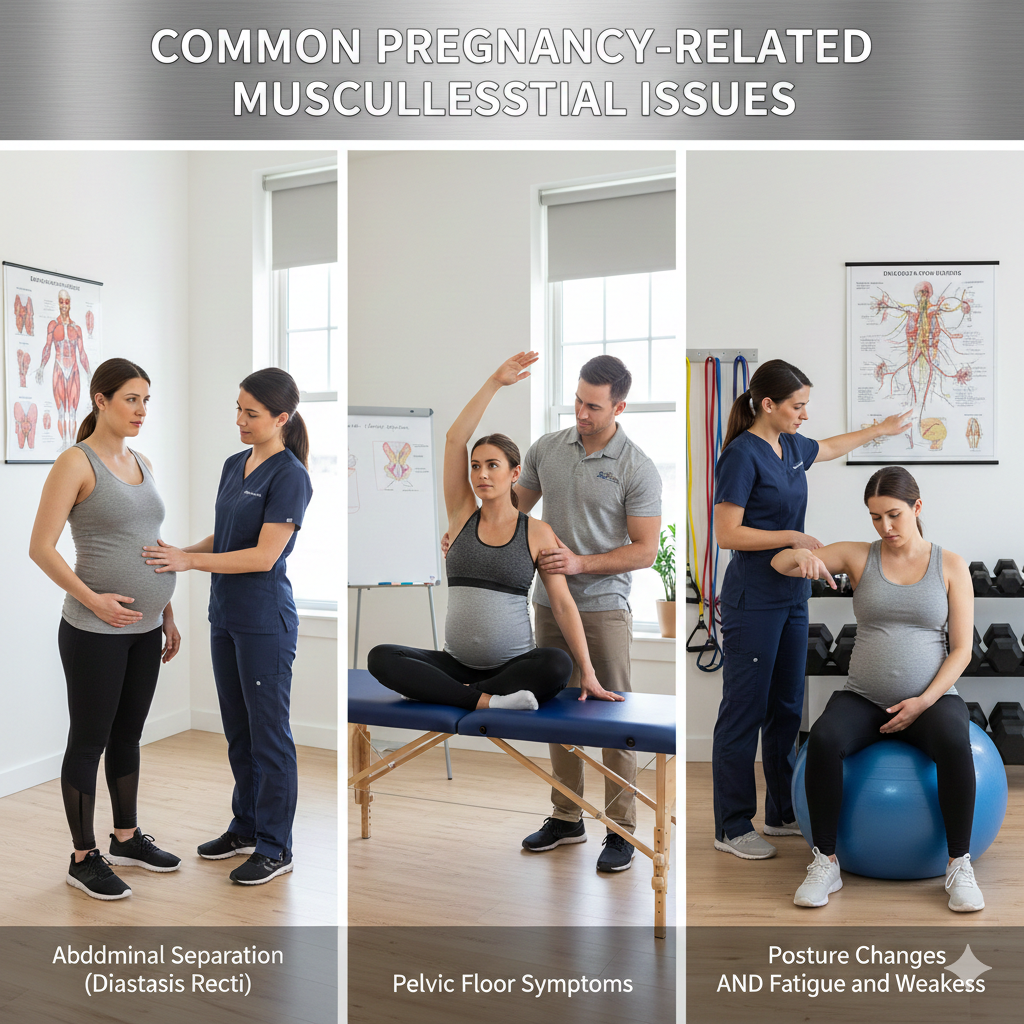
10) Posture Changes
Shifts in your centre of gravity affect spine alignment and muscle balance. Physiotherapy helps maintain posture, reduce discomfort, and prevent long-term pain.
11) Fatigue and Weakness
Ongoing tiredness is common due to increased physical demands. Physiotherapy can suggest gentle, safe exercises to improve energy and support muscles.
Benefits of Physiotherapy During Pregnancy
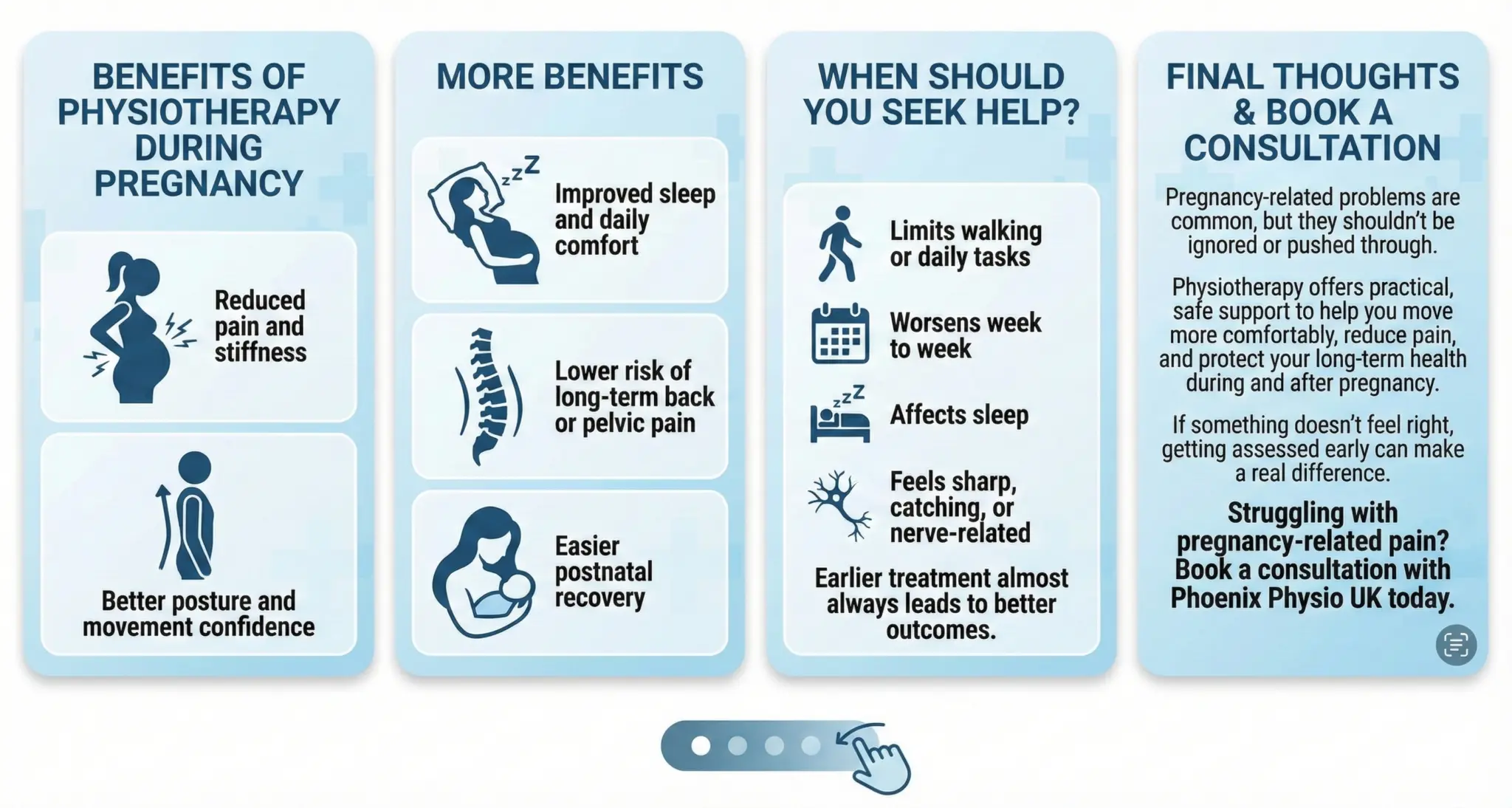
- Reduced pain and stiffness
- Better posture and movement confidence
- Improved sleep and daily comfort
- Lower risk of long-term back or pelvic pain
- Easier postnatal recovery
When Should You Seek Help?
Book an assessment if pain:
- Limits walking or daily tasks
- Worsens week to week
- Affects sleep
- Feels sharp, catching, or nerve-related
Earlier treatment almost always leads to better outcomes.
Why Choose Phoenix Physio for Pregnancy Physiotherapy in Wendover
At Phoenix Physio, pregnancy physiotherapy is focused on safety, comfort, and real results. Every treatment is tailored to your stage of pregnancy, symptoms, and daily demands, whether that’s managing back pain, pelvic discomfort, or movement changes as your body adapts.
Care is evidence-based, gentle, and practical, helping you stay active, reduce pain, and move with confidence throughout pregnancy. You’re supported with clear guidance, personalized exercises, and physiotherapy that adapts as your pregnancy progresses, not a generic program.
If pregnancy pain or discomfort is affecting your daily life, early physiotherapy can make a real difference. Book an appointment at Phoenix Physio in Wendover to get expert pregnancy-safe care, tailored support, and a clear plan to help you move more comfortably throughout pregnancy.
Final Thoughts on Common Pregnancy Problems
common pregnancy problems are frequent, but they should not be ignored or pushed through. Early attention helps reduce discomfort, prevent worsening symptoms, and support a healthier, more comfortable pregnancy.
Physiotherapy offers practical, safe support to help you move more comfortably, reduce pain, and protect your long-term health during and after pregnancy.
If something doesn’t feel right, getting assessed early can make a real difference.
Struggling with common pregnancy problems? Book a consultation with Phoenix Physio UK today.
Frequently Asked Questions
Is physiotherapy safe during pregnancy?
Yes. Physiotherapy is widely recommended in the UK to manage musculoskeletal issues safely throughout pregnancy.
What exercises are safe during pregnancy?
Gentle core engagement, pelvic floor exercises, posture correction, and controlled mobility exercises under guidance are safe and effective during pregnancy. They help reduce pain, improve stability, support daily movement, and prepare the body for childbirth and postnatal recovery.
When should I see a physiotherapist for pregnancy pain?
If pain limits walking, sleep, or daily tasks, or feels sharp or nerve-related, early assessment is recommended.
Can physiotherapy prevent long-term back or pelvic pain?
Yes. Early intervention for common pregnancy problems improves posture, strength, and movement habits, helping reduce pain, prevent long-term complications, and support a healthier, more comfortable pregnancy.
When to start pregnancy physio?
It is beneficial to start pregnancy physiotherapy as soon as you feel comfortable. Many women begin in the second trimester, but it is never too late. Early treatment helps manage common pregnancy problems and prepares the body for childbirth more effectively.