Introduction
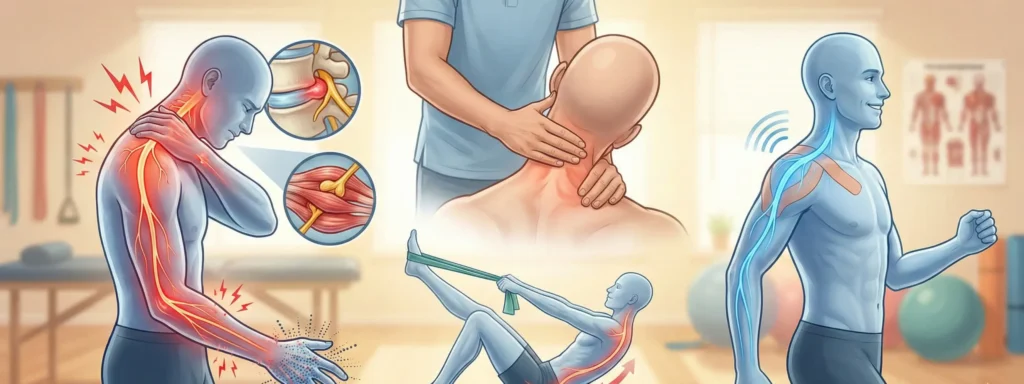
Trapped nerve are one of the most common causes of persistent pain, tingling, and movement restriction. People often describe it as sharp pain, burning sensations, numbness, or weakness that just does not seem to go away.
If you are dealing with a trapped nerve in your neck, shoulder, back, hip, arm, or leg, you are not alone. Trapped nerves are a frequent reason people seek physiotherapy near Aylesbury, especially when pain starts affecting sleep, work, or daily activities.
This guide explains what trapped nerves are, how to identify symptoms, what causes them, how long they last, and how physiotherapy helps trapped nerves recover safely and effectively.
What Is a Trapped Nerve?
A trapped nerve, also known as a pinched nerve or nerve compression, occurs when excessive pressure is placed on a nerve by surrounding tissues such as muscles, joints, discs, ligaments, or bone.
When a nerve is compressed, it cannot function properly. This leads to symptoms like pain, tingling, numbness, weakness, or altered sensation along the nerve’s pathway.
Trapped nerves can occur anywhere in the body, but they are especially common in the:
Neck and spine
Shoulder and arm
Lower back and hip
Leg, foot, wrist, and elbow
Common Trapped Nerve Symptoms
Trapped nerve symptoms vary depending on the location and severity of compression. Some symptoms appear suddenly, while others develop gradually over time.
Typical symptoms of a trapped nerve include:
Sharp or shooting pain
Burning or electric-shock sensations
Tingling or pins and needles
Numbness
Muscle weakness
Reduced movement or stiffness
What Causes Trapped or Pinched Nerves?
Understanding what causes trapped nerves helps prevent recurrence.
Common causes include:
Poor posture (especially desk or screen work)
Slipped or bulging discs
Muscle tightness or spasm
Joint stiffness or arthritis
Repetitive movements
Prolonged sitting or inactivity
Sports injuries
Sudden trauma or awkward lifting
What causes a pinched nerve in the neck?
Poor posture, prolonged screen use, weak neck muscles, and disc issues are the most common causes of trapped nerves in the neck.
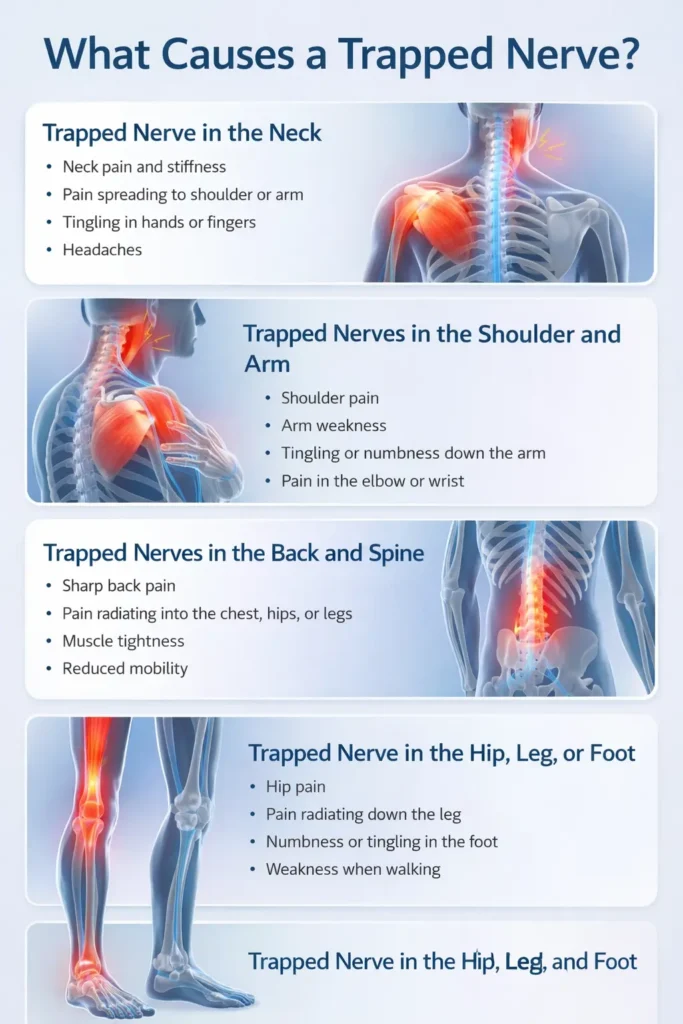
Trapped Nerve in the Neck
A trapped nerve in the neck often causes:
Neck pain and stiffness
Pain spreading to shoulders or arms
Tingling in hands or fingers
Headaches
People often ask how long trapped nerves last in the neck. Recovery depends on the cause, but physiotherapy significantly improves recovery time.
Trapped Nerves in the Shoulder and Arm
A trapped nerve in the shoulder or arm may cause:
Shoulder pain
Arm weakness
Tingling or numbness down the arm
Pain in the elbow or wrist
This is common in people who work at desks, drive long hours, or perform repetitive upper-limb tasks.
Trapped Nerves in the Back and Spine
Trapped nerves in the spine can affect both the upper and lower back.
Symptoms may include:
Sharp back pain
Pain radiating into the chest, hips, or legs
Muscle tightness
Reduced mobility
A trapped nerve in the lower back often leads to nerve pain down the leg.
Trapped Nerve in the Hip, Leg, or Foot
A trapped nerve in the hip or leg may cause:
Hip pain
Pain radiating down the leg
Numbness or tingling in the foot
Weakness when walking
This is commonly linked to prolonged sitting, spinal compression, or muscular imbalance
How Long Do Trapped Nerves Last?
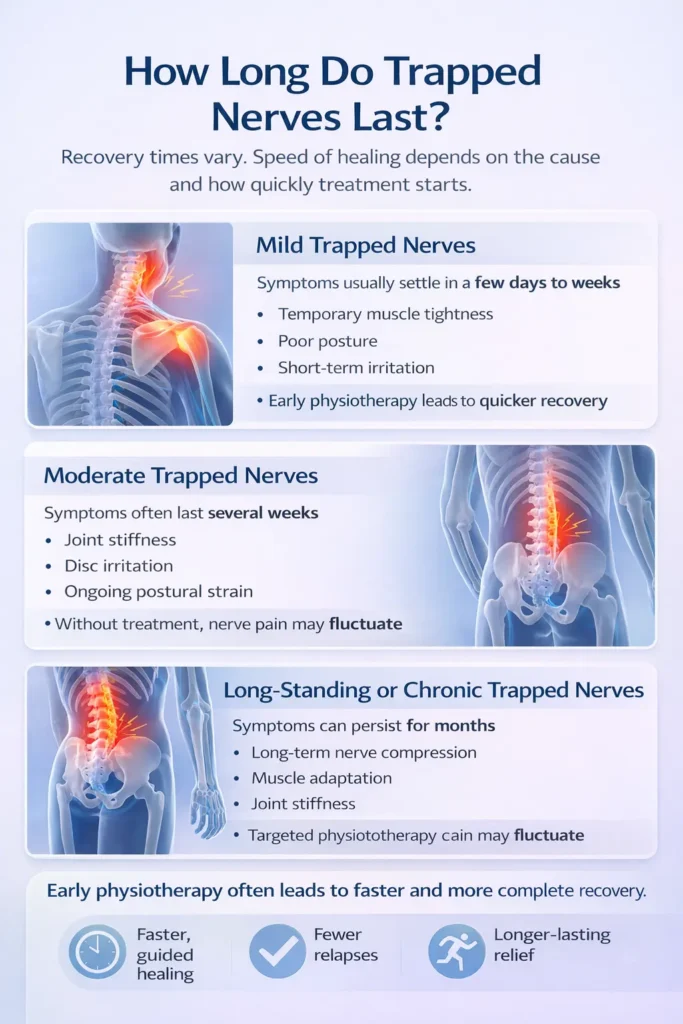
One of the most common and frustrating questions people ask is how long trapped nerves last. The honest answer is that recovery time varies from person to person. There is no fixed timeline, because it depends on the cause of the nerve compression, how long it has been present, and how quickly the right treatment begins.
In general, trapped nerves tend to follow a few broad patterns.
Typical Recovery Timelines
-
Mild trapped nerves
These are often caused by temporary muscle tightness, poor posture, or short-term irritation. Symptoms may settle within a few days to a couple of weeks, especially with rest, activity modification, and early physiotherapy input. -
Moderate trapped nerves
When nerve compression is linked to joint stiffness, disc irritation, or ongoing postural strain, symptoms often last several weeks. Without targeted treatment, pain and tingling can fluctuate rather than fully resolve. -
Long-standing or chronic trapped nerves
Nerve compression that has been present for months can persist for several months or longer if left untreated. In these cases, the surrounding muscles and joints often adapt in ways that keep irritating the nerve, making recovery slower.
How Long Does a Trapped Nerve Take to Heal?
Healing time depends on reducing pressure on the nerve and restoring normal movement patterns.
With targeted physiotherapy, many people notice:
Reduced pain and tingling within the first few sessions
Improved movement and strength over the following weeks
Gradual return to normal daily activities as nerve irritation settles
Early treatment usually leads to faster and more complete recovery. Waiting too long often increases healing time.
Will an MRI Scan Show Trapped Nerves?
An MRI scan can be useful, but it does not always tell the full story.
What an MRI can show:
Disc bulges or herniations
Arthritic changes in the spine or joints
Structural narrowing that may compress a nerve
What an MRI does not always explain:
Why pain levels vary so much between people
Why symptoms persist even when scans look “mild”
How posture, muscle imbalance, and movement habits contribute to nerve irritation
This is why many people experience significant nerve pain even when scan findings appear minimal.
Physiotherapy focuses on functional recovery, not just imaging results. Treatment targets:
Improving posture and movement control
Reducing muscle tension around the nerve
Restoring joint mobility
Strengthening supportive muscles
Preventing recurring nerve compression
In many cases, people improve through physiotherapy without needing further scans or invasive interventions.
Physiotherapy Treatment for Trapped Nerves Near Aylesbury
Physiotherapy is one of the most effective non-surgical treatments for trapped nerves, especially when pain, tingling, or weakness keeps returning or starts affecting daily life. Rather than masking symptoms, physiotherapy targets the root cause of nerve irritation to support long-term recovery.
At Phoenix Physio near Aylesbury, physiotherapy for trapped nerves focuses on why the nerve is compressed, not just where the pain is felt. This approach is crucial because nerve pain often travels away from the actual source of the problem.
What Physiotherapy for Trapped Nerves Involves
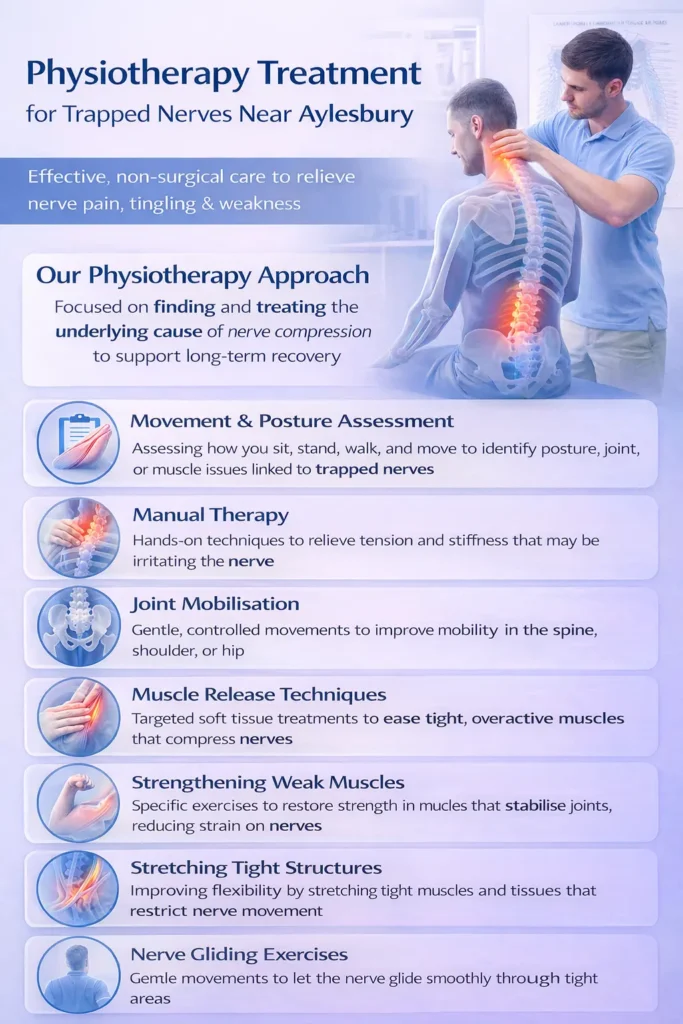
Each treatment plan is tailored to your symptoms, lifestyle, and movement patterns. Physiotherapy treatment may include:
Detailed movement and posture assessment
A full assessment looks at how you sit, stand, walk, and move. Poor posture, joint restrictions, or muscle imbalances are often the real cause of trapped nerves.Manual therapy to reduce pressure on nerves
Hands-on techniques help relieve tension in muscles and joints that may be compressing or irritating the nerve.Joint mobilisation
Gentle, controlled movements improve joint mobility, especially in the spine, shoulder, or hip, allowing nerves more space to move freely.Muscle release techniques
Tight or overactive muscles can press on nerves. Targeted release techniques reduce muscle tension and improve circulation around the affected area.Strengthening weak muscles
Weak muscles fail to support joints properly, leading to repeated nerve compression. Strengthening restores stability and reduces strain on nerves.Stretching tight structures
Tight muscles, ligaments, or connective tissue can restrict nerve movement. Stretching improves flexibility and reduces nerve irritation.Nerve gliding exercises
These gentle exercises help nerves move smoothly through surrounding tissues, reducing sensitivity, pain, and stiffness.Postural correction and education
Small changes in posture at work, during sleep, or while exercising can make a big difference in nerve recovery and prevention.
| Treatment Component | What It Involves & Why It Helps |
|---|---|
| Movement & Posture Assessment | A detailed assessment of how you sit, stand, walk, and move. Poor posture, joint restrictions, or muscle imbalances are often the real cause of trapped nerves and need to be corrected at the source. |
| Manual Therapy | Hands-on techniques used to reduce muscle tension and joint stiffness that may be compressing or irritating the nerve, helping relieve pain and improve movement. |
| Joint Mobilisation | Gentle, controlled movements to improve joint mobility, particularly in the spine, shoulder, or hip, giving nerves more space to move freely and function normally. |
| Muscle Release Techniques | Targeted techniques to relax tight or overactive muscles that place pressure on nerves, improving circulation and reducing irritation. |
| Strengthening Weak Muscles | Focused exercises to strengthen muscles that support joints properly, reducing repeated nerve compression and improving long-term stability. |
| Stretching Tight Structures | Stretching of tight muscles, ligaments, or connective tissue to improve flexibility and reduce restriction around irritated nerves. |
| Nerve Gliding Exercises | Gentle exercises designed to help nerves move smoothly through surrounding tissues, reducing sensitivity, stiffness, and nerve-related pain. |
| Postural Correction & Education | Practical advice and adjustments for posture at work, during sleep, and in daily activities to support recovery and help prevent trapped nerves from returning. |
Can Physiotherapy Help Trapped Nerves?
Yes, physiotherapy is one of the most effective and evidence-based treatments for trapped nerves. Instead of masking symptoms, physiotherapy focuses on reducing pressure on the nerve and fixing the underlying cause.
A trapped nerve usually develops due to poor movement patterns, muscle imbalance, joint stiffness, or postural stress. Physiotherapy addresses all of these factors together, which is why it works so well for long-term relief.
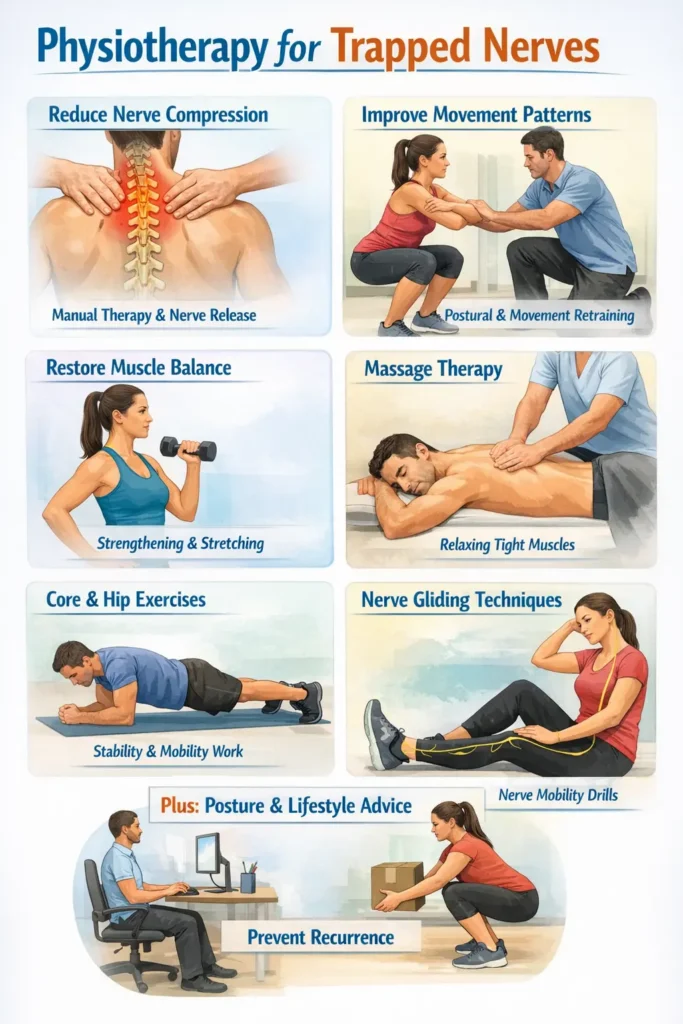
Physiotherapy helps trapped nerves by:
Reducing nerve compression
Hands-on techniques and targeted movements help relieve pressure from tight muscles, stiff joints, or irritated spinal segments that are compressing the nerve.Improving movement patterns
Many trapped nerves are linked to how you sit, walk, lift, or move. Physiotherapy retrains faulty movement habits that overload nerves over time.Restoring muscle balance
Weak or inactive muscles fail to support joints properly, while tight muscles increase compression. Physiotherapy restores balance between strength and flexibility.Preventing recurrence
Treatment is not just about pain relief. You are taught how to move, exercise, and work in ways that reduce the chance of the trapped nerve returning.
Early physiotherapy often leads to faster recovery, fewer flare-ups, and better long-term outcomes, especially when nerve symptoms are caught before becoming chronic.
Best Exercises for Trapped Nerves
The best exercises for trapped nerve recovery depend on where the nerve is irritated and what is causing the compression. Exercises are never one-size-fits-all, which is why assessment matters.
In general, physiotherapy-guided exercise programmes may include:
-
Gentle neck mobility exercises
These help reduce stiffness and improve movement in people with trapped nerves in the neck or upper spine. -
Shoulder stabilisation exercises
Strengthening the shoulder and upper-back muscles reduces strain on nerves travelling into the arm. -
Core strengthening for spinal support
A strong core supports the spine and reduces pressure on spinal nerves, especially in the lower back. -
Hip mobility work
Tight hips can increase nerve tension and load the lower spine. Improving hip movement often relieves nerve symptoms in the back and leg. -
Nerve gliding techniques
These gentle movements help nerves move freely within surrounding tissues, reducing irritation and sensitivity.
Best Exercises for Lower Back Nerve Pain
For lower back nerve pain, targeted strengthening and mobility exercises are particularly important.
These exercises help to:
-
Reduce pressure on spinal nerves
-
Improve spinal stability
-
Restore normal movement patterns
-
Improve walking, sitting, and lifting tolerance
Exercises should always be tailored by a physiotherapist. Incorrect or unsupervised exercises can aggravate nerve pain and slow recovery rather than help it.
Does massage help trapped nerves?
Massage can help trapped nerves, but it is usually only part of the solution. Massage works by reducing muscle tension around a compressed nerve, which can temporarily ease pain and stiffness.
However, massage alone does not address:
Poor posture
Weak supporting muscles
Joint stiffness
Faulty movement patterns
Can a massage help a trapped nerve?
Yes, massage can be helpful when used alongside physiotherapy. It is most effective when combined with:
Movement correction
Strengthening exercises
Postural advice
Nerve mobilisation techniques
This combined approach provides both short-term relief and long-term improvement.

Sleeping With a Trapped Nerve
Poor sleep position is a common reason trapped nerve symptoms persist or worsen, especially in the neck and upper back.
How to sleep with a trapped nerve in the neck:
Use a supportive pillow
Your pillow should support the natural curve of your neck, not push it forward or let it collapse.Avoid sleeping on your stomach
This position forces the neck into prolonged rotation and compression, increasing nerve irritation.Maintain neutral neck alignment
Try to keep your head aligned with your spine when sleeping on your back or side.
Good sleep positioning reduces overnight nerve compression and supports healing while you rest.
Over-the-Counter Medication for Trapped Nerves
Many people experiencing nerve pain search for quick relief options, especially when pain flares up suddenly or affects sleep.
Common searches include:
Over-the-counter medication for sciatica
Best over-the-counter products for treating trapped nerves
Over-the-counter medications may help manage pain in the short term, but they do not fix the underlying problem causing nerve compression.
Common over-the-counter options people use:
Anti-inflammatory painkillers to reduce inflammation
Simple pain relief medications for symptom control
Topical gels or creams for temporary relief
While these options may reduce discomfort temporarily, they:
Do not release nerve compression
Do not correct posture or movement issues
Do not improve nerve mobility or strength
Do not prevent symptoms from returning
Physiotherapy focuses on long-term recovery, helping the nerve heal properly while addressing the physical causes behind the pain. Medication can be supportive, but it should not be the only solution.
When to See a Physiotherapist Near Aylesbury
It’s a common mistake to wait too long before seeking treatment for nerve pain. Early physiotherapy often leads to faster recovery and better outcomes.
You should consider seeing a physiotherapist if:
Pain lasts more than a few days and does not improve
Symptoms gradually worsen instead of settling
You experience numbness, tingling, or pins and needles
You notice muscle weakness in the arm, leg, or hand
Pain is affecting sleep, work, or daily activities
Symptoms keep returning after short periods of relief
Early treatment helps:
Prevent chronic nerve irritation
Reduce the risk of long-term weakness or stiffness
Restore confidence in movement
Avoid unnecessary scans or invasive treatments
If you are dealing with ongoing nerve pain near Aylesbury, a physiotherapy assessment can provide clarity, reassurance, and a structured plan to support recovery.
Why Choose Phoenix Physio for Trapped Nerve Treatment Near Aylesbury
Trapped nerves need more than temporary pain relief. They need proper assessment and targeted treatment.
At Phoenix Physio, treatment focuses on identifying the cause of nerve compression, improving movement, and supporting long-term recovery, not just easing symptoms.
Why patients choose Phoenix Physio:
Thorough physiotherapy assessments
Personalised treatment plans
Hands-on therapy combined with guided exercises
Clear, honest advice about recovery
Local care near Aylesbury with a patient-first approach
Book a Physiotherapy Assessment
If nerve pain is affecting your movement or daily life, an early physiotherapy assessment can help you understand what’s going on and how to fix it.
👉 Book an appointment with Phoenix Physio near Aylesbury and start your recovery with confidence.
Conclusion: Managing Trapped Nerves with the Right Physiotherapy Support
Trapped nerves can be painful, frustrating, and disruptive, especially when symptoms affect your movement, sleep, or daily routine. While pain relief methods may offer temporary comfort, lasting recovery depends on understanding why the nerve is compressed and addressing the physical causes behind it.
Physiotherapy plays a key role in treating trapped nerves by improving movement, reducing pressure on the nerve, restoring muscle balance, and preventing symptoms from returning. With the right assessment and a structured treatment plan, most people can recover safely and regain confidence in how they move.
If you are experiencing ongoing nerve pain near Aylesbury, seeking early physiotherapy can make a meaningful difference. A personalised physiotherapy approach helps ensure your recovery is guided, effective, and focused on long-term results rather than short-term fixes.
Taking action early gives your body the best chance to heal and helps you return to everyday life with less pain and more control.
Frequently Asked Questions
What is a trapped nerve and how does it happen?
A trapped nerve, also known as a pinched nerve, occurs when surrounding tissues such as muscles, joints, discs, or ligaments place excessive pressure on a nerve. This compression disrupts normal nerve signals and can cause pain, tingling, numbness, or weakness. Poor posture, repetitive movements, disc problems, and muscle tightness are common causes.
What are the most common symptoms of a trapped nerve?
Common trapped nerve symptoms include sharp or burning pain, pins and needles, numbness, muscle weakness, and reduced movement. Symptoms often travel along the nerve pathway, such as from the neck into the arm or from the lower back into the leg. Severity depends on the level and duration of compression.
What can I do at home?
Stay gently active and avoid long periods of bed rest, as movement helps reduce stiffness. Anti-inflammatory pain relief such as ibuprofen may help when appropriate, while paracetamol can be used alongside other medication. Heat or cold packs may ease muscle tension, swelling, and discomfort.
Can physiotherapy help treat a trapped nerve?
Yes. Physiotherapy is one of the most effective non-surgical treatments for trapped nerves. It helps by reducing pressure on the nerve, improving joint mobility, releasing tight muscles, correcting posture, and restoring normal movement patterns. Physiotherapy focuses on resolving the underlying cause, not just managing pain.
How long does it take for a trapped nerve to heal?
Recovery time varies depending on the cause and severity. Mild trapped nerves may improve within days or weeks, while more persistent cases can take several weeks. With appropriate physiotherapy, many people notice gradual improvement early, with continued recovery over time. Early treatment usually leads to faster and more complete healing.
When should I see a physiotherapist for nerve pain?
You should see a physiotherapist if nerve pain lasts more than a few days, keeps returning, worsens over time, or is accompanied by numbness, tingling, or weakness. Early physiotherapy can prevent chronic nerve irritation and reduce the risk of long-term complications, especially for people near Aylesbury seeking local care.