Trapped nerves are one of the most common reasons people in Wendover seek physiotherapy—and one of the most misunderstood. They are often described as a pinched nerve, nerve compression, or nerve entrapment. The terminology varies, but the underlying issue is the same: a nerve is under pressure and can no longer move or function normally.
That pressure can cause pain, tingling, numbness, or weakness. Sometimes symptoms appear suddenly. More often, they develop slowly, worsen with certain positions, and eventually start interfering with sleep, work, or daily activity. At Phoenix Physio in Wendover, trapped nerves are assessed and treated by identifying the mechanical cause, not just the site of pain.
What Trapped Nerves Actually Mean
Nerves are not fixed cables. They are living tissue designed to glide as the body moves. This glide depends on joints moving freely and muscles allowing space around the nerve.
When joints stiffen, muscles tighten, or posture places sustained load on certain areas, that space reduces. Over time, the nerve becomes sensitive and reactive. This sensitivity is what most people experience as trapped nerves.
In practice, trapped nerves rarely develop overnight. They are often linked to gradual changes—more sitting, less movement variety, repetitive tasks, or reduced spinal mobility. Muscles often tolerate these changes for a while. Nerves tend not to.
Common areas affected include the neck, lower back, shoulder, elbow, wrist, hip, and buttock.
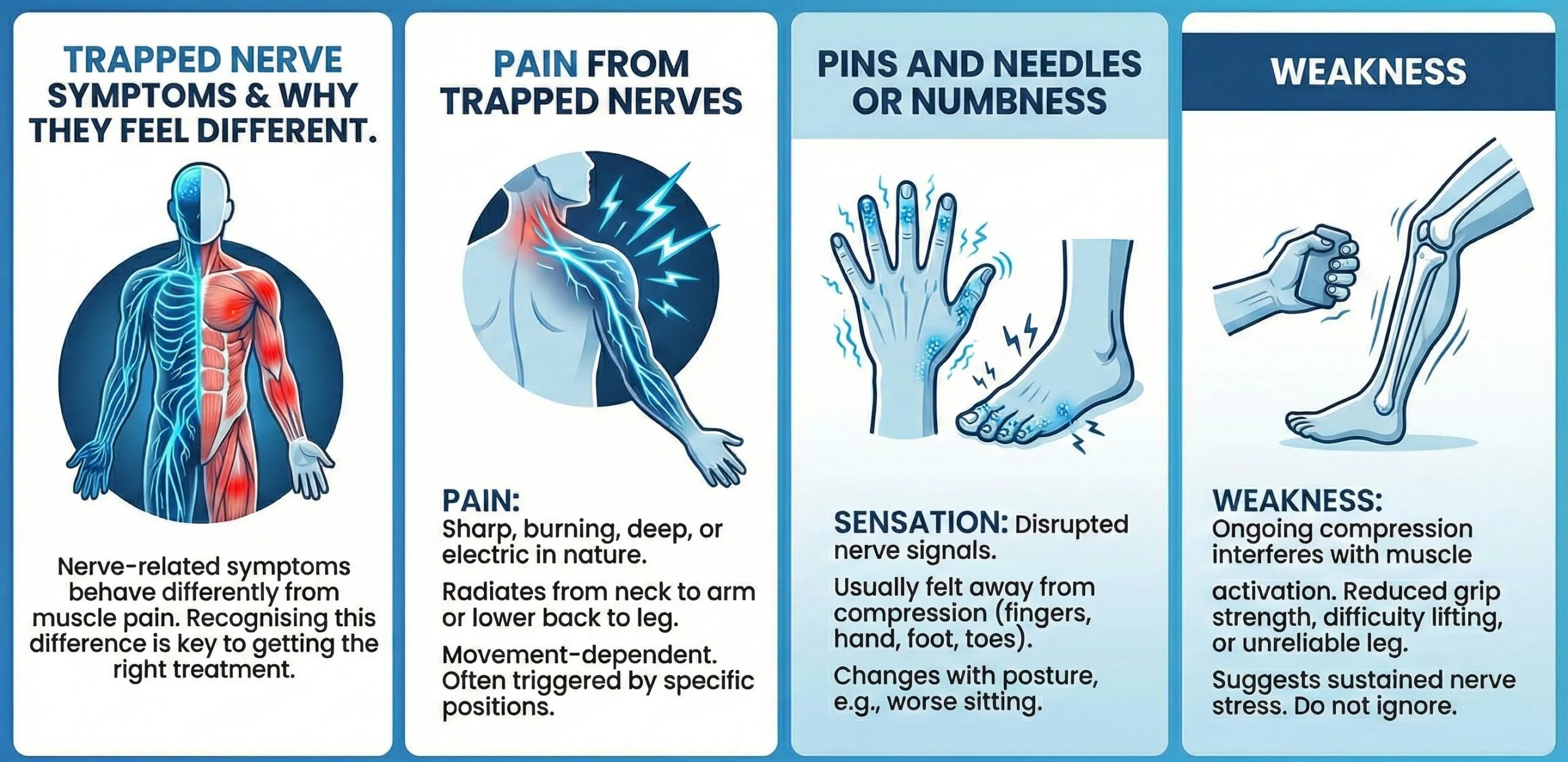
Trapped Nerve Symptoms & Why They Feel Different
Nerve-related symptoms behave differently from muscle pain. Recognising this difference is key to getting the right treatment.
Pain From Trapped Nerves
Pain associated with trapped nerves is often sharp, burning, deep, or electric in nature. It commonly radiates—such as from the neck into the arm or from the lower back into the buttock or leg. Certain movements or positions may trigger symptoms immediately, while others ease them.
This movement-dependent pattern is a strong indicator of nerve involvement and is frequently seen in patients attending Phoenix Physio in Wendover.
Pins and Needles or Numbness
Pins and needles or numbness occur when nerve signals are disrupted. These sensations are usually felt away from the site of compression, commonly in the fingers, hand, foot, or toes.
If symptoms change with posture—such as worsening while sitting or improving when standing—nerve compression is often involved.
Weakness
Ongoing nerve compression can interfere with muscle activation. This may present as reduced grip strength, difficulty lifting objects, or a feeling that the leg is unreliable. Weakness is not a symptom to ignore, as it suggests sustained nerve stress.
Why Trapped Nerves Develop
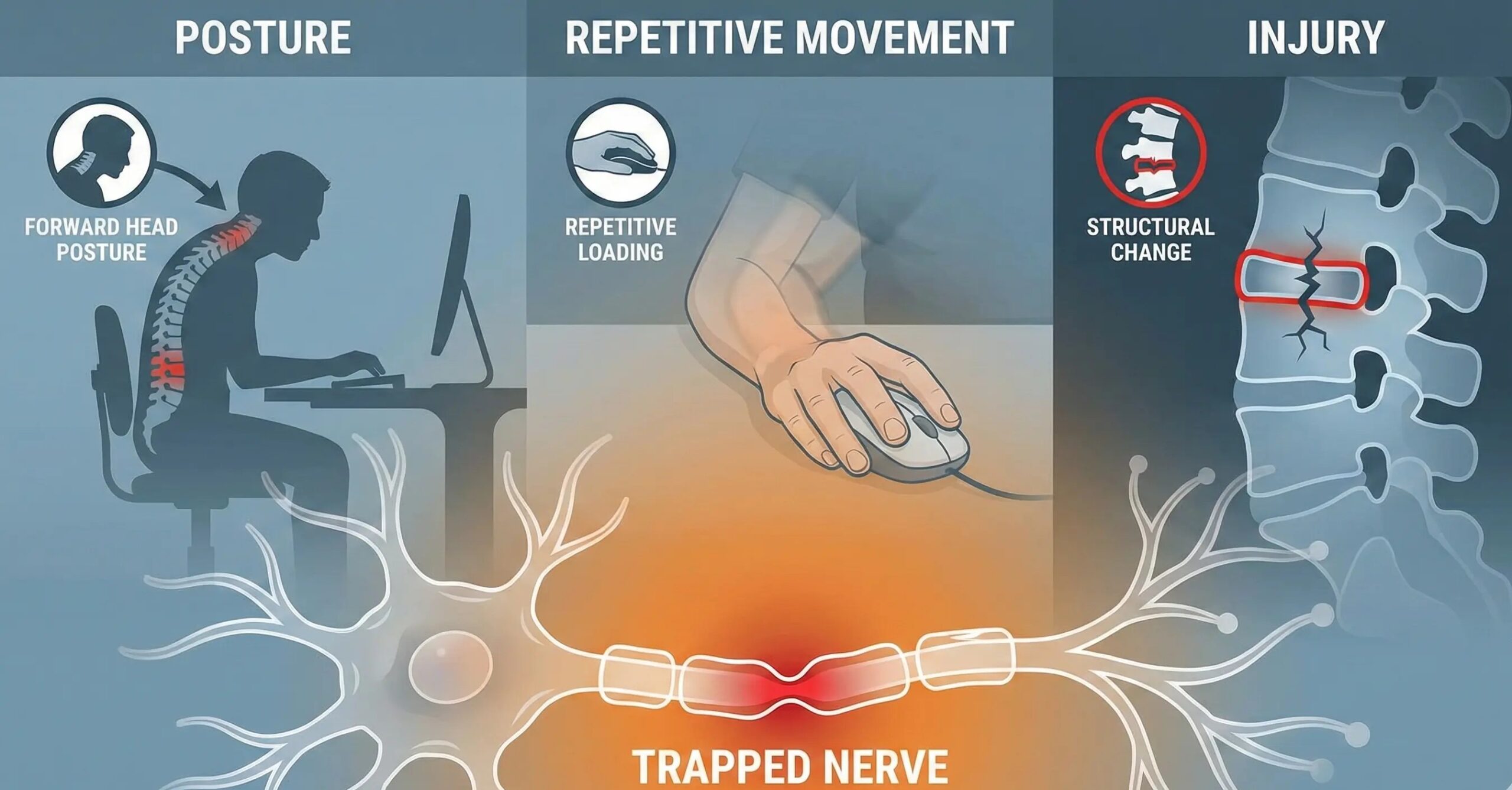
Posture and Sustained Positions
Prolonged sitting, forward head posture, and slouched positioning reduce space around spinal nerves. Over time, joints lose mobility and nerves become increasingly irritable. This is a common contributor to trapped nerves in the neck and lower back, particularly among desk-based workers in and around Wendover.
Repetitive or One-Sided Movement
Repeated loading at the wrist, elbow, or shoulder can gradually compress nerves. Manual roles, prolonged computer use, and sports involving repeated movements on one side are frequent contributors.
Injury and Structural Change
Falls, lifting injuries, or sudden force can alter joint mechanics. In the spine, disc-related or age-related changes may narrow the space where nerves exit. Often, trapped nerves develop due to a combination of factors rather than a single incident.
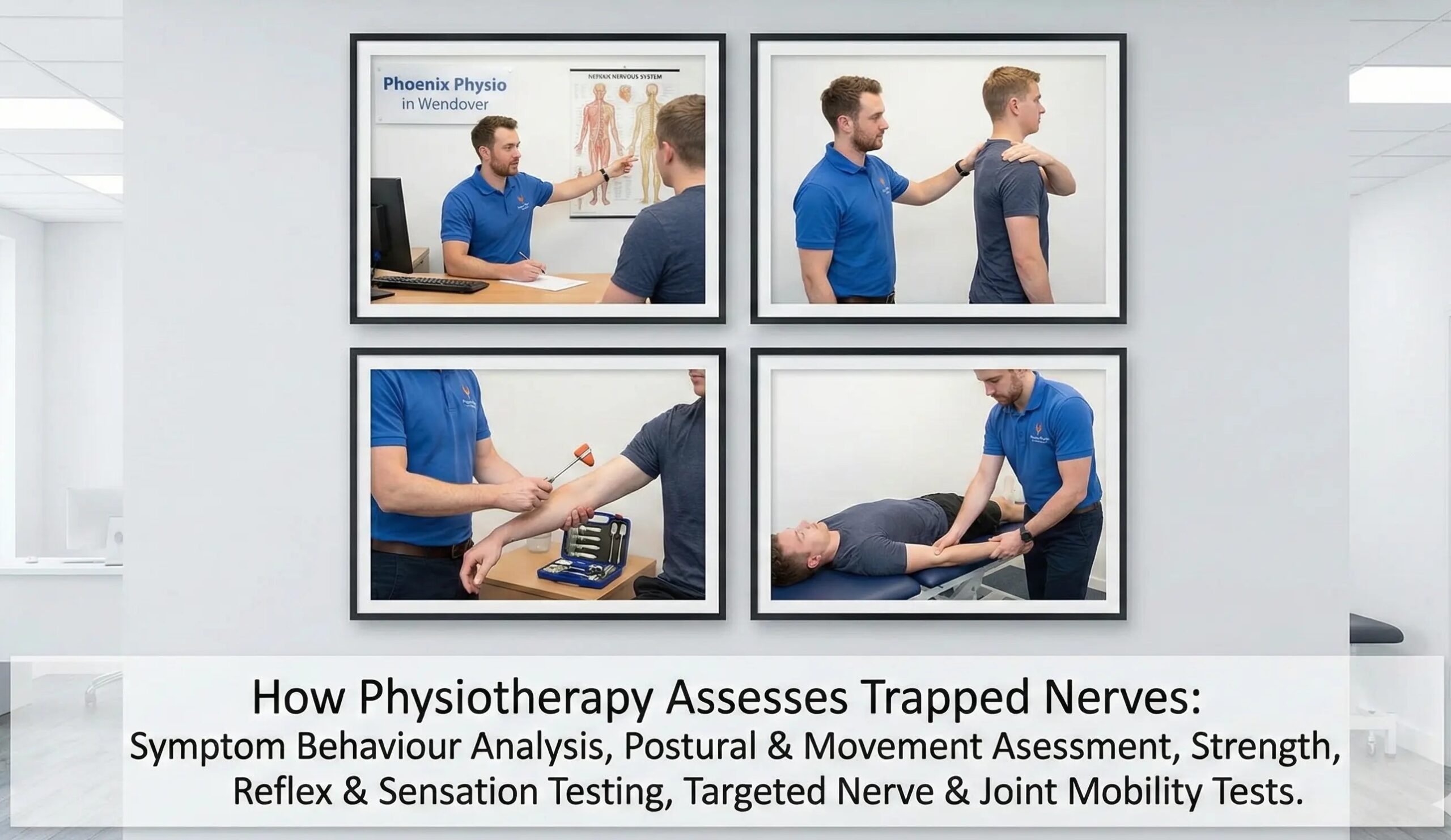
How Physiotherapy Assesses Trapped Nerves
Assessment is not based on pain location alone. What matters is how symptoms behave with movement, posture, and load.
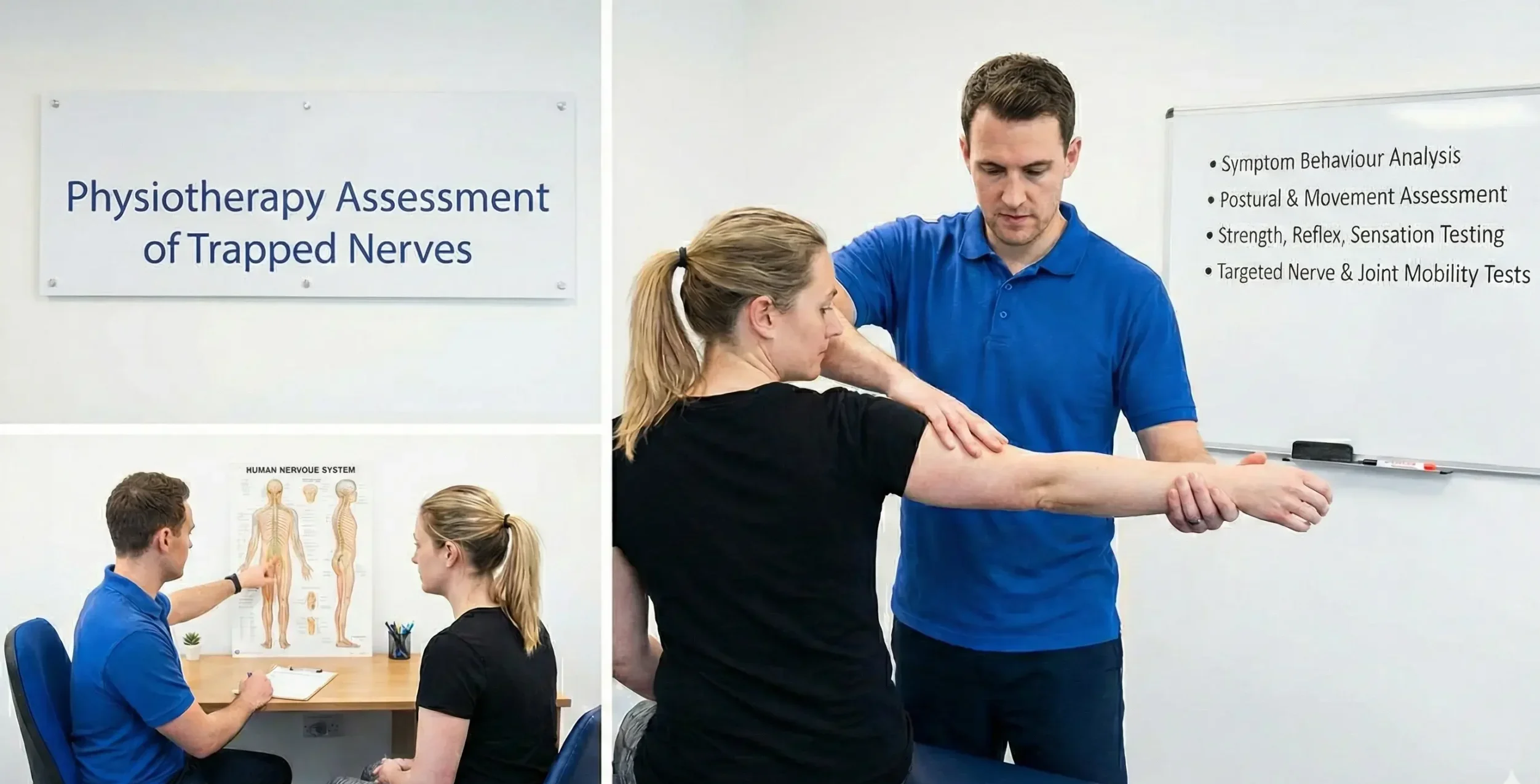
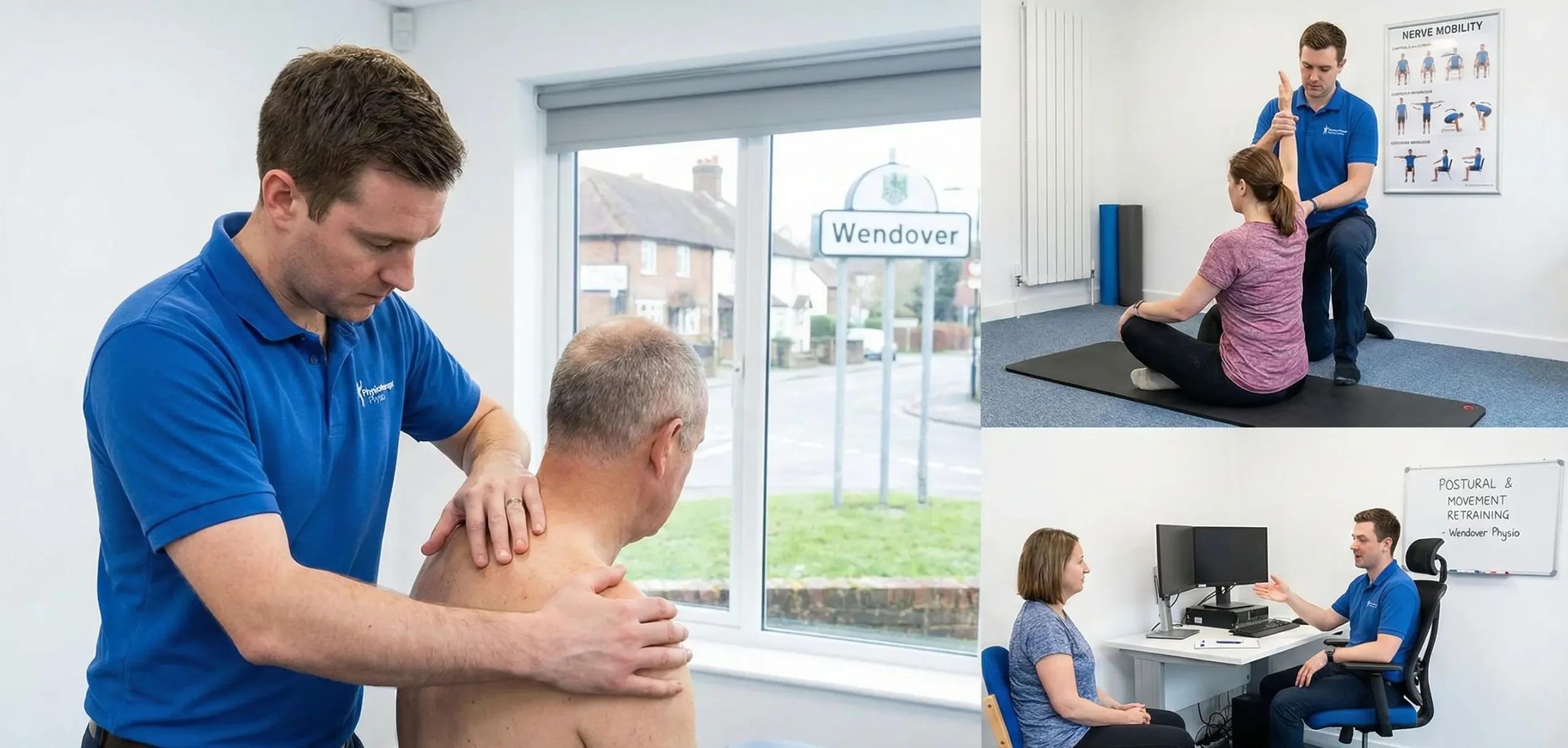
At Phoenix Physio in Wendover, physiotherapy assessment typically includes:
Detailed analysis of symptom behaviour
Postural and movement assessment
Strength, reflex, and sensation testing
Targeted nerve and joint mobility tests
In clinical practice, it is often clear early on whether a nerve is involved—sometimes long before imaging is considered. Scans are not always required, and findings do not always correlate with symptoms.
Physiotherapy Treatment for Trapped Nerves in Wendover
Physiotherapy treatment focuses on reducing pressure on the nerve and restoring normal movement.
Manual Therapy
Hands-on treatment is used to improve joint mobility and reduce muscle tension around the nerve. This often provides early symptom relief and allows movement to feel more controlled and less threatening.
Nerve Mobility Exercises
Nerves need movement—but in the right dose. Forceful stretching is a common mistake and can aggravate symptoms. Carefully prescribed nerve gliding exercises encourage controlled movement of the nerve through surrounding tissues, reducing sensitivity over time.
Postural and Movement Retraining
Long-term improvement depends on addressing contributing habits. This includes sitting posture, workstation setup, lifting technique, and daily movement patterns. Without change here, symptoms often recur.
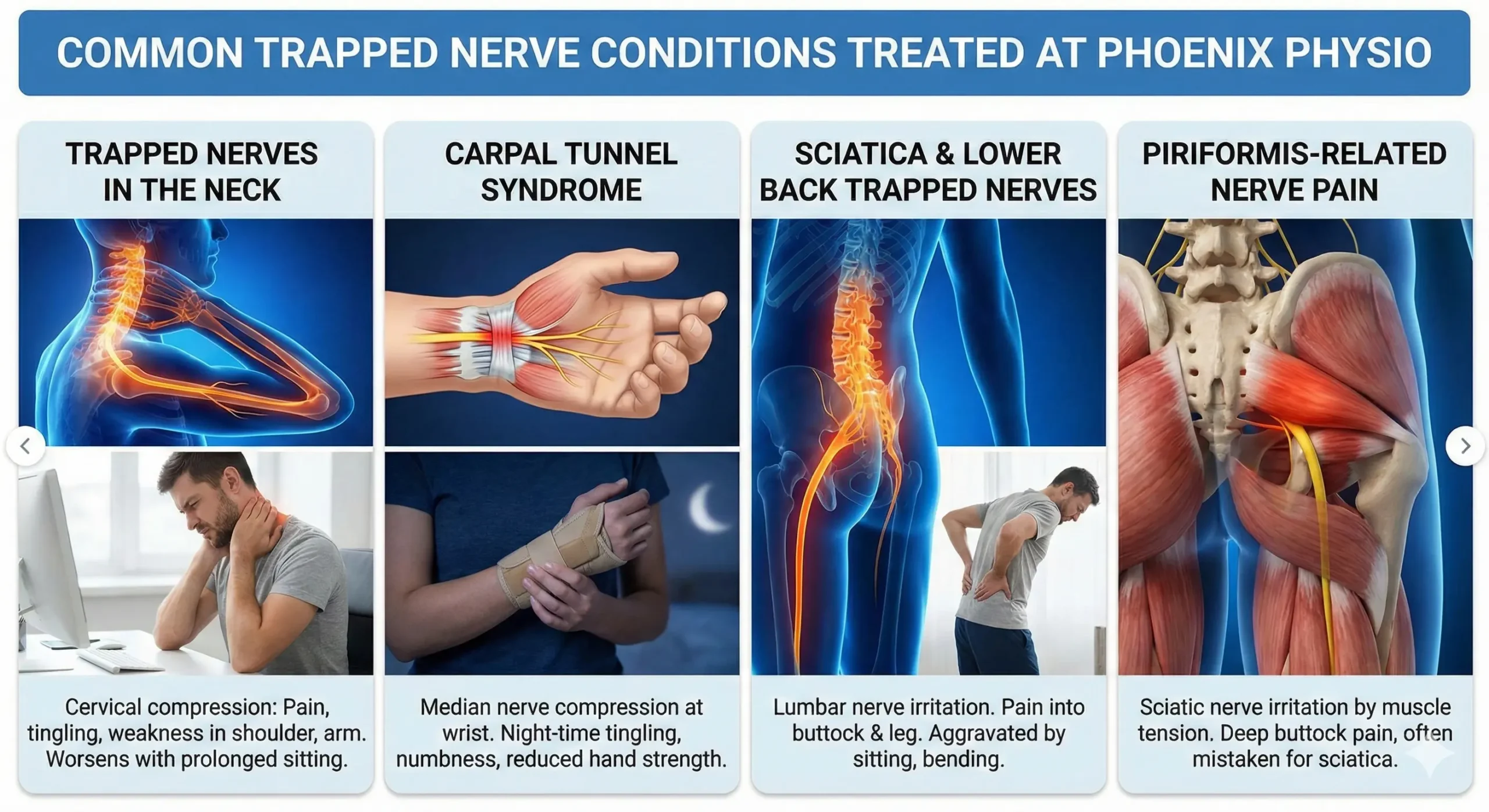
Common Trapped Nerve Conditions Treated at Phoenix Physio
Trapped Nerves in the Neck
Cervical nerve compression may cause pain, tingling, or weakness into the shoulder, arm, or hand. Symptoms often worsen with prolonged sitting, looking down, or sustained desk work.
Carpal Tunnel Syndrome
Carpal tunnel syndrome occurs when the median nerve is compressed at the wrist. Symptoms commonly include night-time tingling, numbness, and reduced hand strength. Physiotherapy focuses on wrist mechanics, nerve mobility, and workload management.
Sciatica and Lower Back Trapped Nerves
Lumbar nerve compression can irritate the sciatic nerve, causing pain that travels into the buttock and leg. Sitting, bending, and prolonged standing frequently aggravate symptoms.
Piriformis-Related Nerve Pain
In some cases, the sciatic nerve is irritated by muscle tension in the buttock rather than the spine. Pain is typically deep and often mistaken for classic sciatica.
Can Trapped Nerves Heal on Their Own?
Mild cases may improve with reduced load and movement changes. However, persistent symptoms—particularly those involving weakness, spreading pain, or altered sensation—rarely resolve without treatment.
In practice, delaying physiotherapy often leads to longer recovery times and repeated flare-ups. Early assessment at a local clinic such as Phoenix Physio in Wendover usually results in faster and more reliable outcomes.
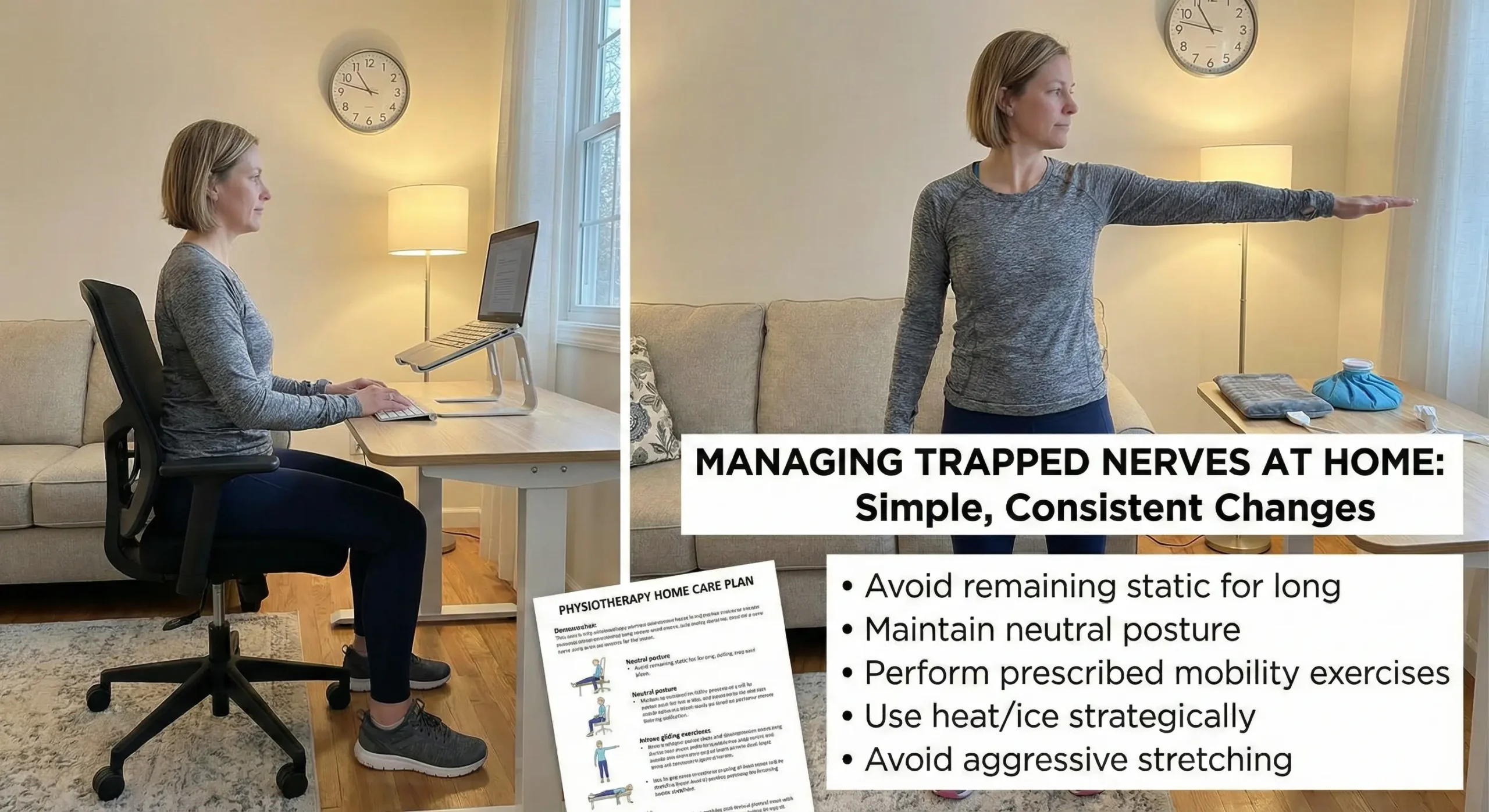
Managing Trapped Nerves at Home
Physiotherapy treatment is supported by simple, consistent changes:
Avoid remaining in one position for long periods
Maintain neutral posture when sitting and standing
Perform prescribed nerve mobility exercises
Use heat to reduce muscle tension and ice during flare-ups
Avoid aggressive stretching without professional guidance
Self-management should support physiotherapy, not replace it.
When to Seek Physiotherapy Assessment in Wendover
You should consider physiotherapy assessment if symptoms:
Persist beyond a few weeks
Spread into the arm or leg
Cause weakness or coordination issues
Interfere with sleep or daily activities
Urgent medical review is required if bowel or bladder changes occur or neurological symptoms worsen rapidly.
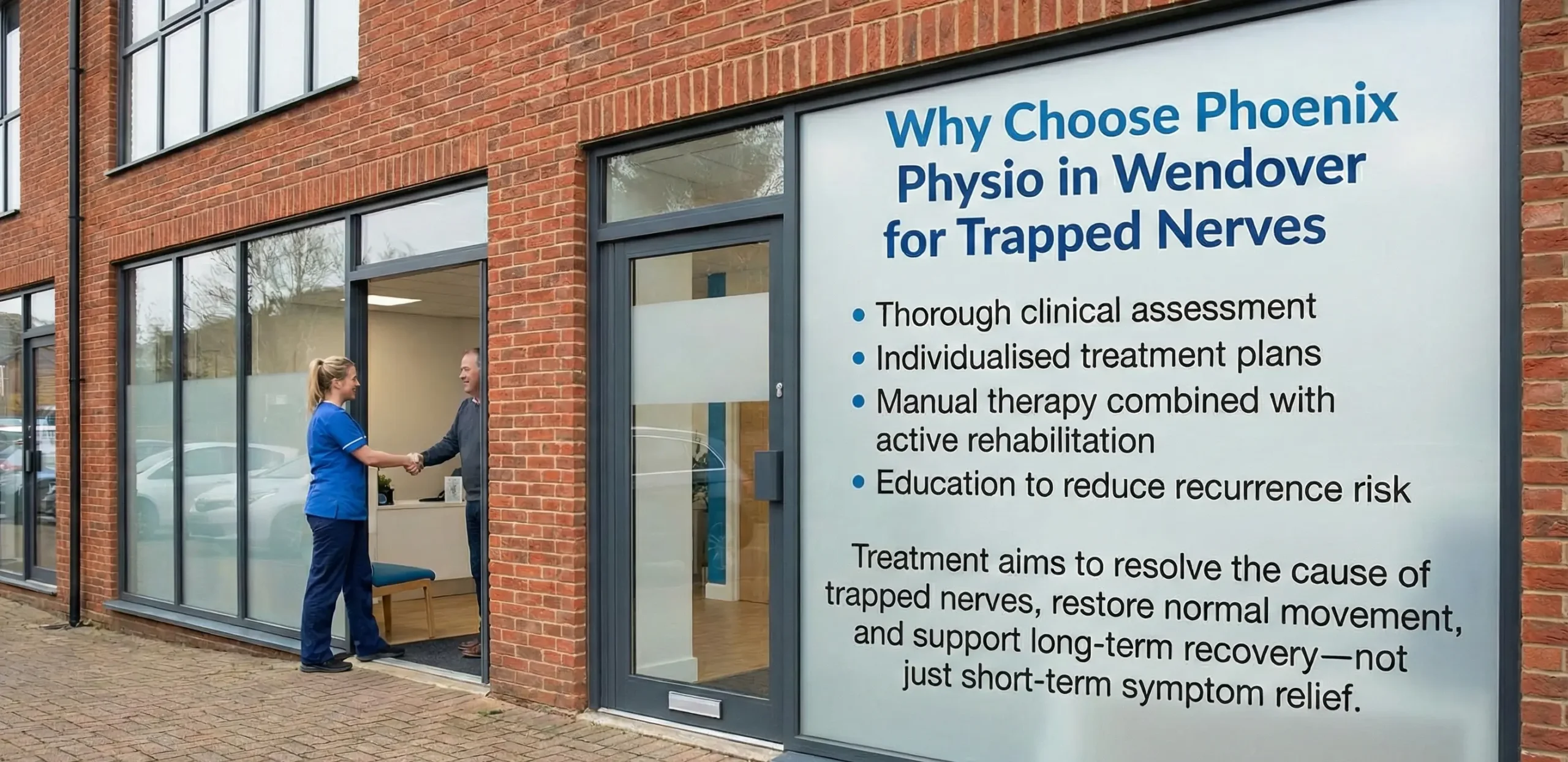
Why Choose Phoenix Physio in Wendover for Trapped Nerves
Phoenix Physio provides local, evidence-based physiotherapy in Wendover, focused on:
Thorough clinical assessment
Individualised treatment plans
Manual therapy combined with active rehabilitation
Education to reduce recurrence risk
Treatment aims to resolve the cause of trapped nerves, restore normal movement, and support long-term recovery—not just short-term symptom relief.
If trapped nerve symptoms are affecting your movement, sleep, or daily activities, early physiotherapy can prevent the issue from becoming long-term. Book an appointment at Phoenix Physio in Wendover for a thorough assessment and a targeted treatment plan designed to relieve nerve irritation and restore comfortable movement.
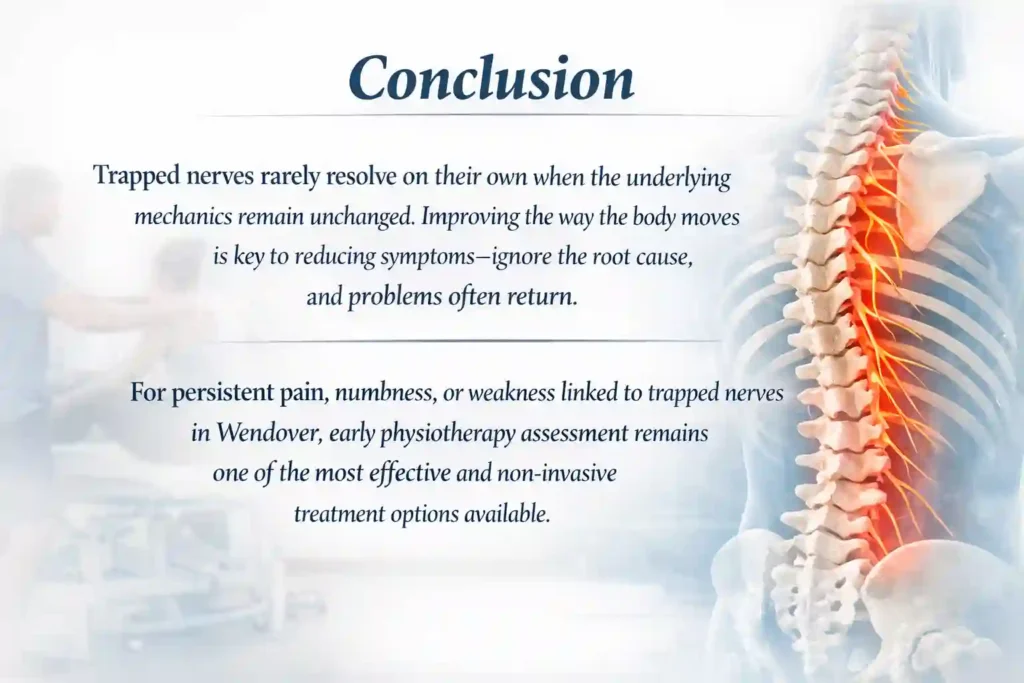
Trapped nerves rarely settle if the underlying mechanics stay the same. Change how the body moves and symptoms improve. Ignore the cause, and they often return.
For ongoing pain, numbness, or weakness related to trapped nerves in Wendover, early physiotherapy assessment remains one of the most effective non-invasive treatment options available.
Frequently Asked Questions About Trapped Nerves
How do I know if I have a trapped nerve?
A trapped nerve commonly causes sharp, burning, or electric pain, along with tingling, numbness, or weakness. Symptoms often radiate into an arm or leg and change with posture or movement, which helps distinguish nerve pain from muscle-related pain.
Can physiotherapy help trapped nerves in Wendover?
Yes. Physiotherapy in Wendover can help relieve trapped nerves by reducing pressure on the nerve, improving joint mobility, and correcting posture or movement habits that contribute to nerve compression. Early treatment often leads to faster and more reliable recovery.
How long do trapped nerves take to recover with physiotherapy?
Recovery time varies depending on severity and duration. Many people notice improvement within a few weeks of physiotherapy. Long-standing or recurrent trapped nerves may take longer, especially if posture or repetitive strain is involved.
Do trapped nerves need scans or surgery?
Most trapped nerves do not require scans or surgery. Physiotherapy assessment can usually identify nerve involvement without imaging. Scans are only recommended if symptoms worsen, fail to improve, or involve significant or progressive weakness.
When should I see a physiotherapist for trapped nerves in Wendover?
You should see a physiotherapist in Wendover if symptoms last more than a few weeks, spread into the arm or leg, cause weakness, or interfere with sleep or daily activities. Early assessment reduces recovery time and recurrence risk.