Introduction
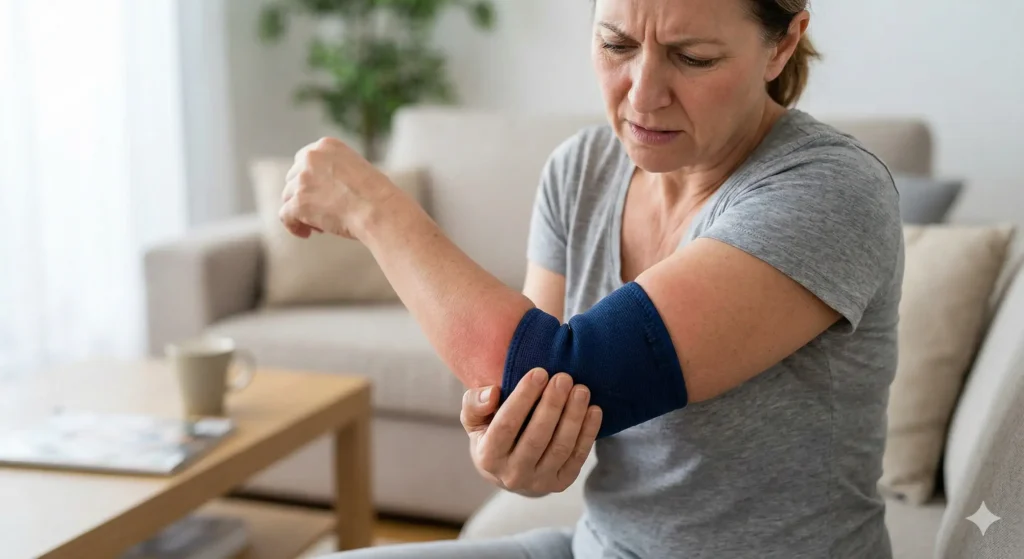
Sit across from enough people in a physiotherapy clinic and one thing becomes clear very quickly: elbow pain is almost always more disruptive than people expect it to be. Patients come in saying they thought it would sort itself out. Most of them have been living with it for weeks — sometimes months — before booking in.
At Phoenix Physiotherapy in Aylesbury, we see elbow complaints every single week. Tennis elbow, golfer’s elbow, trapped nerves, bursitis, post-fracture stiffness — the list is longer than most people realise. And the good news is that the vast majority of these conditions respond extremely well to physiotherapy when they’re caught and treated properly.
This article walks you through the most common causes of elbow pain, the symptoms that matter most, exercises that actually help, and the signs that tell you it’s time to stop waiting and get assessed.
Why Does My Elbow Hurt? Understanding Elbow Pain
The elbow is a hinge joint — simpler in some ways than the shoulder or knee, but no less prone to problems. Three bones meet here: the humerus (upper arm), the radius, and the ulna. Surrounding them are tendons, bursae, nerves, and cartilage, any of which can become irritated, compressed, or damaged.
When patients describe elbow joint pain, they tend to use different language depending on the cause. Some say their elbow aches constantly. Others describe a sharp pain that hits only when gripping. Some have shooting pain down the forearm, others a deep throb that’s worst first thing in the morning. All of these patterns mean something — and understanding which one applies to you is where a good assessment starts.
What makes elbow pain particularly stubborn is how much we use our arms without realising it. Lifting a kettle, typing, carrying a bag, opening a door — the elbow is involved in almost everything. Rest alone rarely fixes it.
The Most Common Causes of Elbow Pain — Explained Honestly
Tennis Elbow (Lateral Epicondylitis) — The One Everyone’s Heard Of
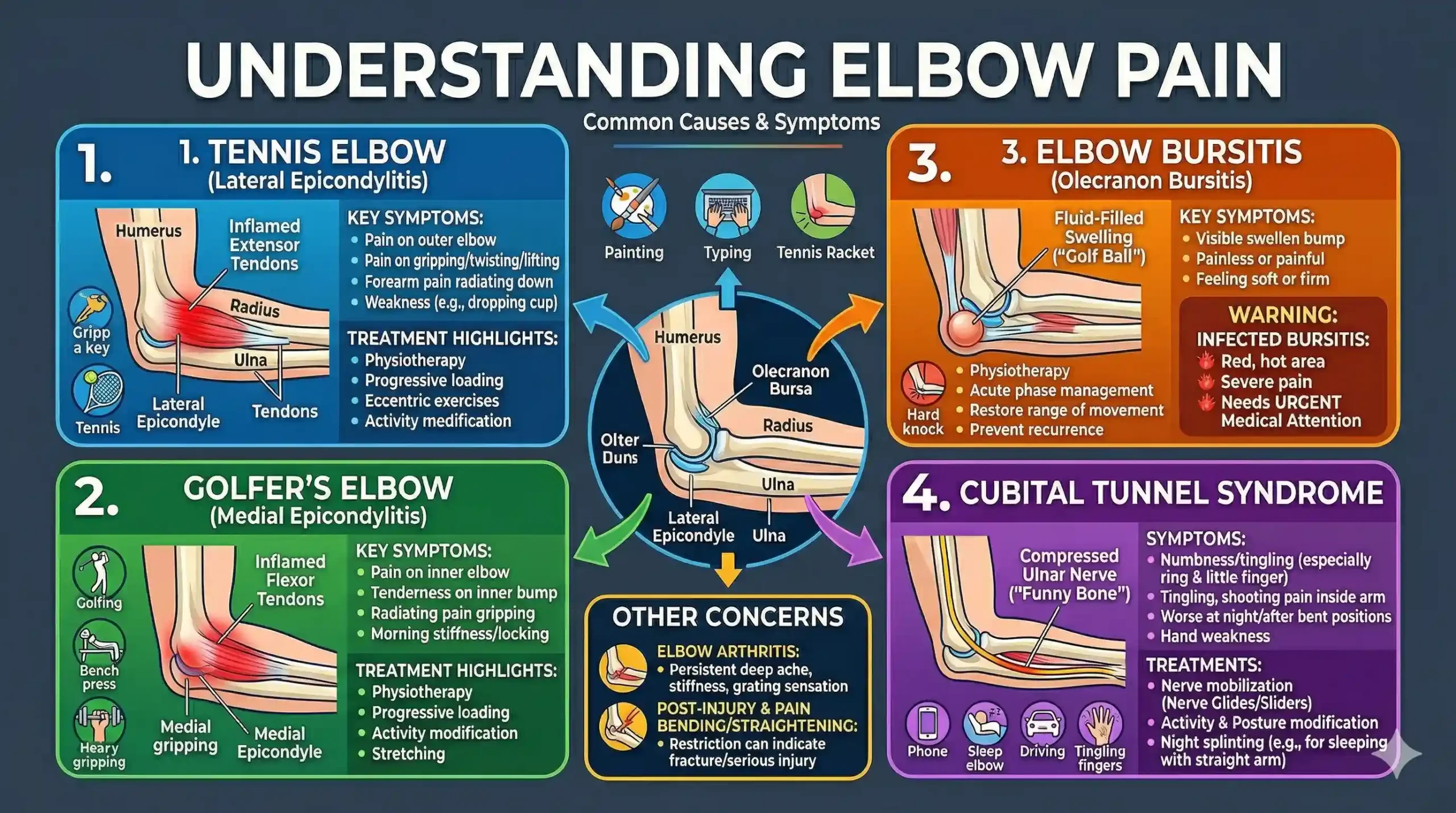
Tennis elbow is, without question, the most searched elbow condition in the UK. Over 40,000 people search for it every month. And the name is famously misleading—the majority of people who develop it have never picked up a racket.
What’s actually happening is this: the tendons that attach to the outer bony point of your elbow (the lateral epicondyle) become overloaded. That overload can come from any repetitive gripping, twisting, or lifting—painting, computer work, manual trades, gym training, or even gardening.
The classic symptoms:
- Pain on the outer elbow that gets worse when you grip, lift, or twist
- Elbow and wrist pain that flares when turning a key or using a screwdriver
- Forearm pain that radiates down from the elbow
- Weakness in the hand—cups of tea get dropped, handshakes become awkward
Tennis elbow typically responds very well to physiotherapy. The key is progressive loading of the tendon—not rest, which often makes things worse in the long run. Specific tennis elbow exercises (particularly eccentric loading), manual therapy, and sometimes shockwave therapy or dry needling form the core of treatment.
One thing patients often ask: how long will this take? Honestly, it depends on how long it’s been going on and whether tendons have started to degenerate. Mild cases can resolve in six to eight weeks. Chronic cases sometimes take four to six months. Starting treatment earlier always leads to shorter recovery.
Golfer’s Elbow (Medial Epicondylitis) — The Inner Side Problem
Golfer’s elbow causes pain on the inner side of the elbow—the medial epicondyle. The mechanism is identical to tennis elbow, but this time it’s the flexor muscles (which bend the wrist and fingers) that are overloaded rather than the extensors.
Who gets it? Golfers, yes—but also gym-goers who do a lot of rowing, pull-ups, or bench pressing; builders; climbers; and anyone who grips heavily or repeatedly. It’s surprisingly common in people who do a lot of typing with a desk that’s too low.
Common symptoms of golfer’s elbow:
- Tenderness specifically on the inner elbow bump
- Elbow pain that radiates into the forearm when gripping
- Morning stiffness or a sensation of the elbow joint locking up
- Weakness in the hand and wrist
The treatment approach mirrors tennis elbow—progressive loading, manual therapy, and activity modification. How to fix golfer’s elbow properly requires patience and a structured rehab program rather than simply avoiding the aggravating activity.
Elbow Bursitis — The Swollen Bump at the Back
If there’s a noticeable swelling at the tip of your elbow—sometimes described as a “golf ball” sitting on the joint—that’s almost certainly olecranon bursitis. The bursa is a small fluid-filled sac that sits between the skin and the bone to reduce friction. When it becomes inflamed, it fills with fluid.
Causes range from a single knock (falling on a hard surface) and prolonged leaning on the elbow at a desk to inflammatory conditions like gout or rheumatoid arthritis. Occasionally, infected bursitis develops — that’s when the area becomes red, hot, and very painful, and requires urgent medical attention.
Physiotherapy plays a role once the acute phase is managed—particularly in restoring range of movement and preventing recurrence.
Cubital Tunnel Syndrome — When the Problem Is a Trapped Nerve
Cubital tunnel syndrome is the second most common nerve compression in the arm (after carpal tunnel). The ulnar nerve—which runs through a narrow channel on the inner side of the elbow — becomes compressed or irritated. It’s the same nerve that causes the familiar “funny bone” sensation when you knock your elbow.
This condition is often underdiagnosed because patients assume the tingling in their fingers is coming from their hand or wrist rather than their elbow.
Symptoms to know:
- Numbness or tingling in the ring and little finger—especially after holding the elbow bent for a while (driving, sleeping, talking on the phone)
- Elbow pain and numb fingers that are worse at night
- Shooting pain inside the arm
- Gradual weakness in the hand in more advanced cases
- Feeling weak in the arm when gripping
Physiotherapy for cubital tunnel syndrome focuses on nerve mobilization exercises (ulnar nerve sliders), activity and posture modification, and — for those who sleep with the elbow bent—night splinting can make a significant difference very quickly.
Elbow Pain When Bending and Straightening — What It Could Mean
This is one of the questions we hear most often: “My elbow hurts when I try to straighten it — is something seriously wrong?”
Not always. But it does need to be investigated. The possible causes include:
Restricted range of movement without trauma usually points to arthritis or chronic tendinopathy. The elbow stiffens gradually, often without a clear triggering event.
Post-injury restriction — if you’ve had a fall, a blow, or significant impact and now can’t straighten your arm, a fracture needs to be ruled out. Patients often ask us about broken elbow recovery time, smashed elbow symptoms, and how long a fractured elbow takes to heal. Those answers depend on exactly which structures are involved and how they’re managed — typically 6–12 weeks for bone healing, with physio starting earlier to prevent stiffness.
Elbow clicking or locking during movement can indicate a loose body (a fragment of cartilage or bone within the joint), which sometimes needs orthopaedic input alongside physiotherapy.
Elbow Arthritis — Gradual, Often Overlooked
Osteoarthritis and rheumatoid arthritis both affect the elbow, though it’s less commonly discussed than hip or knee arthritis. Elbow arthritis symptoms develop slowly: a persistent deep ache, progressive loss of full straightening, morning stiffness, occasional grating or catching sensations.
Physiotherapy won’t reverse arthritis, but it significantly improves quality of life by maintaining function, strengthening the surrounding muscles, and providing strategies for managing flares.
Elbow Pain Symptoms — A Quick Reference Guide
| Symptom | Most Likely Cause |
|---|---|
| Outer elbow pain when gripping or twisting | Tennis elbow (lateral epicondylitis) |
| Inner elbow tenderness with forearm ache | Golfer’s elbow (medial epicondylitis) |
| Swelling at the back / tip of the elbow | Olecranon bursitis |
| Ring/little finger numbness, worse at night | Cubital tunnel syndrome (ulnar nerve) |
| Can’t fully straighten the arm after injury | Possible fracture — needs urgent assessment |
| Elbow pain at night disturbing sleep | Bursitis, nerve entrapment, or arthritis |
| Clicking or locking sensation mid-movement | Loose body or cartilage damage |
| Upper arm tenderness + elbow ache | Bicep tendinopathy or referred neck pain |
| Pain running from shoulder down to hand | Cervical radiculopathy — neck assessment needed |
Elbow Pain After the Gym — What's Really Happening
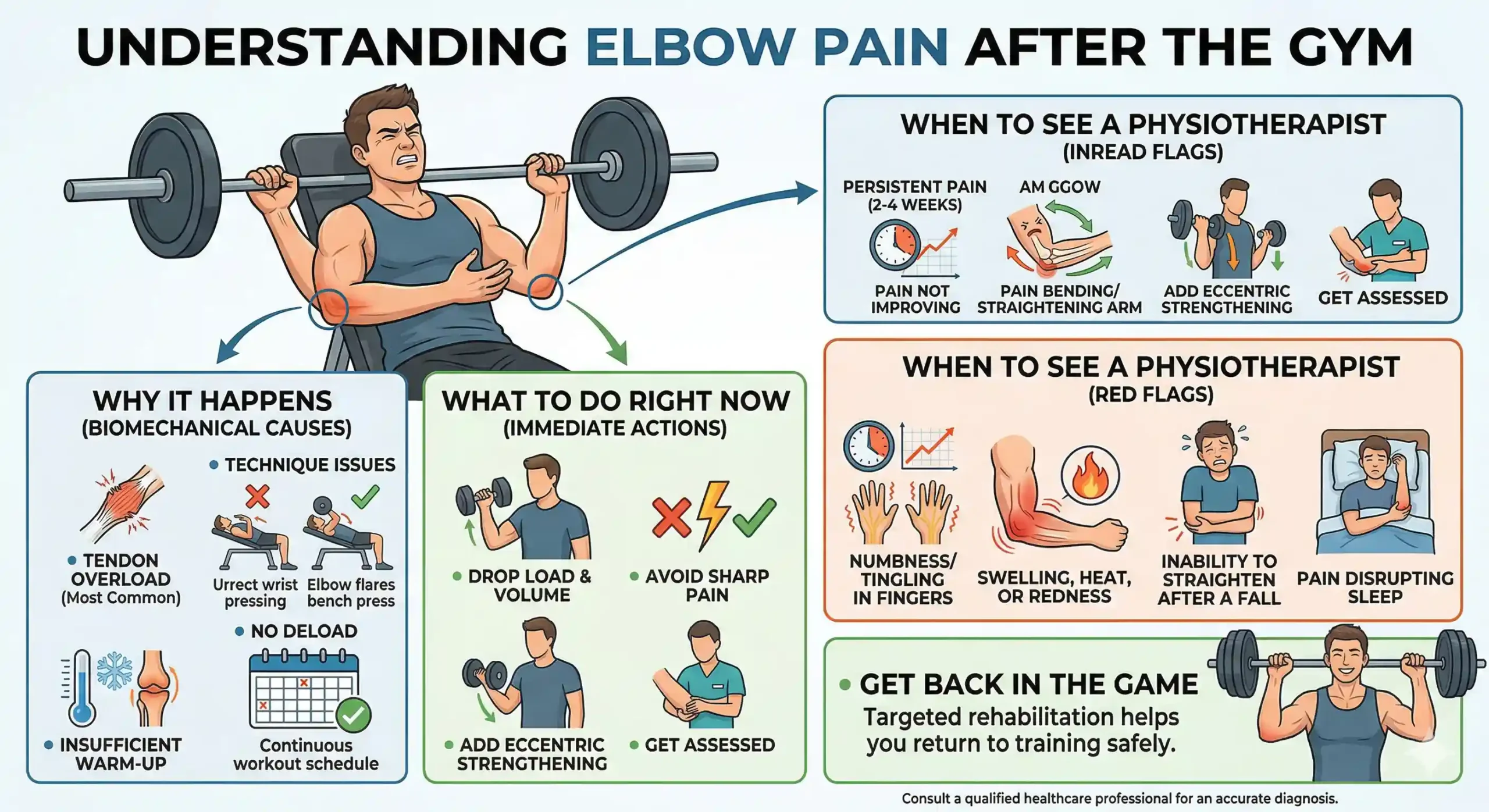
Elbow pain after gym sessions is one of the most common presentations we see—particularly in people doing bench press, bicep curls, overhead pressing, or pull-ups. The pattern is almost always the same: it starts as a dull ache after training, gets ignored, and then starts showing up during training, then during everyday life.
The searches tell the story: elbow pain bench press, elbow pain bicep curl, elbow hurts when lifting weights, elbow strain from lifting weights — these are typed into Google tens of thousands of times a month across the UK.
What’s going on biomechanically? Usually one or more of these:
Tendon overload — the training volume has outpaced the tendon’s capacity to adapt. This is the most common cause and the most fixable.
Technique issues—wrist position during pressing, elbow flare angle during bench, grip width—small adjustments here make a meaningful difference.
Insufficient warm-up—cold tendons exposed to sudden heavy loads are more susceptible to strain.
No deload—training through pain for weeks without recovery compounds damage.
What to do right now if your elbow hurts after training:
- Drop the load and volume on aggravating movements—but don’t stop completely
- Avoid exercises that reproduce sharp pain; mild discomfort during rehab is often acceptable
- Add targeted eccentric strengthening for the affected tendon
- Get assessed if it hasn’t improved within two weeks
When You Should Stop Self-Treating and See a Physiotherapist
Some elbow pain settles with rest, ice, and time. But if it’s been lingering for 2–4 weeks without improvement, it’s no longer a “wait it out” situation. Ongoing pain usually means the underlying issue isn’t resolving on its own and needs targeted treatment. The same applies if you’re dealing with persistent pain when bending or straightening the elbow—that’s a clear sign something deeper is going on.
Don’t ignore symptoms like numbness or tingling in the fingers, as these point to nerve involvement and can worsen without the right care. Swelling, heat, or redness may indicate bursitis, infection, or inflammatory conditions that require proper diagnosis. If you can’t fully straighten your arm after a fall, get it checked urgently. And if pain is disrupting your sleep, it’s already affecting recovery—at that point, professional assessment isn’t optional, it’s necessary.
What Physiotherapy for Elbow Pain Looks Like at Phoenix Physio
We don’t use a one-size-fits-all approach here. Every elbow is different, every person’s activity level and goals are different, and that shapes everything about how we treat.
A typical journey looks something like this:
Assessment (Session 1): A full biomechanical and neurological screen. We identify exactly what structure is involved, what’s driving it, and what your recovery timeline realistically looks like. We’ll also explain everything clearly so you’re not guessing.
Hands-On Treatment: Manual therapy—joint mobilization, soft-tissue work, and neural mobilization—is an important part of early treatment for most elbow conditions. This relieves pain and restores movement while the rehabilitation work builds.
Structured Rehab Program: Exercise prescription tailored to your specific diagnosis, starting where you are and progressing systematically. We don’t just hand you a sheet of generic exercises.
Shockwave Therapy: For stubborn chronic tennis elbow or golfer’s elbow, radial shockwave therapy is one of the most effective treatments available. It stimulates tendon healing at a cellular level and can resolve cases that haven’t responded to other approaches.
Dry Needling: Particularly useful for releasing tight forearm muscles contributing to tendon overload.
Education and Prevention: Understanding why your elbow became painful in the first place is what stops it coming back. We cover load management, technique, workspace ergonomics, and training modification before you’re discharged.
We see patients from Aylesbury, Buckinghamshire, and surrounding areas, including Oxfordshire. Self-referrals are welcome — no GP letter needed.
Frequently Asked Questions About Elbow Pain
Why does my elbow hurt even though I haven't injured it?
This is one of the most common questions we hear. Most elbow pain develops gradually through repetitive overload rather than a single injury. Tendons accumulate stress over weeks and months — eventually crossing a threshold where pain begins. Tennis elbow and golfer’s elbow are classic examples. Poor posture or a compressed nerve in the neck can also produce elbow symptoms without any local injury.
What is the fastest way to relieve elbow pain at home?
For acute flare-ups: relative rest (reduce aggravating activities, don’t stop completely), ice for 10–15 minutes several times a day, and an anti-inflammatory gel, such as ibuprofen gel, can reduce short-term pain. Gentle stretching of the forearm muscles helps maintain flexibility. But for lasting relief, a structured rehab program is essential—especially for tendon-related pain.
How long does tennis elbow take to heal?
Mild tennis elbow caught early can resolve in 6–8 weeks with proper treatment. Moderate to severe or chronic cases typically take 3–6 months. The biggest factor is how long it’s been going on before treatment starts. Starting physiotherapy early consistently leads to faster recovery.
What is the difference between tennis elbow and golfer's elbow?
Tennis elbow affects the outer side of the elbow (lateral epicondyle) and involves the wrist extensor tendons. Golfer’s elbow affects the inner side (medial epicondyle) and involves the wrist flexor tendons. Both are overuse tendinopathies with similar treatment principles, but the specific exercises and aggravating activities differ. A physiotherapy assessment will confirm which one you have.
Do I need to see my GP before booking physiotherapy?
No. Phoenix Physiotherapy accepts direct self-referrals. You can book an appointment without a GP referral letter, which means faster access to the right treatment. Most elbow conditions benefit significantly from early intervention.