
Introduction
Arthritis is a common condition that can cause joint pain, stiffness, swelling, and reduced mobility, making everyday activities more difficult. Although arthritis can affect different joints and have several causes, appropriate treatment and regular physical activity can help manage symptoms and maintain joint function.
Physiotherapy can help manage arthritis through targeted exercises, education, and movement strategies that reduce joint pain, improve flexibility, and strengthen supporting muscles. A physiotherapist can assess your symptoms, movement, strength, and daily activities before creating a personalised treatment programme suited to your needs.
At Phoenix Physio, we help people manage arthritis with individualised physiotherapy aimed at improving mobility, maintaining strength, managing pain, and supporting long-term physical function. Early assessment and appropriate exercise can help you stay active and manage the impact of arthritis on your daily life.
What Is Arthritis?
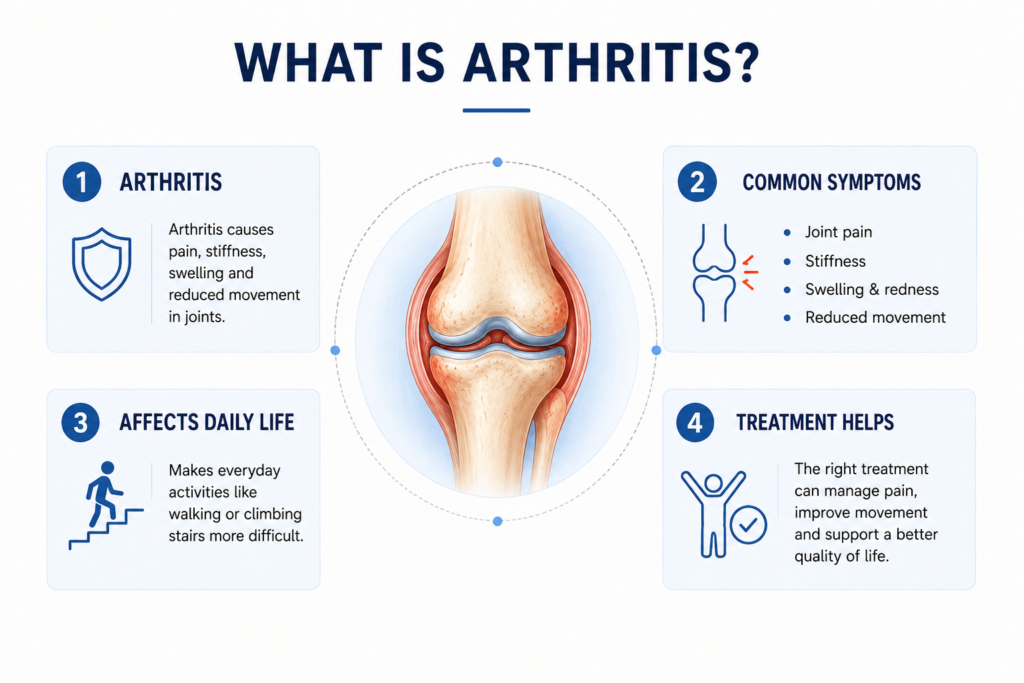
Arthritis is a common condition that causes pain, stiffness, swelling, and reduced movement in one or more joints. It can affect people of different ages and may develop gradually or appear more suddenly, depending on the type of arthritis. The most common forms include osteoarthritis and rheumatoid arthritis.
Arthritis can make everyday activities such as walking, climbing stairs, getting dressed, or using your hands more difficult. While arthritis cannot always be cured, the right treatment can help manage symptoms, improve joint movement, maintain muscle strength, and support a better quality of life. Arthritis physiotherapy can be an important part of managing pain and maintaining mobility through personalised exercises and treatment.
Common Symptoms
- Pain in the affected joints
- Stiffness, especially in the morning or after resting
- Swelling, redness, and warmth around the joint area
- Decreased range of motion or trouble moving the joint
What Causes Arthritis?
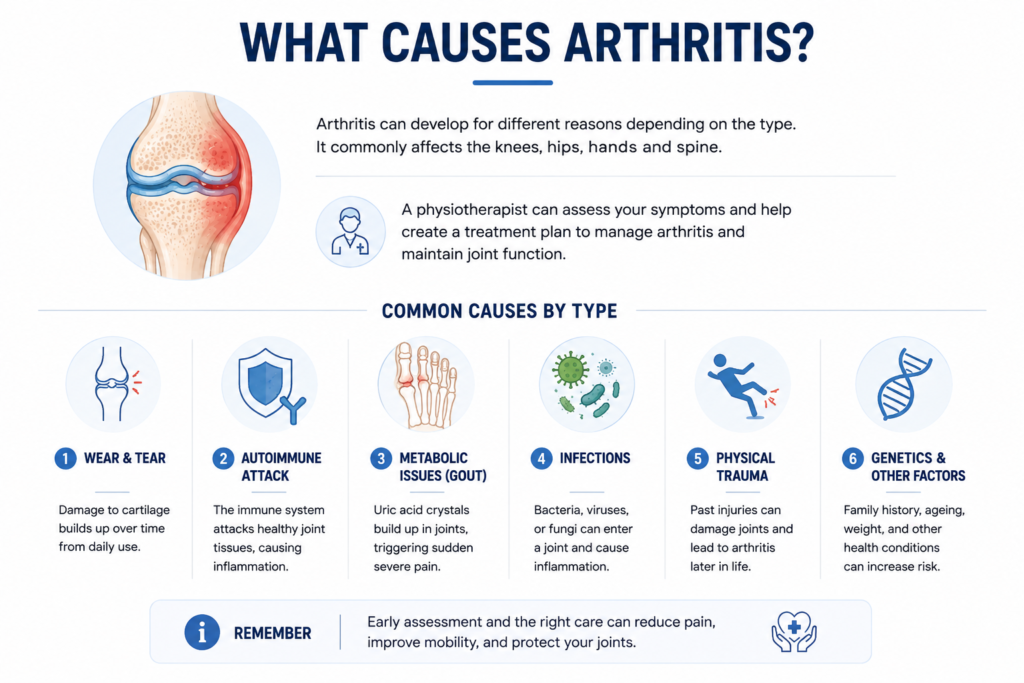
Arthritis can develop for different reasons depending on the type. Osteoarthritis often occurs when the tissues within a joint gradually change over time. Age, previous joint injuries, repeated strain, being overweight, and genetics can increase the likelihood of developing osteoarthritis. It commonly affects the knees, hips, hands, and spine.
Other types of arthritis, such as rheumatoid arthritis, are linked to problems with the immune system, which can cause inflammation in the joints. Some forms may also be associated with infections, metabolic conditions, or other health factors. A physiotherapist can assess your movement, strength, and symptoms and help develop an appropriate treatment plan to manage arthritis and maintain joint function.
Common Causes by Type
- Wear and Tear (Osteoarthritis): Damage to the cartilage—the slippery tissue cushioning bone ends—builds up over time from daily usage, heavy labour, or repetitive sports.
- Autoimmune Attack (Rheumatoid Arthritis and Lupus): The body’s immune system mistakenly attacks its own healthy joint tissues, targeting the joint lining and causing painful inflammation.
- Metabolic Issues (Gout): Sharp uric acid crystals accumulate in the joints when the body has too much uric acid in the blood, triggering sudden, severe pain.
- Infections: Bacteria, viruses, or fungi can enter a joint and spark inflammatory arthritis.
- Physical Trauma: Past joint injuries from accidents or sports can damage tissue and lead to post-traumatic or degenerative arthritis later in life.
What Are the Different Types of Arthritis?
There are more than 100 different types of arthritis, but they fall into a few major categories based on their causes.
Common Types of Arthritis
- Osteoarthritis (OA): This is the most common form of arthritis, caused by the mechanical wear and tear of joint cartilage over time. It leads to pain and stiffness, commonly affecting the hands, knees, hips, and spine.
- Rheumatoid Arthritis (RA): This is a chronic autoimmune disease where the body’s immune system mistakenly attacks the lining of the joints (synovium). It causes painful swelling, often affecting joints symmetrically on both sides of the body.
- Gout: This is a painful inflammatory type of arthritis caused by a buildup of sharp uric acid crystals in the joints. It frequently flares up in the big toe or lower limbs.
- Psoriatic Arthritis (PsA): This type affects some people who have psoriasis, a skin condition that causes scaly patches. It causes joint pain, stiffness, and swelling, often in the fingers and toes.
- Fibromyalgia: This is a long-lasting condition causing widespread pain, tenderness, and fatigue across the body rather than just localised joint damage.
- Ankylosing Spondylitis: This is a specific inflammatory arthritis that mainly affects the ligaments and joints of the spine, leading to stiffness and back pain.

How Does Arthritis Affect Your Daily Life?
Arthritis can affect everyday activities by causing joint pain, stiffness, swelling, and reduced mobility. Simple tasks such as walking, climbing stairs, getting out of a chair, driving, working, or carrying shopping may become uncomfortable. Symptoms can also make it harder to stay active, which may lead to reduced muscle strength and flexibility over time.
With appropriate management, many people with arthritis can remain active and continue their normal routines. Physiotherapy can help improve movement, strengthen the muscles around affected joints, manage pain, and build confidence with everyday activities. A personalised exercise programme can also help you stay mobile and support long-term joint function.
Physical Challenges
- Morning stiffness: Joints feel locked or rigid upon waking up, delaying the start of the day.
- Hard routine tasks: Dressing, cooking, gripping objects, or climbing stairs become painful.
- Limited movement: Swollen joints lose their full range of motion, slowing down physical activity.
- Constant fatigue: Ongoing inflammation drains body energy, causing exhaustion even after light effort.
Can Physiotherapy Help With Arthritis?
Yes, physiotherapy is a core, first-line treatment for arthritis. It reduces joint pain, lessens stiffness, builds supportive muscle strength, and improves daily mobility without relying solely on medications.
How Physio Helps
- Custom Exercises: Low-impact movements and stretches build muscle around weak joints to absorb shock and reduce wear.
- Pain Relief: Therapists use heat or cold packs, massage, and gentle manipulation to soothe sore areas.
- Better Movement: Guided stretching helps you move stiff joints more freely and safely.
- Practical Advice: You learn safe daily postures, joint protection tips, and home activity plans.
What Exercises Are Good for Arthritis?
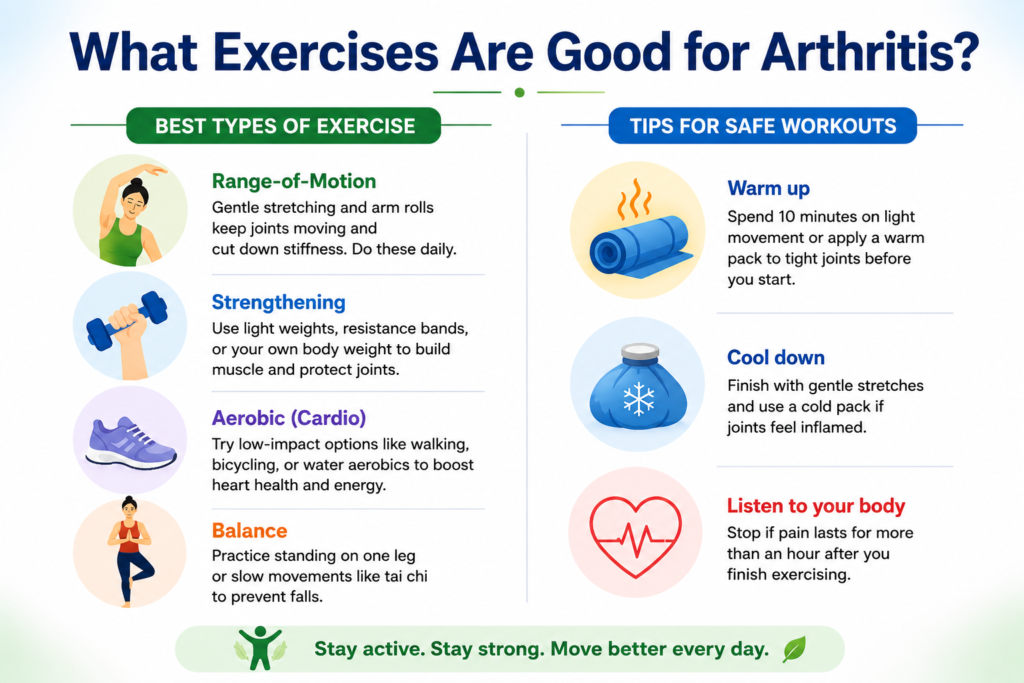
Safe, low-impact physical activity helps reduce joint pain and stiffness by strengthening the muscles around your joints.
Best Types of Exercise
- Range-of-Motion: Gentle stretching and arm rolls keep joints moving and cut down stiffness. Do these daily.
- Strengthening: Use light weights, resistance bands, or your own body weight to build muscle and protect joints.
- Aerobic (Cardio): Try low-impact options like walking, bicycling, or water aerobics to boost heart health and energy.
- Balance: Practice standing on one leg or slow movements like tai chi to prevent falls.
Tips for Safe Workouts
- Warm up: Spend 10 minutes on light movement or apply a warm pack to tight joints before you start.
- Cool down: Finish with gentle stretches and use a cold pack if joints feel inflamed.
- Listen to your body: Stop if pain lasts for more than an hour after you finish exercising.
How Does Physiotherapy Reduce Arthritis Pain?
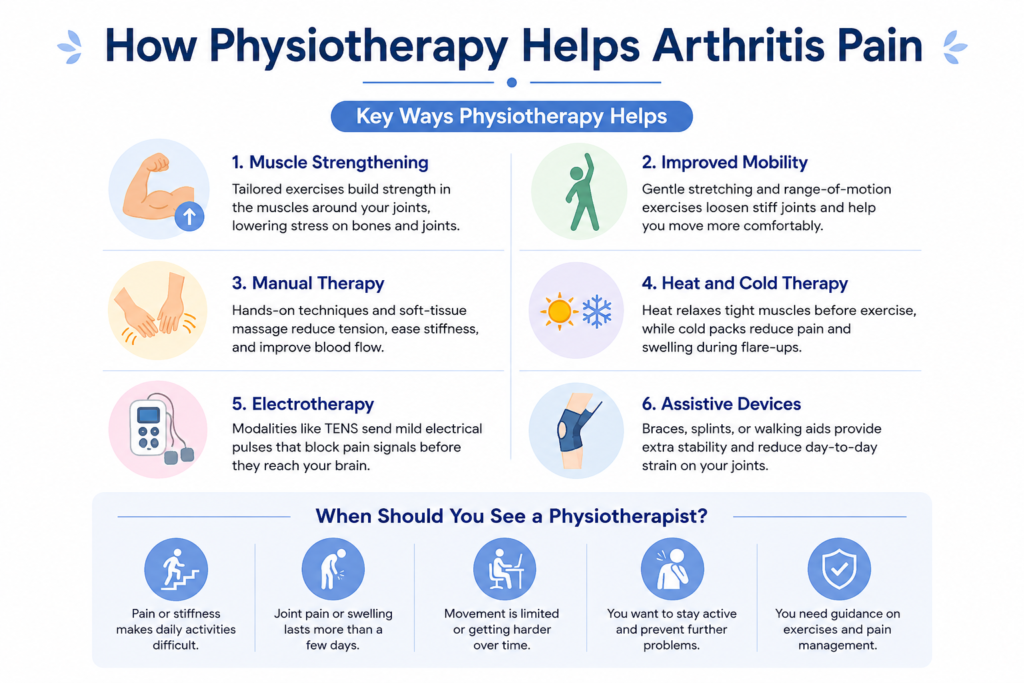
Physiotherapy reduces arthritis pain by strengthening the muscles that support joints, improving flexibility, and using targeted pain-relief treatments.
Key Ways Physiotherapy Helps
- Muscle Strengthening: Tailored exercises build strength in the muscles around your joints (like the quadriceps for knee arthritis), which acts as a shock absorber and lowers stress on the bone.
- Improved Mobility: Gentle stretching and range-of-motion exercises loosen stiff joints and help you move more comfortably.
- Manual Therapy: Hands-on joint mobilisation and soft-tissue massage reduce tension, ease stiffness, and improve blood flow.
- Heat and Cold Therapy: Heat relaxes tight muscles before exercise, while cold packs numb pain and reduce swelling during flare-ups.
- Electrotherapy: Modalities like TENS (transcutaneous electrical nerve stimulation) send mild electrical pulses that block pain signals before they reach your brain.
- Assistive Devices: Guides on using braces, splints, or walking aids provide extra stability and lower day-to-day strain.
When Should You See a Physiotherapist for Arthritis?
Seeing a physiotherapist for arthritis is helpful when joint pain, stiffness, or swelling starts to limit your daily activities or sleep.
Signs It Is Time to See a Physiotherapist
- Persistent joint stiffness: You feel stiff every morning or after sitting for a short time.
- Trouble with daily tasks: Simple movements like climbing stairs, gripping objects, or getting dressed become hard.
- Pain during rest or sleep: Aches flare up and interrupt your sleep or work.
- Loss of balance: You feel wobbly or unstable when walking.
- Preparation or recovery from surgery: You want to build strength before a joint replacement or recover after surgery.
If you’re experiencing any of these signs, don’t wait for symptoms to worsen. [Get in touch with Phoenix Physio in Wendover →]
How Phoenix Physio Can Help With Arthritis
At Phoenix Physio, our team of HCPC-registered physiotherapists provide personalised arthritis care to people across Wendover and the surrounding area, including Aylesbury, Tring, and Halton. We assess your symptoms, joint movement, muscle strength, flexibility, and daily activities to understand how arthritis is affecting you and create a treatment plan suited to your needs.
Treatment may include individualised exercises, strengthening, mobility work, hands-on techniques where appropriate, and advice on managing daily activities. The aim is to help improve movement, maintain strength, reduce the impact of pain, and support your confidence in staying active.
Our clinic in Wendover offers a welcoming, professional environment where every treatment plan is built around your specific joints, lifestyle, and goals — not a one-size-fits-all programme.
Book Your Arthritis Assessment in Wendover
If arthritis is affecting your everyday life, a tailored physiotherapy assessment at Phoenix Physio can help you understand your condition and take the first step towards better mobility.
Conclusion
Arthritis can cause ongoing pain, stiffness, and reduced mobility, but the right approach can help you manage symptoms and stay active. Physiotherapy can support arthritis management by improving joint movement, strengthening the muscles around affected joints, and helping you develop safe and effective exercise habits.
At Phoenix Physio in Wendover, treatment is tailored to your individual symptoms, mobility, and everyday goals. If arthritis is affecting your movement or making daily activities more difficult, get in touch — we’re here to help you explore suitable treatment options and get back to doing the things you enjoy.
Frequently Asked Questions About Arthritis
What is the most common type of arthritis?
Osteoarthritis is one of the most common types of arthritis. It can cause pain, stiffness, and reduced movement, particularly in weight-bearing joints such as the knees and hips.
Can physiotherapy help with arthritis pain?
Yes. Physiotherapy can help manage arthritis pain by improving joint mobility, muscle strength, flexibility, and physical function through a personalised treatment programme.
Is exercise good for arthritis?
Yes. Appropriate exercise can help maintain joint movement, strengthen supporting muscles, and improve overall physical function. Exercises should be selected according to your symptoms and abilities.
Can arthritis be cured?
There is not always a cure for arthritis, but symptoms can often be managed effectively. Treatment may include exercise, physiotherapy, lifestyle changes, medication, or other medical treatments depending on the type and severity.
When should I see a physiotherapist for arthritis?
Consider seeing a physiotherapist if joint pain, stiffness, or reduced mobility is affecting your daily activities or making it difficult to stay active. A physiotherapist can assess your condition and recommend suitable treatment and exercises.
Can physiotherapy prevent arthritis from getting worse?
Physiotherapy cannot guarantee that arthritis will not progress, but maintaining strength, mobility, physical activity, and healthy movement patterns can help you manage symptoms and maintain function.
How can Phoenix Physio help with arthritis?
Phoenix Physio can provide a personalised assessment and treatment programme in Wendover focused on managing pain, improving mobility, strengthening muscles, and helping you remain active and independent.